

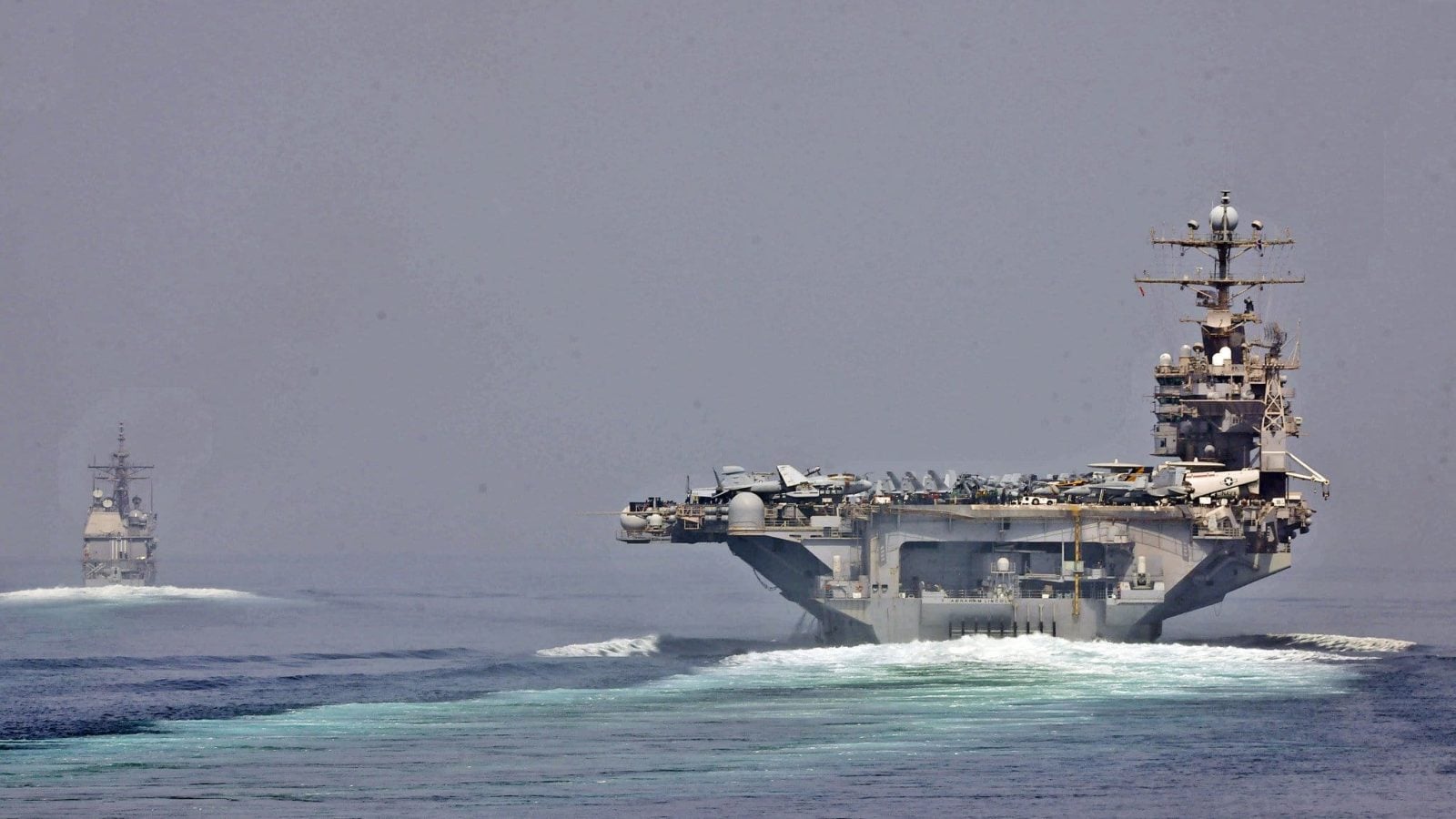
The numbers coming out of U.S. Central Command on Wednesday tell a story Tehran does not want the world to hear. Since President Trump ordered a naval blockade of Iranian ports on April 13, American forces have systematically choked off the regime’s most important revenue stream, and the financial damage is now impossible to hide.
Admiral Brad Cooper, the CENTCOM commander, announced that U.S. forces have successfully redirected 42 commercial vessels that attempted to breach the blockade. That is not a typo. Forty-two ships tried to get through, and forty-two ships were turned around.
But the redirected vessels are only part of the picture. Right now, 41 oil tankers carrying a combined 69 million barrels of crude are sitting idle because Iran simply cannot sell them. The blocked revenue tops $6 billion, and it is growing by the day.
🚨 DONALD TRUMP’S BLOCKADE HAS THROWN IRAN INTO A FRENZY
— Eric Daugherty (@EricLDaugh) April 29, 2026
CENTCOM just confirmed it: 42 COMMERCIAL VESSELS now redirected who tried breaching the blockade
That’s 69 MILLION barrels of oil that Iran can’t profit from, totaling $6 BILLION+
Iran must cry uncle!
ADMIRAL BRAD… pic.twitter.com/JKD8e42qeG
Iran International reported on the CENTCOM milestone, detailing the scope of the enforcement operation and the mounting pressure it is placing on Tehran’s finances:
The commander of US Central Command (CENTCOM) said on Wednesday American forces successfully redirected 42 commercial vessels attempting to breach a maritime blockade, describing the effort as part of ongoing enforcement aimed at restricting Iranian oil exports. Admiral Brad Cooper said the vessels were stopped from entering or exiting Iranian ports, adding that 41 tankers carrying an estimated 69 million barrels of oil are currently unable to be sold by the Iranian government, representing what he described as more than $6 billion in blocked revenue.
The milestone places the enforcement operation directly on Iran’s oil-revenue problem: vessels trying to move through Iranian ports are being redirected, while dozens of tankers already tied to the regime’s crude supply remain stuck outside the normal sales channel. The visible result is a blockade with a dollar figure attached to it, not just another diplomatic warning.
Anadolu confirmed the numbers independently, reporting Cooper’s own words on the blockade’s significance:
The US said on Wednesday that the 42nd commercial vessel attempting to enter or exit Iranian ports has been redirected, adding that 41 oil tankers carrying a combined 69 million barrels remain unable to access Iranian ports due to the ongoing US blockade. CENTCOM Commander Adm. Brad Cooper said in a statement that the US forces recently redirected a 42nd commercial vessel attempting to violate the blockade, describing it as a significant milestone. Right now, there are 41 tankers with 69 million barrels of oil that the Iranian regime can’t sell. That’s an estimated $6 billion-plus from which Iran’s leadership cannot financially benefit, he said. Since April 13, the US has enforced a naval blockade targeting Iranian maritime traffic in the Strait of Hormuz, in response to Iran’s restrictions on vessel passage through the waterway.
That confirmation matters because it ties the 42nd redirected vessel to the larger count of stranded Iranian oil. The blockade has been in force since April 13, and the reported financial pressure is not theoretical. The vessels are being stopped from entering or exiting Iranian ports, and the tanker backlog leaves Tehran sitting on oil it cannot turn into spendable revenue.
Six billion dollars in unsold oil is a devastating blow to a regime that depends on crude exports to fund its military, its proxy networks, and its nuclear program. And the blockade is not the only source of pain.
On the same day the CENTCOM milestone was announced, the Associated Press reported that Iran’s national currency, the rial, crashed to a record low of 1.8 million to the U.S. dollar. The timing is not a coincidence. When a country cannot sell its primary export and its currency is in freefall at the same time, the economic walls are closing in fast.
BREAKING: Iran’s national rial currency hit a record low of 1.8 million to $1 as a shaky ceasefire with the U.S. and Israel still holds. https://t.co/dT67H4YRn1
— The Associated Press (@AP) April 29, 2026
The Associated Press provided critical context on the broader squeeze Iran is facing, from currency collapse to diplomatic isolation:
Iran’s rial fell to a record low of 1.8 million to the U.S. dollar as a shaky ceasefire with the United States and Israel continued. The currency had held steadier in the first weeks of the war because there was little trading or importing, but the pressure became visible as markets reopened. AP’s live updates also said Trump praised the United Arab Emirates’ plan to leave OPEC on May 1, saying the move could help lower oil and gas prices while the Iran war continued to shake energy markets. The broader context is that Pakistan has tried to mediate between Washington and Tehran, while Trump has demanded Iran give up enriched uranium as part of any serious deal.
The currency pressure adds another layer to the blockade story because it shows Tehran facing stress on more than one front at once. A regime that depends on energy exports is dealing with blocked oil revenue, a collapsing exchange rate, and a regional energy picture that could move further against it if the UAE follows through on leaving OPEC.
Think about what that means for Iran’s leadership. Their oil cannot be sold. Their currency is collapsing. One of the most powerful Gulf states, the UAE, is walking away from OPEC in a move Trump publicly welcomed because it could push global oil prices even lower. And President Trump is not offering Tehran an easy off-ramp. His demand is clear: give up enriched uranium, or the pressure stays.
Pakistan has reportedly attempted to play mediator between Washington and Tehran, but there is no indication that Iran is anywhere close to meeting Trump’s terms. Why would they be? The regime has spent decades building its nuclear ambitions. But decades of ambition do not pay the bills when your tankers are dead in the water and your currency is worth less every hour.
The blockade has been in effect for just over two weeks. In that short window, the United States Navy has turned away 42 vessels, stranded 69 million barrels of crude, and vaporized more than $6 billion in potential Iranian revenue. Admiral Cooper called the 42nd redirection a “significant milestone.” For the Iranian regime, it is something closer to a financial emergency.
This is what real leverage looks like. Not sternly worded letters from the United Nations. Not pallets of cash flown to Tehran in the dead of night. President Trump is applying the kind of sustained, material pressure that forces a regime to make hard choices, and every day the blockade continues, those choices get harder. Iran’s leaders can cry foul all they want. The math does not care.

Join the conversation!
Please share your thoughts about this article below. We value your opinions, and would love to see you add to the discussion!