

Imagine you’re in Antarctica…
At least 50% just bailed on me even before we get to the details.
Let’s set the scene: You’re at an American research base floating on 60 feet of ice in perpetual darkness and horrific sub-zero temps.
And that’s the GOOD news. That’s just normal day-to-day life in Antarctica!
But here’s the bad news — you get sick.
Then the power goes out, and the cold gets really cold really fast.
Instant medical emergency. So… what’s the plan?
That’s exactly the situation a 3-person American team found themselves in a few days ago.
The answer was a rescue mission straight out of a James Bond or Mission Impossible movie.
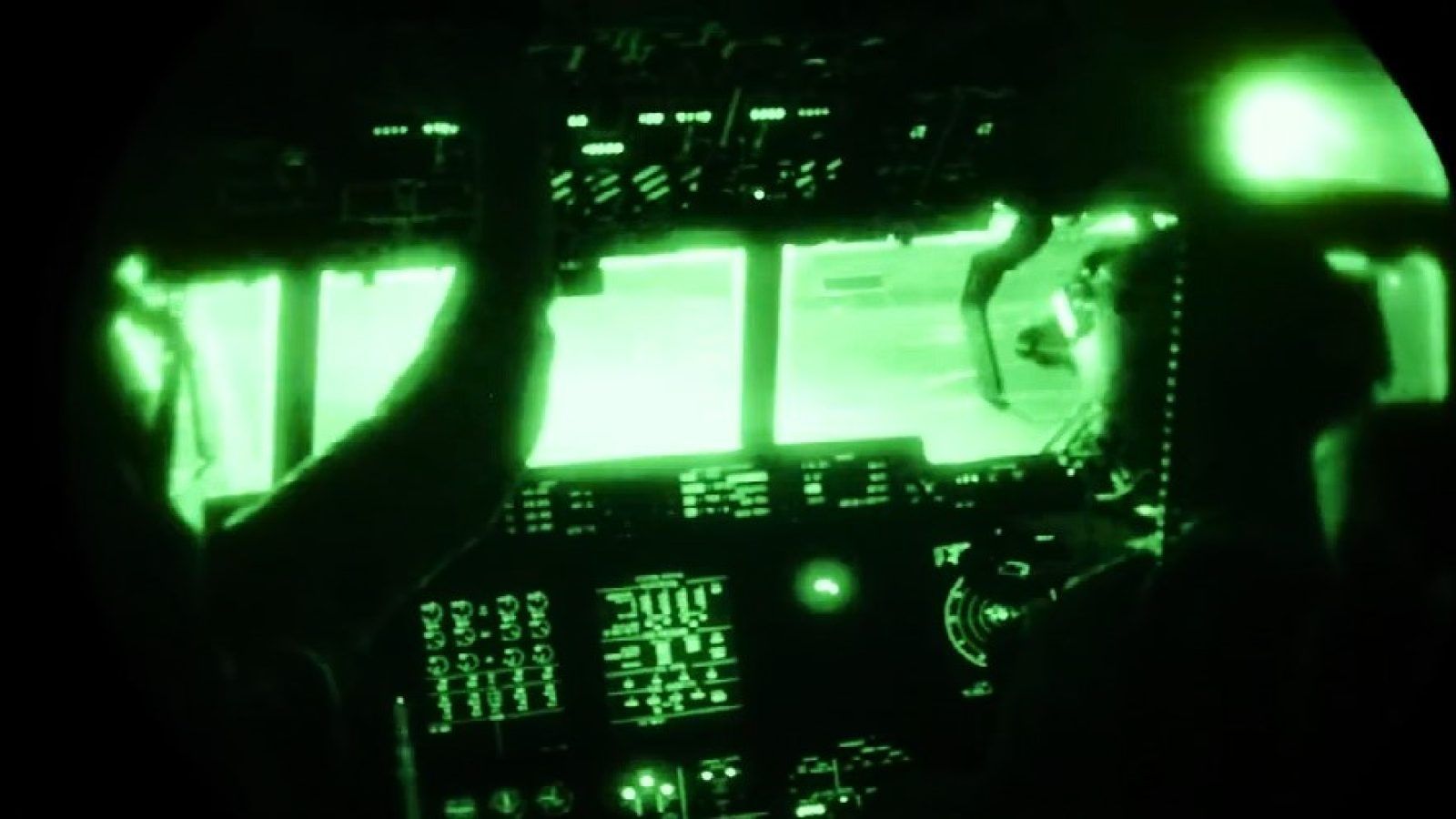
Luckily, the Royal New Zealand Air Force is into doing the ‘Impossible’, Bond-style, as you can tell from these photos of the rescue op shared by the US Embassy to New Zealand:
Overnight, the RNZAF carried out a high-risk winter medevac from the U.S. Antarctic Program’s McMurdo Station. Landing a large aircraft on ice, in darkness, using night vision, takes precision and extraordinary skill. We are deeply grateful for the crew’s professionalism,… pic.twitter.com/IKrS2bxxEQ
— US Embassy NZ 🇺🇸🇳🇿 (@usembassynz) August 6, 2025
Here’s the full text of that thankful post from the US Embassy in NZ:
Overnight, the RNZAF carried out a high-risk winter medevac from the U.S. Antarctic Program’s McMurdo Station. Landing a large aircraft on ice, in darkness, using night vision, takes precision and extraordinary skill. We are deeply grateful for the crew’s professionalism, courage, and partnership. This mission was nothing short of heroic. Thank you for going above and beyond.
New Zealand’s close proximity to Antarctica (relatively speaking, anyway…) makes their Air Force the go-to for emergency evacuations from Antarctica.
There have been various rescue missions launched by the New Zealand Air Force over the last few decades, and it’s always a challenging mission; proximity notwithstanding.
A medical team flew in with the rescue squad on the 20-hour flight to ensure proper medical care could be dispensed to the Americans on the return flight, according to Fox News:
New Zealand’s air force carried out a nearly 20-hour medical evacuation to rescue three Americans from Antarctica, calling it a high-risk mission conducted in freezing temperatures and total darkness.
The U.S. National Science Foundation requested the evacuation after three staff members at McMurdo Station were unable to receive adequate medical treatment on-site.
One of the individuals required urgent care, while the other two also needed medical attention and were transported as a precaution, according to New Zealand’s air force.
A medical team, including a physician, accompanied the crew to provide in-flight care during the return to Christchurch.
The aircraft was pre-positioned from Auckland to Christchurch on Sunday, with a crew on standby for a weather window.
The crew made the decision on Tuesday to fly to Antarctica, working through the night to complete the mission.
ADVERTISEMENTThe round-trip mission lasted 19.5 hours, with the aircraft touching down in Christchurch on Wednesday morning.
Temperatures at McMurdo Station dropped to -11°F during the operation, adding to the already dangerous conditions.
Check out this shot shared by Reuters of the back portion of the C-130 being loaded up with the three Americans’ gear prior to disembarking the frozen continent:
New Zealand's air force said it had evacuated three people from a United States research base in Antarctica, in what it said was a high-risk operation in freezing temperatures and perpetual darkness https://t.co/Q64WzoWUew
— Reuters (@Reuters) August 6, 2025

With constant darkness and ‘extreme’ weather conditions, the pilots had to fly in wearing night vision and land on a runway literally made of ice.
And if the rescue plane has an issue??? There’s no secondary airport to land at.
There is NO safety net on this sort of operation, as reported by the New Zealand Military:
Air Component Commander Air Commodore Andy Scott said the extreme cold, changeable weather conditions plus landing on the ice in the dark make mid-winter flights to Antarctica one of the most challenging RNZAF air crews perform.
“The crew can only attempt the flight after detailed analysis of the weather and airfield state.
“Although they determine it is safe, it’s still an extremely challenging environment to fly in on Night Vision Goggles due to the extreme weather conditions, which are highly changeable at this time of year and makes accurate forecasting a challenge.
“This, coupled with there being no airfields available to divert to once the aircraft is past a certain point south adds to the risk, so these missions are not taken lightly.
“With the support of Antarctica New Zealand and United States’ National Science Foundation staff in Antarctica, we have been able to complete the flight and the patients are now getting the medical treatment they need in Christchurch.”
ADVERTISEMENT
All three of the American emergency evacuees were safely rescued after an incredibly technical operation.
The NZ Air Force Captain that led the rescue operation reported a very challenging trip, with quickly changing conditions making it a very high-risk flight from the beginning, as this video report from ABC News makes perfectly clear:
One particularly sketchy part of the operation is the fact that no runway sits at the location, ready to be used at a moment’s notice.
A special team had to prep a landing surface in advance, and guarantee it’s usability during a specific window of time prior to the rescue flight taking off to make the 20-hour roundtrip flight.
Even then, the pilots had to keep the plane running while they refueled in Antarctica, fearing that to shut the engines down might mean a complete freeze-up…
And no way home for ANYBODY.
But the U.S. Charge D’Affaires for NZ said the rescue was carried out ‘flawlessly’, according to this report from CBS News:
Officials said a U.S. team at the base had to manually create a runway and ensure the ice was groomed and suitable for landing in Antarctica’s perpetual winter darkness and sub-zero temperatures. After a detailed analysis of the weather and conditions of the airfield, the New Zealand air force crew — with a doctor on board — used night vision goggles to carry out the mission.
Once on the ice, the engines of the C-130J Hercules were kept running to keep them warm for refueling, a process known as “hot refueling,” before the aircraft took off with the three patients, officials said.
McMurdo Station — which is located about 25 miles from the world’s southernmost active volcano — reported temperatures of -11 degrees Fahrenheit on Tuesday.
The U.S. Embassy in New Zealand lauded the success of the mission.
ADVERTISEMENTMelissa Sweeney, the U.S. charge d’affaires for New Zealand, said the latest operation was carried out “flawlessly.”
“This required absolute precision. It was daring, dangerous, and deeply courageous,” Sweeney said in a statement. “This is the kind of mission that tests every ounce of skill and bravery. RNZAF delivered, just as they always do.”
According to its website, McMurdo Station is “the central logistical hub for the U.S. Antarctic Program (USAP), supporting research on the continent and at NSF Amundsen-Scott South Pole Station.”
Some situations surpass the relative “normal” of the rest of daily life very quickly.
Those scenarios can make the ordinary of mundane life seem far less of a bother and way less of a problem than we like to make them out to be on most days.
Today might have been a rough day, or this week might have been an entire week of rough days.
But for most of us, most of the time — whatever we’re going through will very rarely match up with the severity of a medical emergency in the middle of Antarctica and the extreme conditions that entails.
No further information has been released concerning what type of medical emergency the American team was facing.
But thankfully, all three of those Americans are getting the care they needed in New Zealand, thanks to the ‘heroic’ exploits of that NZ Air Force team.
From America to our Kiwi allies — thanks and God bless for taking care of our people!

Join the conversation!
Please share your thoughts about this article below. We value your opinions, and would love to see you add to the discussion!