

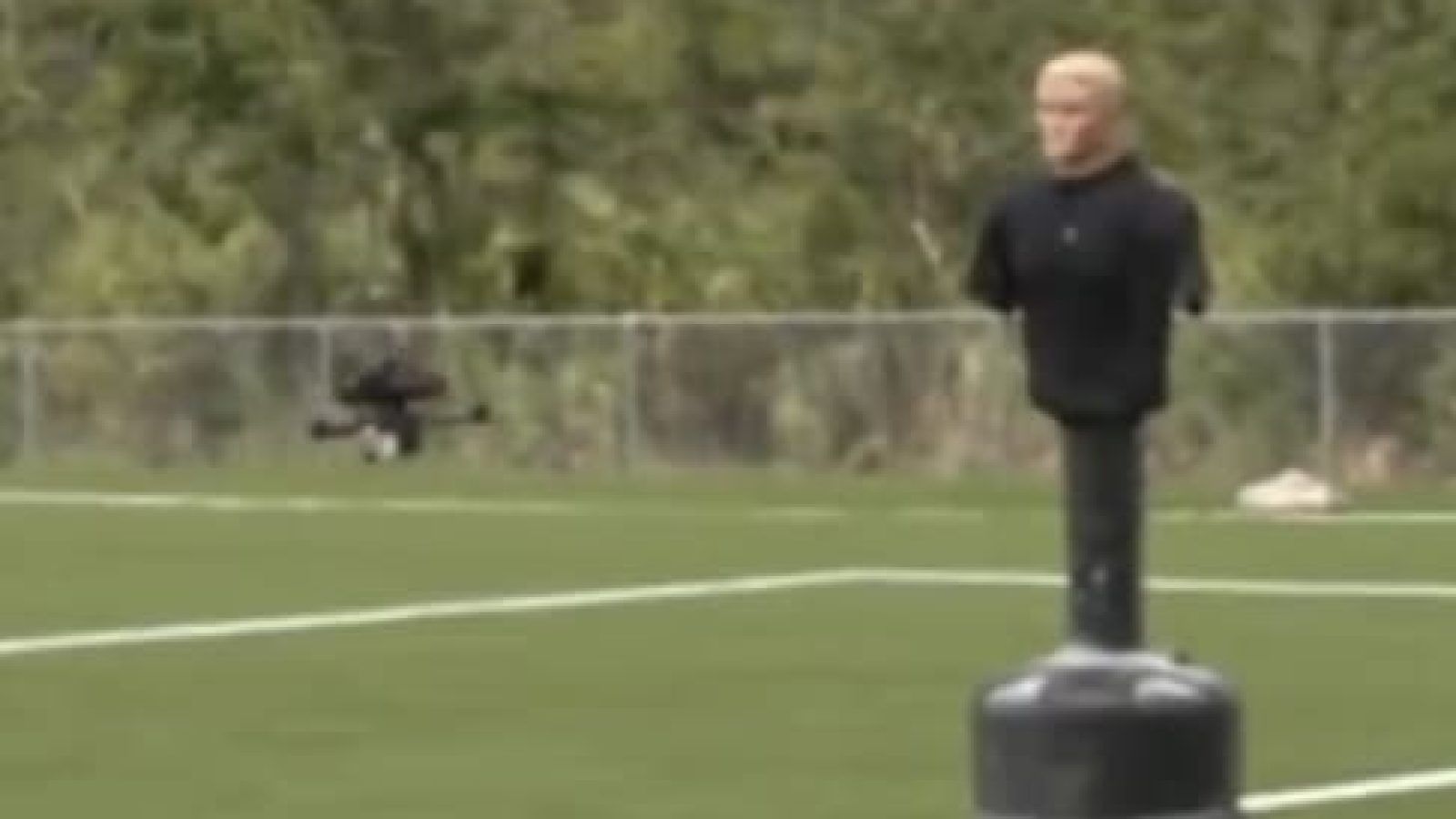
A Texas-based company wants to deploy attack drones at select U.S. schools to stop school shooters in emergencies.
Campus Guardian Angel, a company founded by a retired Navy SEAL and defense tech entrepreneur, aims to help law enforcement respond more quickly.
“In a school shooting most of the death happens in the first 120 seconds so it’s really about how quickly can you get there to engage the shooter before they’ve had the chance to kill a whole bunch of children,” founder and CEO Justin Marston said, according to CBS News.
“If somebody comes into the school with a gun, our pilots from our central ops center can immediately start flying them and our goal is to respond in 5 seconds, be on them in 15 seconds and then take out that shooter in 60 seconds,” Marston added.
The company demonstrated its technology at AcadeMir Preparatory High School in South Miami-Dade, showing how the drones can be deployed within seconds after a silent alarm is triggered.
NBC News provided coverage:
ICYMI – Attack drones will be deployed at select U.S. schools to stop school shooters in emergencies, by Campus Guardian Angel, a company founded by U.S. military and defense contractors. pic.twitter.com/AX5qxUgePk
— Disclose.tv (@disclosetv) July 28, 2025
CBS News has more:
The drones can fire powder pellets and potentially knock down a suspect, and the company demonstrated how difficult the devices are to shoot down.
Marston said Gov. Ron DeSantis approved $557,000 in the 2025–2026 state budget to fund pilot programs in three Florida school districts. He said the Florida Department of Education will decide which districts are selected, but Miami-Dade County Public Schools has shown interest.
It costs about $1,000 per month for a school of 500 students, or roughly $4 per student, according to Marston.
“School safety used to be a fire drill, fire alarm, tornado drill once a year – it’s now active shooter drills, hostage drills, things of that nature, it’s turned into traumatizing events for students and parents,” said AcadeMir Preparatory principal John Lux.
“We send our kids to school to be safe, I think this is another step in the right direction to ensure the safety of our kids,” Lux said.
Marston said installations are underway in four school districts and one university in Texas.
ADVERTISEMENT
Additional footage below:
A Texas-based startup showed off how drones can be used to stop school shooters. Here’s a look at the drones and what they can do.
MORE: https://t.co/mep1WZzzxa pic.twitter.com/bOT9pWpnPr
— WFAA (@wfaa) July 17, 2025
“In Texas, we’re building four rooms and four teams so we can handle four things simultaneously,” retired Navy SEAL Bill King said, according to Government Technology.
“I can’t find anywhere in the data that shows me Texas has ever gotten close to that, so we’re pretty confident we can protect every school in Texas with that configuration,” he added.
Government Technology provided further details:
Marston said the company recruits from a pool of former military and SWAT team veterans and that each remote response team has 11 members, four of whom are drone pilots. He added that some of the best drone-racing pilots in the U.S. have come to work for Campus Guardian Angel.
“They all have roles just the same as in a SOF [special operations forces] tactical operation center,” Marston said. “We have somebody whose job is to track the threat; we have a commander who is doing command and control, who’s saying where the threat is and helping vector the pilots to it; we have somebody watching all of their cameras and picking the best camera angles to share with law enforcement and ourselves; and then we have liaisons to teachers, students and parents.”
The goal, he said, is to respond within five seconds of an active shooter alarm, be on the shooter in 15 seconds and degrade or incapacitate the shooter in 60 seconds. Marston said they were able to prove that this is possible during their first school demonstration last spring, where three special forces shooters acted as assailants.
ADVERTISEMENT“We kind of proved to ourselves in May last year that this is going to work,” he said. “It was really clear that waves of these little low-cost drones could overwhelm even elite special forces guys.”
The company has demonstrated the service in several Texas school districts since then, Marston said, and is now branching out to schools and universities in other states as well. They have also been meeting with state and federal lawmakers to discuss school security bills that could help fund the technology in lieu of, or in addition to, armed campus officers.

Join the conversation!
Please share your thoughts about this article below. We value your opinions, and would love to see you add to the discussion!