

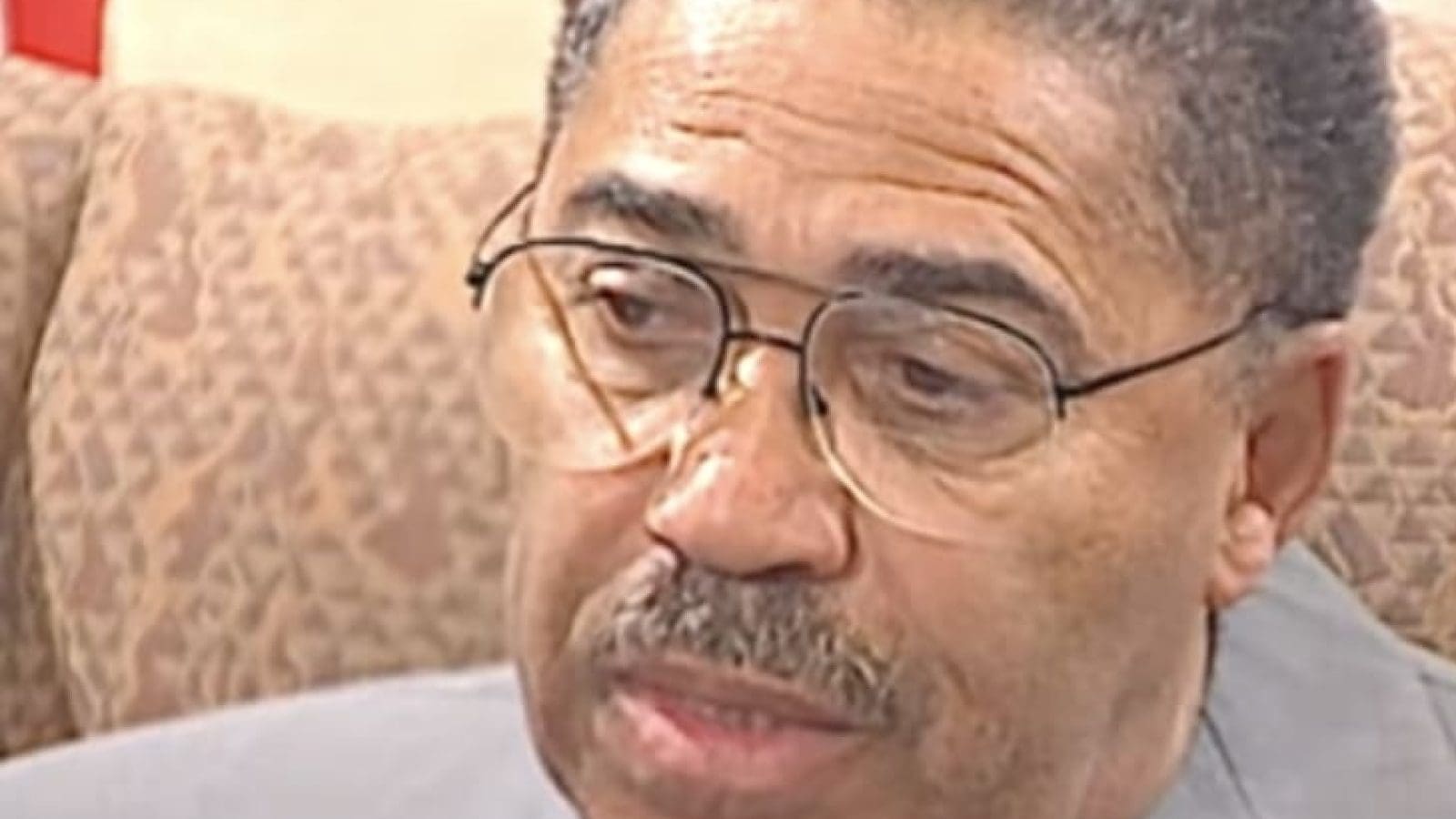
Bill Clay Sr., a founding member of the Congressional Black Caucus and Missouri’s first Black member of Congress, has passed away.
He was 94.
Tributes poured in for the congressman who served 32 years in the House of Representatives.
“William Lacy Clay Sr. was a giant—not just for St. Louis, not just for Missouri, but for the entirety of our country. I counted Mr. Clay as a grand mentor, as a trailblazer, and as a dear friend. But more than that, I carry his example with me every time I walk onto the House Floor. My heart is with his family, with Lacy, and with every person whose life was better because Bill Clay chose to serve,” Rep. Wesley Bell (D-MO) said.
William Lacy Clay Sr. was a giant—not just for St. Louis, not just for Missouri, but for the entirety of our country. I counted Mr. Clay as a grand mentor, as a trailblazer, and as a dear friend. But more than that, I carry his example with me every time I walk onto the House… pic.twitter.com/6SwAFSr44I
— Congressman Wesley Bell (@RepWesleyBellMO) July 17, 2025
“Former Congressman Bill Clay Sr. was a founding member of @TheBlackCaucus and a staunch leader for justice. His legacy will forever live on in the CBC, in Congress, and across our nation. My prayers are with his family and loved ones. May he rest in peace,” Rep. Troy Carter (D-LA) said.
Former Congressman Bill Clay Sr. was a founding member of @TheBlackCaucus and a staunch leader for justice. His legacy will forever live on in the CBC, in Congress, and across our nation. My prayers are with his family and loved ones. May he rest in peace. pic.twitter.com/MaBDXHr1nc
— Congressman Troy A. Carter (@RepTroyCarter) July 17, 2025
More from POLITICO:
Clay became Missouri’s first Black congressman when St. Louis voters elected him in 1968. He entered the House alongside two other Black lawmakers, former Reps. Louis Stokes (D-Ohio) and Shirley Chisholm (D-N.Y.) The trio helped launch the Congressional Black Caucus several years later in 1971.
Clay spent his entire 32-year career in the House serving on the Education and Labor Committee, where he championed efforts to reform the Hatch Act and promoted the Family and Medical Leave Act, signed into law by President Bill Clinton in 1993.
When Clay left public office, he was succeeded by his son, William Lacy Clay Jr., who served in Congress until 2021.
“His work laid the foundation for future generations of Black leadership in public service,” Clarke wrote. “May he rest in power and everlasting peace.”
“It is with deep respect and profound sadness that we mourn the passing of former Congressman Bill Clay Sr. — a founding member of the Congressional Black Caucus. May he rest in peace,” The Black Caucus stated.
It is with deep respect and profound sadness that we mourn the passing of former Congressman Bill Clay Sr. — a founding member of the Congressional Black Caucus.
May he rest in peace. pic.twitter.com/s2rDciJnwn
— The Black Caucus (@TheBlackCaucus) July 17, 2025
St. Louis Public Radio described further details of Clay’s life:
During his raucous 32-year tenure representing the 1st District, from 1969 to 2001, the Democrat exerted his clout widely in St. Louis, influencing major redevelopment projects and hiring for city jobs. His endorsements — or lack of — could make or break the candidacies of other Democrats.
Clay was instrumental in fostering a political environment where African Americans could wield real, tangible political power throughout St. Louis. His son, former Congressman Lacy Clay, said his father able to hold that role because he commanded respect among Black St. Louisans.
“The Black community, almost overwhelmingly, looked at him as a fighter for them,” Lacy Clay said Thursday.
He launched his elective career at age 28, winning the 26th Ward seat on the St. Louis Board of Aldermen in 1959. Clay’s House biography says he “embraced his radical reputation,” built over his years as an alderman, union leader and civil rights leader.
Clay was at the center of the sit-ins in the 1950s and ’60s that desegregated St. Louis fixtures such as White Castle and Howard Johnson’s, Fairground Park’s swimming pool and the Fox Theatre. He was a pivotal figure in the historic Jefferson Bank demonstrations that gave Black people entrée into white-collar jobs in the service industry.
Congenial but blunt, fierce and gregarious, Clay refused to accept the practiced inequality in his hometown.
“St. Louis was no different from any of the cities in the South,” Clay said in a 1998 profile. “We had rigid segregation — not by law, but by custom.”
ADVERTISEMENTHe spent his retirement years in Silver Spring, Maryland.

Join the conversation!
Please share your thoughts about this article below. We value your opinions, and would love to see you add to the discussion!