

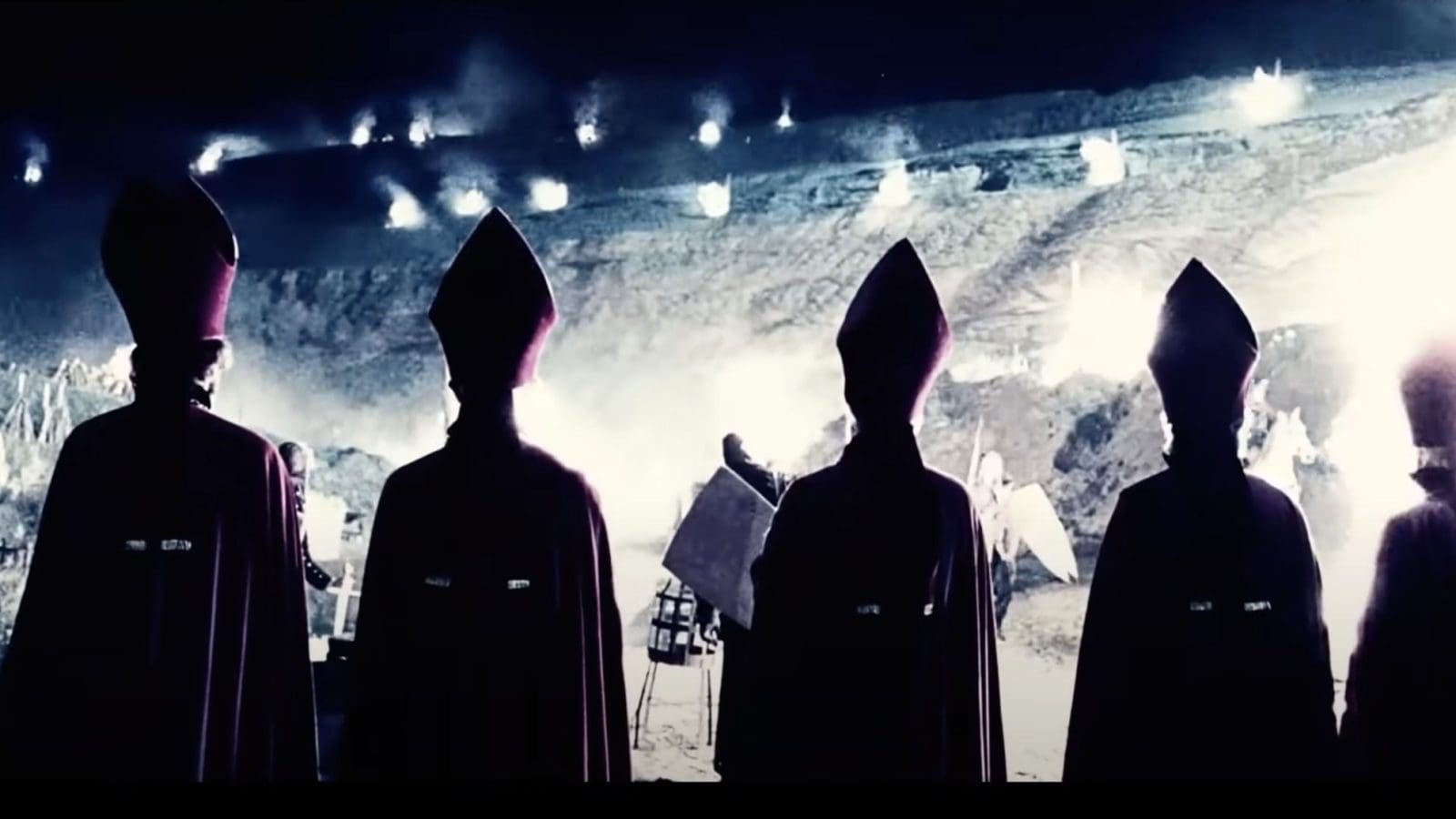
Yes, I know The Da Vinci Code by Dan Brown came out nearly 22 years ago….
So why am I writing about it now?
Because my hope is that this article can live on and become a living resource for anyone who finds the book and wants the TRUTH behind all of the claims made in the book, and the truth about “Gnosticism”.
Because much of what Dan Brown claims in the book is completely false.
In fact, it took renown semitic language scholar Dr. Michael S. Heiser over SIX HOURS to break down all of the egregious fallacies in the book!
Now that would be fine if he were merely writing fiction, but the book doesn’t claim to do that. The book claims to be rooted in scholarship and that has led many people to be confused and led astray.
So for anyone who stumbles into the book or the movie in the future, I hope this article and video finds you and helps you as you seek the truth.
Here’s a quick summary of what you will see in the video below:
This is a video originally posted by Guy Malone of http://www.alienresistance.org
This video is all 8 parts of his lecture from back in 2006.
Part 1: Introductions
Although the hype surrounding the DaVinci Code has left the mainstream
media, the ideas persist. Here, speaking in 2006 at the height of the
DaVinci controversy, ancient languages scholar and Biblical Hebrew
expert Michael Heiser gives us a solid and plain spoken introduction to
Gnosticism.Part 2: Reliability of New Testament Scriptures (esp vs the Nag Hammadi)
Dr. Heiser compares the oldest scriptural texts with the gnostic texts and explains why the New Testament texts are reliable while the gnostic texts aren’t.
Special attention is paid to the precise dating of New Testament texts, and serves as a primer for all serious students and teachers of the Bible.Part 3: Were Jesus and Mary Madelene married?
Dr. Heiser compares the Gnostic Jesus with the Jesus of the Bible. Was Jesus, as a rabbi, required to marry? Was Mary his companion? His wife? Were these and other secrets buried along with Jesus?
These and other questions are examined. Relevant texts, including the gospel accounts and the gnostic texts, are examined. Mr. Heiser shows what is in the text and what isn’t. You might just be surprised.Part 4: Gnosticism and Women
Heiser offers an honest examination of the supposed “pro-woman” message often ascribed to the gnostics. Is gnosticism really “enlightened” in terms of womens’ roles.
Looking at the actual texts the gnostics themselves wrote, their customs, rituals and spirituality, Heiser makes sense of the nonsense surrounding this ancient and mysterious religion’s place for women.ADVERTISEMENTPart 5: Neither Lord nor Christ?
The Belief in Jesus as God before The Council of Nicea and the Exalted Christ of Gnosticism. This is a refutation of two ideas put forth in The DaVinci Code: That Constantine invented the idea that Jesus was God at The Council of Nicea, and that the Gnostic texts portray Jesus as only a mortal man (hint: they do not).Part 6: What Really happened at Nicea?
An examination of Constantine’s spiritual commitments and the documentary evidence left to history concerning the proceedings at the Council of Nicea.Part 7: The Conspiratorial Logic of The DaVinci Code and Jesus Bloodline Theorists
Part 8: Jumping the Shark from the Newsroom to the Ivory Tower: Assessing the Gospel of Judas Frenzy
I’ve actually never read the book or watched the movie, but I found this teaching from Dr. Heiser absolutely captivating!
Please enjoy:
FULL TRANSCRIPT:
Guy: Hi, welcome to the Da Vinci Code Conference. I’m assuming if you’re here or if you’re watching the DVD, you’ve already examined the website. You have an idea who Dr. Michael Heiser is, his credentials. Just in case you don’t, he’s got two master’s degrees in ancient texts and in ancient history.This is what he does, and we’re simply today examining the views of Dan Brown’s The Da Vinci Code. There’s 45 million books in print. Many people are believing it to be a very true book, and the only thing worth noting is I want to let you know that Mike is not taking—he’s not approaching the subject from the view of an offended Christian who’s upset by Dan Brown’s work.I know there’s a lot of them out there, but what you’re going to see today, Mike is going to be presenting to you because his specialty is ancient text and ancient history. He’s just going to simply show you: Is this book that many people are believing, even though it describes itself as fiction, is it historically accurate?Is what Dan Brown tells you about the Gnostic Gospels and the ancient history true or verifiable or not? The way I know Mike, for example, there’s a quote in The Da Vinci Code book that says the Gospel of Philip says XYZ, and then you’re left to believe what Dan Brown says about it. What I know of Mike, he’s going to show you the Gospel of Philip, and he’s going to compare what it actually says to what Dan Brown says it is.But we’re in for a great day. I know more than you do, so by the time this is over, you won’t be able to contain your applause. But right now, I’ll just ask you to give some applause to welcome up Dr. Michael Heiser than—um, Guy is correct.Dr. Michael Heiser: I didn’t read The Da Vinci Code and just feel like I needed to go jump over a cliff or get overly angry about it. What disturbs me—and if you’ve never heard me on the radio or ever seen a DVD like this, you’ll pick up real quickly—what disturbs me the most is when people manipulate sources and when they only give you a partial picture of an ancient text, some issue in ancient history, to really drive a position that they have.My goal over the course of the whole day—this is the first session of what’s going to be the equivalent of eight hours—my goal is to get you to look at the data, the primary material, and as Guy said, compare that with the claims of the book. Sometimes this isn’t going to be terribly exciting because what I will do—and that’s not, you know, now is not the time to click off the DVD—I’m going to explain what I just said.What I tend to do is I tend to try to show you the source, and when I’m quoting from a secondary source like a dictionary or some accepted scholarly work that is just accepted and used and praised by everyone in a given field, I’ll give you the page—I’ll give you the page number. I’ll show you the text. I want you to have the information so that you don’t have to just assume that I’m quoting it right or I’m, you know, just such an honest guy you can just always trust me.I think I am an honest guy, and you can trust me, but I still like to put it in front of your eyes so that you can see that I’m not making it up. The last thing I want to say by way of introduction is I’m not so worried about Dan Brown. Dan Brown is an author. He writes fiction.He probably has gone a little too far in, uh, sort of implying and in some cases saying that he believes this or that about his sources. The people that I, uh, if I’m going to target anybody today, it’s going to be the people he uses as sources because I do think that they’re being dishonest, and I do think they’re being manipulative.I will name them by name. They know where to find me if they don’t like it, and they’re free to prove otherwise because I think it’s going to be pretty hard because it’s going to be right in front of your face. The first session that I think we need to go through is introducing gnosticism for you.This is a term that you often hear related to The Da Vinci Code and its contents. It’s one of those terms that people throw around, and you may or may not know what it is, but if you know the basics of gnosticism, the Gnostic worldview, it will help you frame certain positions that are put forth in The Da Vinci Code.And so this is where we’re going to start today. This is the worldview behind The Da Vinci Code. Now the basics are this: In gnosticism, they’ll use the term “God”—the true God. The true God—you need to know right away—in gnosticism is not a personal being.When you—if most—I don’t know if any of us in here in the room are gnostics, but chances are you’re not—when you think of God, you think of a person. You think of an actual being, an entity that has personality, emotions, that kind of thing, because you’re used to reading the Old or New Testament or some other book, you know, from a Western religion, and this is how God is spoken of.In gnosticism, though, you have this sort of force called the Light, the Numa, which is a Greek word which means spirit. This thing is pre-existent and uncaused, and so that would be kind of similar to what we’re used to, but this force actually has parts. But it’s not a—it’s not a person. It’s just like a—for—think of Star Wars, I guess, for lack of a better illustration.Gnostics will refer to the true God in masculine terms—the Father or the Spirit or the Numa. Gnostics will also refer to the true God, the ultimate God-thing, in feminine terms as Mother, also the First Thought. The Coptic word is “Anoia”—the First Thought of the Father.So they sort of begin with this Father-God concept, but he’s not a person. And then as this—this thing—sort of is able to think within itself or do something—this cosmic intelligence, maybe that would be a better way to describe it—the first thing the cosmic intelligence thinks of is called the Anoia, the First Thought.And that is viewed in terms of feminine terms. Now look at this—this is a circle. I picked a circle for a deliberate reason. In gnosticism, the ultimate God-force is whole. It is complete.It is self-contained. It is self-existent and pre-existent. It has balance—masculine, feminine. It is androgynous. It’s not just one or the other—it’s not just masculine or feminine—it’s both.There’s an emphasis in gnosticism on something called androgyny, which is this union—this sexless sort of thing—or this union of genders. I know this is going to sound kind of weird, but as we go on, you’ll start to see how this works itself out, not only in the system but in Brown’s novel.The First Thought, according to gnostics, was—and they’ll use the word “impregnated.” Now we’re not talking about anything physical here, but they’re using procreative language to illustrate for you what they believe. The First Thought, the female, is impregnated by the Father and brings forth other eons—or aeons—these are gods.So right away, we have—you know, us, as you know, from our background, Judeo-Christian background—this sounds like polytheism, and in some ways it is. But the point I want to stress now is not essentially the nature of the system, but you have the true God—the true God sort of creates other gods.Okay, so you have this thing up above. The thing up above sort of creates within itself lesser things—lesser eons, lesser gods. The circle is androgynous, but the things that it creates are not. They are spoken of in gender.In gnosticism, the universe is three-tiered. The diagram here has at the top—this is the true God—where the true God lives is one realm. The bottom realm is the created universe—the world you and I know—and then there’s this middle existence, and that’s where the other gods reside.So from the true God, the whole entity, there are other divine beings created called aeons. You’ll notice by the features here—some are masculine, some are feminine. Now we’re not going to get too far into gnosticism, but what happens is they pair up, and they procreate.Again, I’m using, you know, sort of literal language, but they produce other aeons. And so you have a whole system of gods—plural—underneath this divine thing, this cosmic mind or cosmic force. The middle gods are sort of expressions of the greater whole.These are called aeons. The word next to it—“pleroma”—means fullness. When all the aeons are together and in harmony with the True Light, that is called the fullness. It’s the way things ought to be.The fullness will come back to that term. They are the true God’s essence, and together the parts equal the whole. Now the true God—again, or the Light—produces these aeons. One of them is the Logos.Now for those of us who are Christians in the room, Logos is a word that gets applied to Jesus in John chapter 1. But now mentally stop yourself—the Logos in gnosticism here is not Jesus. This is not a one-to-one equation.Jesus is something else to a gnostic, just so that you know that one of these gods is referred to as the Logos. And the Logos—if you look at the hierarchy, the row here, the way I have this arranged—the Logos is considered the very highest aeon.He is the highest thing that the Light produced, okay? He’s the highest. If you notice there, you will read in Gnostic writings—if you go down to the third bullet—the Logos is called the form of the formless, the body of the bodyless, the face of the invisible, the word of the unutterable, the mind of the inconceivable.The Logos is the primary expression of the Light—this cosmic spirit-thing that gnostics refer to as the true God, the ultimate God. The Logos possesses knowledge of all the other aeons. He is the entire image and likeness.Now if you look here, we have father-language within the true God. We have mother-language. So we have Father, Mother, we have the Logos, and that forms—in gnosticism, you notice the triangle—this is sort of their Trinity.Now that’s an oversimplification, but they will use triune language. They call it the Initial Triad—the initial three: Father, Mother, and Son. And they’ll actually call these bodiless beings the First Man, the First Woman, and the First Son.The reason I’m pointing this out is when you read Gnostic literature—and for most of us, it’s going to be in the newspapers or The Da Vinci Code or some other work—it’s going to start saying things like, “Well, I mean, this is really kind of the same thing as Christianity. There’s the Son, there’s the Father, you know, there’s this thing—the divine feminine, you know, whatever that is.”And they’re going to try to latch on to similar terminology to make you think that we’re all really talking about the same thing. Well, we’re really not, okay? The lowest aeon—you’ll notice the chain here progresses from high to low.It’s a progressive dissipation of the Numa—the ultimate Light, the ultimate Spirit—from the primary aeon to the last one. There’s a finite number here. The last one right here is feminine, and that is called Sophia in gnosticism.Now this is a term that comes up in The Da Vinci Code all the time. The Sophia is an extraordinarily important figure—an extraordinarily important aeon—to the Gnostic system, the way they understand reality. Sophia is the lowest aeon.You’ll notice that I have her chin right on the red line. That is because Sophia was sufficiently far down the line enough that she was close to the material world, and she’s going to have some kind of interaction with the material world. She will, in fact, transgress the boundary.She sins and rebels in Gnostic thinking. What she does—the Sophia—and this is a quotation from one of the Nag Hammadi texts—the Sophia wanted to bring forth a likeness out of herself without the consent of the Spirit. She wants to reproduce like the ultimate God did.She doesn’t want to involve her consort. Remember, I told you the aeons were paired—masculine, feminine—and they produce other godlike beings in the Gnostic system. She doesn’t want anything to do with her male counterpart. A thing came out of her which was imperfect and different from her appearance because she created it without her consort.So the Gnostic story—the Gnostic mythology—is that Sophia says, “You know what? I want to be like the ultimate Light. I want to be like the Most High, okay? And I’m going to create of myself something. I’m going to imitate his behavior.”Gnostics view that as sort of a good thing, but, you know, she kind of preempted the way it’s supposed to be done, but it’s still somewhat okay. Why did she do it? She is—according to Gnostic text—“unconquerably pros,” which means lewd: “I am the Holy One. I am the wife and the virgin—holy wife, virgin.”Think Da Vinci Code. This act of—you know, there’s this thread running through the novel about how this sexual act, the sexual ceremony, somehow is an act of worship. What they’re trying to do—what Brown is trying to describe—and not all gnostics saw it this way, but many did—was that this ritual act of intercourse somehow commemorates not only Sophia—Sophia’s reunion—we’re going to talk about when Sophia gets back to the pleroma when she repents—but also the initial androgynous male-female togetherness of the Ultimate Reality.That’s why this—the act of intercourse—has a sacramental value to some gnostics. What does she make of herself? She makes a being called the Demiurge, which just means “the maker.” The Demiurge is also known as “Yaldabaoth”—“Child, come forth” or “Child of Chaos.”You will see both translations. He is also called “Sakas”—“The Fool.” He is also called “Sael”—“The Blind One.” This being is none other than Yahweh, the God of the Old Testament, in gnosticism.The God of the Old Testament, to a gnostic, is a created being. He is called a fool—why? Because he runs around saying, “I’m the only God. There’s none like me.” Duh, okay? Gnostics consider the God of the Old Testament a fool because he doesn’t want people to know—and he’s going to create humans—he doesn’t want humans to know that actually there’s a whole bunch of aeons that are bigger than he is, more powerful, and there’s even, further removed from him, this ultimate God-thing.The God of the Old Testament, to a gnostic, is a fool—is blind—because he doesn’t seem to realize that there are other gods. He goes around denying it. He’s either blind, or he’s an idiot, and he’s just bad because he doesn’t want you—humanity—to know the truth.Now here’s our line separating the middle realm from the realm we know. The Demiurge is going to create the world—just like, you know, in the traditional Old Testament. The Demiurge will also create archons, which is a word that means “rulers.”The archons are mentioned in the New Testament. These are the principalities and the powers of the air, the rulers in high places who are wicked. But in gnosticism, the archons—yes, they’re bad because the fool, because the Demiurge, made them—but they’re not bad in the sense of they’re opposing God.They’re actually, in gnosticism, the archons are God’s henchmen. They do his bidding to suppress humanity—to keep humanity from learning something—and we’ll talk about what that something is. So the Demiurge makes helpers—what we would think of as fallen angels or Watchers or fallen sons of God—archons.It’s really the same old thing. Together, the archons—now look, the key there is “together the archons and the Demiurge make Adam.” “Let us create humankind in our image,” and we’d say the plural there indicates that the Demiurge and the archons get together and fashion the man.It is a co-creation. Those of you who are familiar with other stuff I do know that I don’t buy that position because the grammar of Genesis 1:26 does not support it. But frankly, gnostics don’t care, so we’ll skip that point. If you want to find more about that, you go up to my website.Sophia looks down at this—you see the yellow line there—Sophia looks down at what’s happening, and she goes, “This was probably a mistake because this guy’s kind of nasty. The Demiurge is kind of nasty, and now the Demiurge is just kind of doing what I did, and he’s starting to make all this stuff.”“And I guess it was okay when he made this world thing—like, who cares—and the archons, well, you know, we’re more powerful than they are anyway, so I’m not too concerned.” But Sophia takes pity on Adam because Adam is created to be a slave of the Demiurge and of the archons.And something clicks inside Sophia—according to the Gnostic myth—that says, “You know, I need to do something. This is just a little too far. I can’t abide this.” And so the Sophia—gnosticism disagrees here—there are two versions of this.One has the Sophia voluntarily putting some of her divine essence into Adam. The other version has the Demiurge being tricked into doing it himself. But either way, a spark of the divine—you’ve all heard that phrase before—a spark of the divine gets deposited into Adam.So that now Adam is not just a wormlike, you know, creature that just can’t think or has no mind and no spirit, just to serve the Demiurge—now Adam is flesh and spirit. He is material, and he is divine, okay? He’s a mix.Adam then is used to bring forth Eve. In a later session, we’re—that’s really devoted to this Da Vinci Code myth about how the gnostics just treated women so wonderfully, and the Christians are just the misogynistic Neanderthals of the ancient world. We’re going to see that that is not the case.In gnosticism, I’ll just telegraph one point here—in gnosticism, Adam has the divine spark. Eve doesn’t. Eve is less than Adam. She is less than divine to a gnostic.That’s not a very positive, affirming thing, you know, for women, but that’s gnosticism really as you’ll see it in Gnostic texts—not in Dan Brown’s novel. Advanced concepts—I’m not going to park too much on this—Sophia is redeemed.She’s the youngest and last aeon. She was furthest from the Light. She makes a mistake. She’s again driven by this procreative urge—her desire again was viewed positively in that she wanted to be like the Father.There are really two parts to her, you know—she’s conflicted in the Gnostic myth, you know. She wants to be like the ultimate God, and—but yet she has this own self-willed rebellion thing going on. Eventually, the rest of the pleroma says, “You know, we can’t let this go. We need to get Sophia back here so that we are full—we’re complete.”So we have the old pleroma back—the fullness. And so what they do is they decide to attract her. Several high aeons—the Holy Spirit—these are all separate beings in gnosticism—the Holy Spirit, the Kristos, and Jesus—that if that surprises you, if you’re a Da Vinci Code reader, good.Because The Da Vinci Code has characters saying that in the—in—in the true Gnostic scriptures, Jesus was just an ordinary man. If you read the Gnostic texts, you will not get that message. Jesus is an aeon. He is a divine being in gnosticism.He’s not just an ordinary Joe. These three devise a plan to attract Sophia back to the True Light. The Kristos appears to Sophia in the shape of a trans-cosmic cross, and now she sees that out in the universe, and she knows that this is a sign from the pleroma that “you can come back—just follow the light.”Isn’t that a nice phrase we’ve all heard in our—in our—“Follow the light.” It’s Gnostic. You keep your eye on the cross, you follow the light, and you will make it back to the pleroma. Her celestial bridegroom, Jesus, awaits her.Again, think of the Dan Brown Jesus-Mary Magdalene—they get together, they have, you know, intercourse, either ritually or just, you know, to enjoy it—probably just ritually if Dan Brown’s going to be consistent with his gnosticism, but he often isn’t. This whole idea of Jesus needing a consort—Jesus needing a wife to further the faith—is this idea.Jesus and Mary Magdalene are mimicking the journey of Sophia back to the cosmic Jesus so that they can be one. It’s an expression of godliness. It’s an expression of fullness in the Gnostic system. That is their introduction to gnosticism.I don’t know what the time is here—32—we have time—10, 15 minutes—for questions. But let me just summarize real quickly. The whole point with this is when you read about sacred marriage in The Da Vinci Code, the reason that that is an issue—and the reason that Dan Brown and his sources want to convince you that this was part of Christianity, that Christianity has suppressed the female, that Christianity has suppressed the goddess—is not because this stuff is really taught in the Bible, okay?Some will try to make it—force it—into the New Testament in some odd passages, and we’ll talk about those a little later. What they’re really saying is, “Look, this is the way this particular sect of Christianity saw things, and this is the truth—this is the real Christianity—and it was suppressed because these nasty church fathers that you and I think of as the orthodox, you know, of Christianity, they were just prudish.”“They didn’t like to talk about women. They didn’t like to talk about sexual things. They tried to do whatever they could to suppress women and their roles in the church and their leadership and their character and everything like this.” The reason—so Dan Brown, you know, tells the story—is that they were reacting to what was really the truth—gnosticism over here.And if you—if you’re a discerning reader—Brown has tapped into a cultural sensitivity in here—in our time—how women are viewed and treated, and he’s bringing you along on that thread into the Gnostic camp. But he’s not telling you all this other stuff. He’s not telling you about, again, sexual sacraments.He’s not telling you that the God of your Old Testament is a liar and a fool and a blind person and, frankly, bad. He’s not telling you all sorts of that stuff. Now he may not know it—that’s possible—but don’t be duped into thinking that, you know, two sides of the same coin.There are fundamental differences between the Gnostic sect and what historically was orthodox Christianity. The primary one is—I’ll give you the primary two, and then I’ll take questions—Orthodoxy has Jesus as an uncreated being, united in essence with God the Father, and they are both good.Gnosticism has Jesus as a created being who is above the God of the Old Testament, who is bad. Those are not two sides of the same coin—they are mutually exclusive, right? So don’t be led astray into thinking that we’re just talking about the same thing.We have any questions? If not, we can take a little break, and we’ll move to the next one. Go ahead—questions. “Consider Yahweh—are part the other aeons?” Yahweh is under the aeons. He is lesser in power than the aeons.He—he—he straddles—and really, when he—when he starts to create material things like the world, he moves away from the middle realm down to the lower realm in the Gnostic universe. He is derivative from one of them—and even the lowest of them—so he is not on a par.Another question in the back: “So there were gnostics at the time of Jesus, and where did they come from? Where did the Gnostic thinking come from, and where did they fit into that time in history? We, as Christians—like, what were they doing, right?”The question is, “Where—you know, the gnostics were around, they developed—where did they come from?” Gnosticism, as a full-blown system—you don’t have what we call gnosticism until the second or third century AD as a system. You have elements of its thought—of its worldview—prior, and the strands come from different places.One of the more obvious is that it was a struggle—and frankly, if we’re honest, it still is to some extent—it was a struggle to understand how you can have a God in three persons, but they’re all the same, but yet they’re not. And the Council of Nicaea was an attempt—not to come up with a new position—the Council of Nicaea is arguing for an ancient way of understanding that.And in—I think the third or fourth session here—we’re going to talk about Jesus as God well before Nicaea. And frankly, the idea that there was a godhead in Judaism—that idea is not a Christian invention—it’s Jewish.But backtracking—it’s hard to understand. I’ll take you through some Old Testament passages today, and you’ll look at them, and you’ll go, “Well, there’s two there—how can that be? How can there be two gods? I thought Judaism was this monotheist—you know, it is, and it isn’t.”It depends how you define your terms, and it depends what the texts are saying. And they were struggling with this—like some of you, when I show you some of these things, you’re going to go, “Well, how did that work? Why didn’t they get that—or if they got it, why did they go over here with it?”—that kind of thing.Gnostics are trying to—they’re struggling, you know, and I feel somewhat sympathetic to gnostics on that level—and to Arius, who was the focal point of the Council of Nicaea—his heresy—because he’s just trying to figure this out.Another strand is Jewish mysticism—the idea of, “Well, what is it really like at home in the godhead? I mean, what is it really like? Who lives there with God?” And, you know, we ask these questions now: “Well, before there was a creation, what was there? What was God doing?”“If there was no time, can God have thoughts that are in order? Can there be chronology before time?” I mean, they’re thinking these thoughts, and when the ancients are thinking these thoughts, they’re essentially putting them down—either in their heads or in writing.They’re trying to systematize their thinking—to understand what goes on with God and what’s His relationship to these other beings that we see in the scripture. We see plural Elohim in the Old Testament. We see the Word. We see the Name.We see the Angel of the Lord. We see the one who rides in the clouds who isn’t Yahweh in Daniel 7. They’re reading their Bibles, and they’re trying to grapple with how to correctly systematize this. Now what happens is you take those questions—which are all legitimate—and gnostics come from Egypt.And what they did was they started to try to merge what they’re seeing in the Old Testament and in Jewish writings—this is all before the New Testament’s written—and it carries on when the New Testament starts getting written—and they start looking for counterparts in the local religion of Egypt.And once that happens, you see this convergence of threads, and out of that comes gnosticism. Another strand is, “What about evil? Why is there evil?” You know, we—Orthodoxy has—I’m not going to say there’s just one explanation for this—but Orthodoxy wants to see—and, you know, I agree, but I’m not going to go any further than that because there are ways to understand this, and there’s difference of opinion—but the orthodox position is that, “Look, if there’s anybody in control of evil other than God, then we’ve got problems.”“Then we’re dualists—then there’s a competitor to God out there who’s just as powerful as He is—and that isn’t reflected in the text of the Jewish Bible—the God of Israel, you know, who is our God—the God of the New Testament—because the church derives from, you know, Judaism in that sense.”And so that just wasn’t an option. But then that means that God is somehow in control—ultimately—of evil. Now, does God cause evil? Does He passively allow evil to happen? God is bigger than evil, so He can take evil and manipulate it and work it and predestine it to good, okay?That is taught in the New Testament—these ideas. But to the gnostic, here’s the way the gnostic answered the question: The reason that there’s evil is because that’s the way the world was created. There’s no fall—it was just created evil.And if you have an earth that’s created evil, somebody evil had to do it. And since that person in the Jewish Bible is Yahweh, Yahweh must be bad. That must be why there’s evil—because the fullness—the true God—the Light—would never create anything evil.Therefore, there’s a separation between the true God and this god over here who creates the world. Gnostics were troubled by the problem of evil, and that’s an honest question—that’s an honest, you know, issue. So I’m not going to portray gnosticism as some sinister movement or force that, you know, four guys got in a room one day because they didn’t have anything better to do and say, “Hey, let’s create a counter-system to Christianity.”“We all just hate these Christians—let’s come up with something that mocks it and turns it on its head or whatever.” No—they were asking the same questions that everybody else was asking, and they were doing some bad exegesis in the process, but the questions were good ones.And they were reacting—not necessarily to, you know, the orthodox point of view—but what Dan Brown tries to give you the impression of—and his sources especially—you know, Brown’s just a fiction writer—they want you to think that at one time gnosticism was the dominant view, and that was never true.There is not a scrap of evidence for that. Gnosticism was always a peripheral thing that was reacting against the majority opinion. And the majority opinion was not just based on, “Well, which way is the wind blowing—you know, we have so much power here in the second-century church—you know, forget the fact that the Romans are killing us off in droves—you know, we have so much power here, we need to suppress these gnostics.”It’s just—it’s silly. But that’s the view that Brown’s sources want to convey with you. They want to give you this impression that, “Well, the reason orthodoxy won was because Irenaeus and these other church fathers were so powerful—they just, you know, they just put the screws to everybody else.”“Hey, they’re trying to survive like everybody else. Christianity is not legal—you can be killed if you have a copy of the New Testament. This is not a bunch of power-hungry slobs, you know, dictating something to this little piddly group over in Egypt.” It is just a mischaracterization of what the historical record is.But again, I want to leave you the impression—it’s not that gnostics started out as this sinister group. They’re asking good questions, but they’re basically refusing the instruction—and they’re not refuting the arguments of the majority—they’re coming up with their own arguments.And that eventually leads to the Council of Nicaea, where they have their day in court, and they lose, okay? Because they cannot refute the arguments of the majority. It’s not that they go there as the majority, and then somebody gangs up on them and sticks some theological knife in the back—that is not what happened.And we’ll talk about that today later too. Other question: “Yes—so the Council of Nicaea pretty much put an end to gnosticism then?” No—the Council of Nicaea made a declaration. There were a lot of people there who did not buy what Arius was saying, but they didn’t want him expelled because, in their eyes, he was still a Christian.You know, he accepts that Christ is the way of salvation and so forth and so on. But the opinion came to be that, you know, pragmatically speaking, “We need to do something so that the rest of the ancient world knows that Arius’s position is not, you know, correct.” So they did expel him.But even after he is expelled from his position, Arians are referred to as Christians in ancient writings. It’s not that, “You’re evil, and you’re going to hell now,” or anything like that. But the whole point was that, “We’re going to declare that this position is incorrect—Arius is not able to articulate the position that reflects the ancient text—but we’re just kind of hoping that, you know, he comes back to the fold.”Gnosticism and Arianism continued, you know, along with their own followers. Eventually, it just sort of dies out because there aren’t many of them, you know, relatively speaking. But the ideas get picked up, you know, in the Middle Ages by certain groups—early, late Middle Ages.It never completely goes away because some people like that position. They just—they preferred—they thought that that was a good answer to these questions. But it was never, you know, the majority, and they never produced anything that refuted the majority—they never did it.But they didn’t really care because they just preferred the position. “Is there an official start to the date of gnosticism?” No—not as a movement. What happens is its threads go all the way back, you know, into pre-Christian days—with, you know, your Jewish Bible in the first millennium BC, we’ll say.There are threads—there are ideas in what we call Gnostic ideas in the Dead Sea Scrolls. They didn’t have gnostics there, but gnostics liked the way this guy over here wrote that—“I like the way that scroll says that, so we’re going to use that to foster our idea over here.”You have all these strands sort of converging in the second or third century when gnosticism becomes known as a movement, and you have figures like Arius who become sort of, you know, champions for this view. Okay.The second session today is a comparison, really, of the Testament issue—the gospel issue—the manuscripts of the New Testament—not just the gospels—versus the Gnostic Gospels from Nag Hammadi. In The Da Vinci Code, one of the characters—Leigh Teabing—who is cast in the story as an expert on the Holy Grail—which we find out in The Da Vinci Code, the Holy Grail is not a chalice or cup—it is a bloodline of Jesus—but one of the characters, Professor Teabing, says this:“More than 80 gospels were considered for the New Testament, and yet only a relative few were chosen for inclusion—Matthew, Mark, Luke, and John among them. These texts,” quote, “are the earliest Christian records and the unaltered gospels.”Now before I turn the slide here—there is a reason why when The Da Vinci Code came out, every scholar—from any theological position, from the most rabid fundamentalist to the most rank atheistic liberal—said, “This is bunk.” And this is one of the biggest reasons why.These claims—as far as the nature of the gospels, earliest and unaltered—are just frankly laughable to people who do this for a living. But again, it’s like, “Well, it’s just fiction,” and everybody could have lived with that if it wasn’t for the fact—on the first page or the inside cover of The Da Vinci Code—he talks about the meticulous research that went into this and how this is just going to change everything.And then successive interviews—that’s what people—off—regardless of their theological position—because, frankly, scholars don’t like when people invade their turf and say dumb things about it, okay? Now, what are the Nag Hammadi documents?You’ll notice in red there on the map—the bottom third is Nag Hammadi—the place. The Nag Hammadi texts are a collection of 13 ancient codices—which is essentially—we’ll call it a book—something bound on one side or folded—containing over 50 Gnostic texts.They were discovered by accident in Upper Egypt in 1945. The man at the center is the credited discoverer—Muhammad Ali Samman—had gone off—kind of like the Dead Sea Scroll story—he goes off and, looking for fertilizer in the mountains close to his village, and he unearths a jar, and the rest, they say, is history.The books that were found at this location were quickly sold into the black market. The Egyptian government eventually got them—you know, fairly quickly. This is what they look like—you’ll notice that, you know, as manuscripts go, this is pretty decent condition.I mean, you can get a whole lot worse than this. Despite the figure to the left there, you can see how tattered some sections are. They were taken to the Cairo Museum, and another few years went by before scientists knew about them.In 1966, at a conference in Italy devoted to gnosticism and these new texts, James Robinson assembled a group of editors and translators to publish the codices in English. This is the cover of the book—I have it with me here if you want to look at it today.Robinson was chosen to oversee the project, and eventually a facsimile edition was published. Facsimile editions—they’re just literally pictures of each leaf in book form—they’re plates—if you’ve ever seen a book that has plates in it—that’s what you get.It’s only $750, so rush right out and get yours—it’s an expensive set. Subsequently to that, though, there was a translation in English, and the introductory material prefacing the translation—this is taken from Robinson’s book—says this: “The library of fourth-century papyrus manuscripts consists of 12 codices plus eight leaves,” so on and so forth—fourth century.These were Coptic manuscripts. Coptic is just the Egyptian—the ancient Egyptian language—put into a sort of Greek. A lot of the letters in Coptic and Greek match—there are a few different letters that were added because of the sounds in the Egyptian language that the Greeks didn’t use—but there’s a lot of overlap there in the language.But these were from the fourth century. Now the first century—I should say this before we go much further so you get this fixed in your mind—the first century is the year 0 to 99. Second century begins with the one—as in 100 on. Third century begins with two—you just back it up a digit, okay?So fourth century—we’re talking about written in the 300s sometime. This is Coptic, but everyone agrees—and rightly so—that the Coptic texts were actually themselves translations of older Greek material. One of the ways that’s known is there are lots of Greek loanwords in the texts.There are other ways to tell that too, but we’re not going to worry about that for today. These texts—according to The Da Vinci Code—are the earliest Christian records, okay? Boy, he didn’t look very far for that. Here are some sources—and again, if you get the DVDs, you can look these books up if you’re interested.And I recommend taking some interest in textual criticism—it sounds horrible, but it’s actually really interesting. Text of the Greek New Testament: Textual Criticism by David Allen Black is a nice intro for the layperson—I recommend it. Dave’s a nice guy too—he’s a friend of mine.Canon of Scripture—F.F. Bruce—is a classic, and the latest work on the canon—The Formation of the Christian Biblical Canon by McDonald—is really quite good. Again, these are well-recognized, mainstream scholars with no particular axe to grind. Let’s talk about the date, though, from those books.Those books were my sources—places you can go to check up on me as I go through this. If you look at the timeline here—you have the cross—33 AD—we’ll take that as a sort of consensus date. New Testament gospels and Acts—the Book of Acts, which is the fifth book in the New Testament order—were written sometime between 50 and 80 AD.That is not a conservative, fundamentalist number—that is a consensus view. There are very few people who would date them before—some people would put Mark in the 40s—and there are very few people who would go beyond 80 for any gospel—50 to 80.Now you have the presumed Greek originals of the Gnostic texts—and you can see with the blue there that we’re talking at least—at least—a hundred years after the New Testament books—and then, of course, the Coptic Gnostic copies. Now why 50 to 80 AD for the New Testament? What’s the evidence?In other words, are you going to come here and just have me tell you that and walk away thinking, “Oh, that’s nice”? Why do people say that? Well, there’s actually evidence for that. Three non-technical points for today are: The gospels—all of them—or at least Matthew, Mark, and Luke—prophesy the destruction of the temple.In other words, there’s a prediction—Jesus makes predictions about the temple being destroyed. That happened in 70 AD—everybody on the planet knows that, okay? However, none of the gospels mention its fulfillment. So the presumption is that they were written prior to the fulfillment of the prophecy because nobody mentions it—and that was a big deal in Judaism—a huge deal.Luke never mentions the death of Paul and Peter in either his gospel or its sequel, the Book of Acts. We know from external sources that Paul died in the late 60s—66, 67 AD. The Book of Acts ends before his death, and Luke was written prior to Acts—so there you go—do the math.Manuscript evidence—this is called the Rylands Papyrus. It is the oldest manuscript—piece manuscript in any size—of the New Testament, and it dates to roughly the 130s or the 140s—something like that. It is from John 18:31-33—this is when Jesus is in front of Pilate.I’m not going to translate the whole thing, but just so you know where it comes from—“Therefore Pilate said to them, ‘Take him—you all take him—and judge him according to your law.’ And the Jews said to him, ‘We are not authorized to put to death anyone.’”“They said that in order that the word of Jesus might be fulfilled, which spoke of the type of death that he would die,” and so on and so forth. But the red are the letters that show up in this papyrus—and so this is what papyrologists and New Testament paleographical experts do—they’ll take a scrap, and now especially with the use of computers, you can find where the matches are in a document, okay?This is the oldest one. Now if this manuscript dates to the 130s, the original—logically—let’s put our thinking caps on—logically would have been prior to the 130s, okay? Again, why doesn’t Brown or his sources go into this?They either don’t know it—which isn’t good if you’re writing—especially if you’re claiming to write nonfiction—or they don’t want you to know—which is probably worse. Do we have any other hard evidence that the New Testament gospels are older than the oldest Nag Hammadi material? What about the rest of the New Testament?Well, the answer is yeah, we do—very simply—early church fathers—early church writers—quote the New Testament—like, what else would they quote? They’re doing sermons, they’re doing commentaries, they’re writing theologies—they’re quoting the New Testament—and we know when these guys live because of Roman records, okay?We know when they lived—we know when Barnabas—we know all these figures—their dates and everything else—so when they quote something, it fixes a date for that quotation. The thing they’re quoting must have existed prior to the quotation—this is simple, coherent logic that apparently escapes Brown’s sources—or, again, they just don’t want you to know.The Epistle of Barnabas—there—the date—70 to 79—quotes Matthew and Mark. The Didache quotes Matthew extensively—and that’s between 70 and 130. Luke and John are both quoted in what’s called the Muratorian Fragment—again, 170 to 180.There are external methods of dating too—paleographical analysis, carbon-14, whatnot. Polycarp—there—these are his life dates—69 to 155—lived a long life—he was a convert of the Apostle John—you know, the John—quotes the Book of Acts in his own Epistle to the Philippians.The Shepherd of Hermas quotes Acts several times—there you have the dates. The Epistles of Paul—Romans is cited by Clement of Rome a lot—there are his dates. He’s also cited—Romans is cited—by Polycarp in the Didache.First Corinthians is cited in the Didache and The Shepherd of Hermas. So is Second Corinthians—and also by Polycarp. Galatians is cited by Polycarp and Ignatius. Ephesians and Colossians by Polycarp, Clement, and Ignatius—there you have Ignatius’s dates.Philippians is cited—again—by Polycarp—you get—you see a pattern emerging. What I’m going to do here is I’m going to go through every book of the New Testament—every book of the New Testament is quoted in a source earlier than the oldest Gnostic material at all—every one of them—without exception.Epistles of Paul—more of them—First and Second Thessalonians, First Timothy, and Titus—again cited by Clement, the Didache. Ignatius makes allusions to the personal letter of Philemon—there’s a debate whether that’s an actual quotation or an allusion—but an allusion, you know, works for our purposes.The Book of Hebrews is cited frequently by Clement. James also. First and Second Peter cited by Clement. First John and The Shepherd of Hermas. Second John by Polycarp and other sources—and the Book of Revelation cited by Hermas and Justin Martyr—whose date is 160.Every book in the New Testament is quoted by somebody before any Gnostic gospel was written. I’m not talking the translation was written now—the only possible exception among the Gnostic material is the Gospel of Thomas. Thomas might be roughly contemporary with some of the later gospels—but that is the only one—and there’s debate over that.But I’m telling you because there’s debate on it, okay? And by the way—the Gospel of Thomas—if you—again, a lot of this scholarly material is really expensive, and you’d have to be near a library to get a hold of it—but there are—you know what a harmony of the gospels is?When they’ll take the gospels—the four of them—or the three anyway—the three Synoptics—Matthew, Mark, and Luke—and they will put them together into a flowing narrative—there are sources by scholars—one of whom I know—Craig Evans—if you listen to Coast to Coast a couple weeks ago—Craig was on the show—talking about the Gospel of Judas.He has produced a harmony of the gospels and Thomas so that you know where Thomas quotes from the gospels, okay? Now let’s put our thinking caps on again—again, I’m really speaking, you know, to people who are going to view the DVD who just are enamored with The Da Vinci Code.If you’re quoting from something—that something exists prior to your quote, okay? It just makes sense. So even in the oldest case—again, it’s debated—Thomas might be later—but just so that you know—we’re not running from the Gospel of Thomas—the statement implies or assumes several things.Let me go back to the statement—you’ve seen it before, but repeating it—“More than 80 gospels were considered for the New Testament, yet only a few were chosen”—when Teabing says that—you, the reader, are given certain suggestions—certain things are implanted in your mind.Things like that all the gospels written in the ancient world were being considered at relatively the same time—you know—there were over 80 gospels considered—like they’re having this big smackdown of gospels—you know—like, “We’ve got to choose which ones are in now”—that isn’t true.Again, in The Da Vinci Code, Brown’s academic characters make the assertion that the decision over what books to include was done at Nicaea. Nicaea did not meet to discuss anything about the canon—we’ll get to that when we get to the session on that—but it’s not true that all the gospels were around and being considered at the same time.He also sort of plants the thought in your head that there existed no early consensus—in other words—roughly around the decades that followed the writing of the New Testament gospels—for which gospels told the true story of Jesus. There was a consensus about which gospels correctly preserved the story.The early church almost immediately recognized what we know as the four—and we’re going to talk a little bit about that in a minute or two—but there was an early consensus. What Brown wants you to think is that nobody knew—it was just so up in the air—“What do we do? We’ve got 80 gospels—you know—how do we know?”There was a consensus long before most of the other ones were written. In fact—if Thomas might be the only exception—the four were in existence before any of the other ones were around—that sort of compels a consensus if there’s, like, only four to start with.Third thing is that he creates the impression that all the gospels were worthy of equal weight or consideration. Nobody believed that in the ancient world. Some liked others—“Oh, that one’s kind of cool—I kind of like the way that guy says that”—and some of them—“This is just ridiculous—you know—why would anyone want to read this? Who’s the idiot that wrote it?”I mean, there were—it was an uneven thing—it was an uneven thing—as far as the other gospels. The fact is that the followers of Christ had chosen the four canonical gospels very early—again, with the possible exception of Thomas. Now here’s how we know that—okay—don’t just take my word for it—here’s how we know that.John dies—roughly 96 AD—we know the gospels are 50 to 80—John dies right around 100. In 144—this is 50 years—basically a generation afterward—we have a guy named Marcion come along. Marcion produced some writings in which he divided up the books he thought were inspired—or were worthy of canonical status—and he grouped them into two headings: the Gospel and the Apostle.Basically, the gospel he liked, and then certain writings of the apostles. Marcion was kind of flaky—a lot of church fathers took off after him—but the important point is that he was thinking of which books were accepted. He did not include the Gospel of Thomas.He did not include any of the Nag Hammadi gospels. Marcion—to call Marcion orthodox would be really iffy—so he could have felt very free to include one of the Gnostic gospels in his—but he doesn’t. Again, you can go look up Marcion and read about him if you want.Justin Martyr—in 160—produces a listing of what he calls the “Memoirs of the Apostles.” In 170, Tatian did something very important—he produced what’s called the Diatessaron. It was a harmony of the four—this is 170 AD—again, this is before most of the Nag Hammadi gospels are even written—they’ve never even seen the light of day.Tatian produces a harmony of the four—Matthew, Mark, Luke, John—and it’s still available in fragmentary form—mostly in Syriac. The Muratorian Fragment—again—listed various books as canonical—again, the gospels—170—describes the four gospels, 13 epistles of Paul, Jude, and two epistles of John—and attributes canonical status to them.Again, this is well before we have Nag Hammadi gospels floating around. Now I want to rabbit-trail into the Diatessaron because there’s another reason why it’s important—170 AD—he produces this fourfold harmony—this edition proved very popular—especially in Tatian’s native Assyria—where the Syriac-speaking church was unwilling to abandon it at the beginning of the fifth century in favor of a new Syriac version of the four separate gospels—very popular.Now the Gospel of Thomas—again—some people want to date roughly contemporary with the canonical gospels—but here’s the important point—the Gospel of Thomas is called “The Gospel to Didymus Judas Thomas”—and it shows—that title comes from the eastern part of the Roman Empire—the Syriac-speaking church—that’s the only place that that designation is found—in that part of the world.That tells us the Gospel of Thomas—whenever it was produced—was around in the Syriac church—and guess what—they did not include it in the Diatessaron. Tatian did not accept it at the level of the four gospels. If he had, we’d have—you know—the Pentatessaron or something—I don’t know what—whatever—I’m being a little flippant here—it’s not the proper word terminology in Greek—but you get the idea.You’d have five—you’d have a harmony of five—or Thomas would replace one of the other ones—Tatian did not deem it canonical. Guess what else—Tatian does not come from the western part of the empire—where the evil bishops—the evil western church fathers—could, you know, twist his arm behind his back and say, “You better not—you know—you better say the right things about the gospels.”It’s also—what—180 years—150 years—prior to Nicaea. The four were accepted hundreds of years before we ever get to Nicaea—if you’re going to look at the primary sources—that’s the only conclusion you can draw—because that’s what they say—you know—what we—at least what we have left.Now the other claim in The Da Vinci Code—the Gnostic gospels are the unaltered gospels—this I really love—this one—the statement implies or assumes some flawed ideas—one—that the Gnostic gospels all agree on the details of Jesus’s life and his teachings.The Gnostic gospels don’t all agree about who Jesus was and what he said and where he went and what he did—there are disagreements—they do not match perfectly—therefore, you know—there could have been some changes—some alterations—whatever—they’re not—they’re not this unified, monolithic thing that—“Oh, perfect agreement”—it’s just not true.It also implies that disagreements between the canonical gospels invalidate them as accurate sources for the life and teachings of Jesus. Now let’s examine the logic a little bit before we move on—if I were to—well, let’s just take a look here—let’s go to this one.The Gnostic gospels do frequently agree—or disagree—this is a quote from History of Jesus and the Gospels—you will notice here—the portion that is in yellow—there are significant differences between the Greek fragments of Thomas—and we must therefore have—it must have existed in two versions—two redactions—so on—the one hand, The Da Vinci Code wants you to think that the stuff in the New Testament just disagrees all the time about Jesus—and “How can they—how can any of them be right? There must be errors in there—they don’t give us a unified picture of Jesus—something’s wrong here.”But over here—the Gnostic gospels are unaltered—they just present this wonderful story about Jesus—and it’s so coherent—and we don’t have these problems over with the evil, nasty New Testament—where the gospels disagree with each other on points—it is just—it is just buffoonery, okay?On the one hand, the Gnostic gospels disagree a lot—on the other hand, disagreement doesn’t mean error—illustration—if—let’s go back to 9/11—maybe some of you did save the newspaper—if you went to New York the day after 9/11 and you bought three or four newspapers about what happened on that day—would the accounts all agree word for word?No—I mean, you pick up a newspaper any day and look at a common story—sports page, lifestyle, whatever—you have different people writing—they use different words—they highlight different parts of an event—does that mean that any of them are wrong?Does it of necessity mean that any version is wrong? No—they might be—but it doesn’t necessarily mean that—because there’s different people—they write from their own perspective—they choose—they have a pile of information and a limited amount of space—same thing in the ancient world.You don’t go down to your—to your W.B. Mason or to OfficeMax and get another ream of paper—you got what you got—and if you screw it up—you know—God be with you to find another piece of paper to write on—because it’s not like you—you know—you can’t buy it—you got to make it—and it takes a long time—or you got to go in the goat that you’re saving—you know—for whatever meal—you know—it’s—it’s just a different world.On the other hand—let’s put yourself in the classroom—let’s say you’re—you know—your high school teacher, professor, whatever—and you’ve given an assignment to your class to write a paper—and you go into class the day the paper’s due—and you collect the papers—and you’re shuffling through them in your office—and lo and behold—there’s—there’s four of them here—they agree word for word—what would you think?“Somebody’s copying—we have plagiarism here—or somebody’s copying—there’s collusion and whatnot.” Let’s take this to the gospels—yeah, the gospels disagree—disagreement does not necessarily mean that any of them are wrong.This is why it’s kind of neat when people come along and produce harmonies and Synoptics—exact agreement would suggest collusion—but that isn’t what you find in the New Testament—I’m glad they disagree—because if they all agreed word for word—that would look like they all got together in a smoke-filled room and said, “Let’s get the story right.”That’s not what you have—the gospels disagree—again—because of difference in audience—difference in personality—you know—there are similarities because these guys know each other—they probably pal around with each other periodically—but there’s also independent work—it’s just what you’d expect in the normal circumstance of—you know—those days.Now I’m going to recommend some books—again—check up on me—buy them—they’re not expensive—at least these aren’t—and these are the best sources for historical reliability of the gospels—from people who are scholars who are aware of the disagreements between the gospels—Craig Blomberg has produced one on the historical reliability of the gospels—that’s Matthew, Mark, and Luke.He has a companion volume on John’s gospel—same focus—this is not light reading—I will warn you—but it’s the best thing in print—just bar none. Why Four Gospels—again—from my friend David Allen Black—Black tries to write for the lay audience—so if you’re going to start somewhere, I’d start with Black.But the motherlode—the trenchwork—is Blomberg—and Rethinking the Synoptic Problem—again—by Black—okay—that is the end of the session for the New Testament—we have—can’t remember when we started—but we can take some questions—again—summary—I’ll try to do this each time.The summary is—you need to match the claims of the book and the sources Brown is using—that the Gnostic gospels are older—that they’re more consistent—that they’re more reliable—that they’re unaltered—none of those points can stand up with actual historical evidence—guys who were alive who were quoting the New Testament—we know their dates—their dates are fixed—absolutely—they’re quoting the material before any of the Gnostic gospels even existed.Now I don’t know why Brown doesn’t put this in his book—well, maybe I do—it wouldn’t sell as well, I guess—but again—he’s just a fiction writer—he’s Dan Brown—“Cool idea for a story—let’s write one—this is how I make my living—I write neat stories.” The people that I—that I think are more worthy of blame—blame—that are really guilty of—frankly—pseudo-scholarship—are his sources.People like Michael Baigent, Lincoln, Richard—you know—Richard Leigh, Henry Lincoln, Picknett, and Prince—these people who are writing—quote—nonfiction—and they’re telling you stuff—and they’re not giving you the information—they either don’t know it—which doesn’t speak well of their ability and their credentials for writing this—whatever—book they’re writing—or they don’t want you to know—they have an agenda to push—and either one is bad.I’m going to let them take their pick and explain to you—explain to me—why this stuff isn’t in their works—okay—any questions? “Yes, sir—you went into a long parenthesis on the Gospel of Thomas—is the only exception—and I heard the arguments—but I’m not sure exactly—it’s the exception in what sense—of—chronologically?”Yeah—maybe the only one that is as old as the New Testament originals—yeah—the reason that that is supposed—is Thomas is the only Gnostic gospel for which there is Greek material—remember—the supposition is that you have the Gnostic gospels—they’re all written in Coptic—they are translations of older Greek originals.There isn’t one shred of Greek material for any of the Gnostic material—except for Thomas. And since we have that from Thomas—and—and I mean—they’re little pieces—you know—it’s not like you don’t even have pages—you know—in Thomas’s case—but the Greek original is known because of the scraps that are there.And so the difficulty is—well, you know—can we get a reliable date—you know—from the scraps—you know—it’s kind of a carbon-14 problem—because to date it, you’d have to destroy it—and there’s that little of it left—so the guess is somewhere it might be as early as 50—which would put it contemporary with the canonical gospels—but that’s the only one—just because there just isn’t material—you know—for it.Another question: “This is redundant—but Thomas—preceding the association with gnosticism—was it considered—referred as Gnostic text—and how was it viewed before—and other references?” Well—have any of you ever read Thomas? Thomas is not actually—you’ve read it—okay—Thomas is not actually a gospel like you and I think of a gospel.When we think of a gospel, we think of a narrative history—the life of Jesus—that isn’t actually what Thomas is. Thomas is a list of sayings—think of the Book of Proverbs—and you have sort of an analogy—they’re called logions—or logia would be the correct plural—they’re just sayings—things that supposedly Jesus said.So the reason that this collection of sayings is viewed as Gnostic is because some of the content of the sayings—thematically and conceptually—will match Gnostic material that is much longer and more theological treatises—so that’s where the association comes in.And even if Thomas is as early as the 50s or the 60s or whatever—what you have is you have pieces—you have threads—of the fuller Gnostic thinking that comes later—you have threads of that—little pieces of it—resident in Thomas—which comes—again—as you know—we mentioned last time—gnosticism as a movement is the result of a convergence of threads of ideas.So you have Thomas reflecting some of those—you know—if all we had—you could go to some Dead Sea Scrolls—and if you just selectively quoted certain lines—and let’s say nobody knew where this was from—and you just put it in front of a Gnostic scholar—and he read this line—he’s, “Oh, that’s Gnostic”—you know—because it sounds like something that’s going to be expounded in gnosticism later.But—so you have these threads out there—these ideas—and that’s where—that’s where Thomas would get the association—another question: “So now—how did the Essenes fit into this—like the Cathars—what period of time were they from?” The Cathars are—of course—in the Middle Ages—and they’re going to—just quick comment on them—the Cathars are going to pick up on certain ideas that are associated with gnosticism—and so they get linked to gnosticism.I think—somewhat fairly—it’s not that you could label them gnostics totally—but some of the ideas are there—the Cathars, of course, are centuries—frankly, millennia—later than the Essenes. The Essenes, of course, are living before the New Testament era.The Dead Sea Scrolls will date—on the spectrum—some of the older Dead Sea Scrolls will go back as far as 300 BC—you have some that go into the first century AD—as far as paleography and carbon-14 dating—the Essenes are going to be residents at—at the place Qumran—where the Dead Sea Scrolls are discovered.It’s still probably the majority view that the Essenes produced what are called the sectarian manuscripts at Qumran—the ones that the community actually produced—as opposed to others they were collecting—like the Book of Enoch—the Essenes didn’t write the Book of Enoch—but they had a library there, and it was in there.But some of the Dead Sea Scrolls—they produced and wrote about themselves and their own ideas—those are called the sectarian manuscripts—you will have certain ideas within the sectarian manuscripts—again—little threads—that will show up later in gnosticism—but it would not be accurate to call the Essenes gnostics.Because we don’t—we don’t have gnosticism as a movement until—as a—when I say movement—I’m talking about a religious system that has its own books and its own fully developed theology—you don’t have that until second or third century—and we know that because of the Gnostic gospels—that’s what—that’s the evidence for that.But you’ll have certain ideas that are present at Qumran—you know—a lot of the popular writers—like Baigent and Leigh and Lincoln and Picknett and Prince—want to create some sort of association between the Essenes and the gnostics and the Masons and all these other groups.The only way you can do that is to ignore the date of the Dead Sea Scrolls—and I think there’s one person—you know—maybe two—that I’m thinking of here—one for sure—there’s one scholar who doesn’t like the dating—Barbara Thiering—whose writings show up a lot in these other sources.So basically, they’re quoting Thiering against—literally—the thousands of other scholars who agree with the work for the team that produced the—you know—the dating on the Scrolls—and Thiering does not base her date on carbon-14 or paleography.She thinks that she’s unlocked a code—a coded language—in the Scrolls—that convinces her that there’s overlap with the New Testament—and that—even though no New Testament characters are mentioned in the Dead Sea Scrolls—and they aren’t—go read them—I’m not keeping you from them—go read the Dead Sea Scrolls—they’re in English.You will not find any New Testament character in any Dead Sea Scroll—zero—nada—I mean, I don’t know any other way to say it—you just won’t find them—but that doesn’t deter Thiering—she says, “Well, the New Testament characters are encrypted—and they’re coded in there”—and I’m glad you brought that up, Ted.The best book written on this subject is right here—written by two liberals—they’re not fundamentalists—they’re not even evangelicals—they’re not Bible-bangers—okay—they’re two liberal scholars—Jesus, Qumran, and the Vatican. Frankly, they got ticked—they got upset—and, you know—I have often made the comment on radio and in venues like this—that it is such a crying shame that scholars think themselves too far above the interested general readership to fool around with this nonsense that people like Baigent, Leigh, and Lincoln and these other guys are writing.They honestly—I mean—I travel in these circles—scholars generally are elitists—that shouldn’t surprise you—okay—they honestly think that writing against these guys is just—frankly—beneath them and is a waste of their time. Here’s an exception—these two guys finally got irritated enough with this twaddle that they wrote this book.It’s probably about 15 years old now—let me take a quick look—1994—12 years—and this is a thorough dismantling of Thiering and all these popular writings—you finally had two guys—they weren’t on the Scrolls team—so they’re not part of the conspiracy—okay—they’re just two New Testament scholars—early Judaism scholars—that just said, “Enough—enough—this is nuts—and we’re going to address it.”So they did that—I highly recommend the book—it’s out of print—you’d have to get it used—but I found a cheap copy, so you can too—okay. The third session for today is “Were Jesus and Mary Magdalene Married?”—and it’s an assessment of the evidence for this offered in The Da Vinci Code—and, of course, in Dan Brown’s sources that he draws from.This, of course, is the central question: Who was Mary Magdalene—of the whole debate? Brown and his sources build a lot on understanding Mary as the lower-left-hand corner—of course, you know—the bare breasts depicted in art—often this way—because of the supposition—incorrect supposition—that Mary Magdalene’s—you know—sins were somehow related to—you know—sexual activity—that she was a harlot, a prostitute, and whatnot.There really isn’t any evidence in the New Testament for that—but we’re going to talk in the course of this session as to where the idea came from—and I’m going to try to show you—essentially—the chain of logic—the chain of thinking—that led to a misconception of who Mary was—and then we’ll talk about—you know—who she really was—and the claims of The Da Vinci Code.But The Da Vinci Code makes a great deal of casting the church as an evil enemy—an enemy to be looked upon with the hermeneutic of suspicion—because they allegedly—supposedly—deliberately cast Mary as a prostitute—not because they misunderstood the New Testament—which is what I’m going to show you—that’s really where it comes from—but they would say, “No—Mary was taken as a harlot because the church deliberately wanted to suppress the idea that Jesus and Mary were married.”“That it was—it—this was part of a greater conspiracy—to put down Mary—in reaction to this truth that they wanted to suppress—that Jesus had a wife.” Oh, by the way—I should mention—you notice in some of these that Mary is holding up an egg—just thought I’d mention this in passing—if you wonder what that’s about—there’s a story—it’s not a biblical story—so it’s extra-biblical—about after the resurrection, Mary had audience with the emperor Tiberius.And she went before Tiberius and essentially was giving him the gospel—telling him about Jesus and the resurrection and so on and so forth—and she—the story isn’t clear whether she was going to—you know—do something—or whether this just was a happenstance—but the emperor said, “Resurrection? Oh, come on—you know—that—I see you have an egg in your hand—that egg would no sooner—you know—turn red right now than the resurrection be true.”And, of course, the story is that the egg turns red—and she holds it up and says, “You know—you need to believe on the Lord Jesus Christ”—you—so it’s an apocryphal story—but kind of an interesting one—but the church picked up on it—historically—and so you’ll often see Mary with an egg—either the white or the red one—you know—in commemoration of the story.Who she wasn’t—how did Mary Magdalene come to be identified as a prostitute? Now this—you’re going to have to pay attention to closely. This is not a shameless plug for the software company I work for—but it is, nevertheless, our software—if you’re interested—go—I won’t give you the web—this is the passage in Luke chapter 7—where a sinful woman comes to Jesus and does—you know—certain things—and anoints his feet and whatnot.Let’s just take a look—a quick look—at the passage—I don’t want to read all these passages—I’m going to show you a bunch of them—but—if this is Luke 7—and so one of the Pharisees asked Jesus to eat with him—and he went to the Pharisee’s house—took his place at the table—behold, a woman of the city who was a sinner—so the woman is called a sinner—when she learned that he was reclining at a table in the Pharisee’s house—brought an alabaster flask of ointment.And standing behind him—that is, Jesus—at his feet, weeping, she began to wet his feet with her tears—and wipe them with the hair of her head—and kissed his feet—and anointed them with the ointment—and when the Pharisee who had invited him saw this, he said to himself, “If this man were a prophet, he would have known who and what sort of woman this is who is touching him—for she is a sinner.”And then Jesus, of course, answers him and basically tells him to back off—you go down to verse 48—he says—he says to the woman, “Your sins are forgiven”—and everyone around says, “Wow—you know—who can forgive sins—you know—but God—he even forgives sins”—and he says to the woman, “Your faith has saved you—go in peace.”Now—now—if you look at this section—this pericope—to use scholar-speak—you will notice that the woman is never named—there’s no name given—there’s really not even an indication of what kind of sins she is guilty of—look at the next chapter—chapter 8.Soon afterward, he went on through cities and villages—so Jesus is even at a different location—proclaiming and bringing the good news of the kingdom of God—and the Twelve were with him—and also some women who had been healed of evil spirits and infirmities—Mary, called Magdalene—from whom seven demons had gone out—and Joanna—so on and so forth.In the original New Testament—the way the Greek New Testament was written—there were no paragraph divisions—there were no verse divisions—they didn’t even have spaces—and a few that are children—so the assumption is that at least one of these people was married—okay—but if you’re—if you’re going to put Jesus in the Essenes—why are you talking about him being married to Mary Magdalene—it’s completely contradictory—but again—no—it’s like they don’t care.They don’t care about being consistent—they don’t care about the primary data—the Essenes—again—were known for their emphasis on celibacy—and so that—that is not uncommon—to have a teacher—a rabbi—a Jewish leader—who wasn’t married—there’s no evidence that Jesus was—doesn’t really matter—at least in my view—but that is the primary data.Again—to summarize—I’ll just say it in one sentence—there isn’t a single text—a single line—in the New Testament—or in the Gnostic material—that has Jesus married to anybody—much less Mary Magdalene—it’s a myth—okay—questions—“Would you think that there’s a great appeal for the readers to think that Mary Magdalene married Jesus?”“I think it gives—um—define what you mean by ‘appeal’”—“Well—I’m trying to think of some people—without saying this in a pejorative sort of way—but I know more than a few women who like the idea that Mary Magdalene achieved a sort of state of blessedness through her union—she was redeemed—and I think gives some people a lot of—um—credibility—who otherwise might feel like they’re second-rate followers of Jesus.”Yeah—I—I would—I would say—on the one hand—I understand how hanging on to that idea would—I don’t want this to sound negative—but to convey the impression that that would give them a warm, fuzzy feeling—that that would just make them feel good—I understand that—what I don’t understand—is the flawed thinking that says—whether consciously or unconsciously—that—“I need that to be true—you know—to feel—essentially—that I’m valued in the eyes of God.”In other words—what I’m saying is—is if a woman today—or even then—needed to think that Mary Magdalene was married—so that she could feel more worthy—or worthy at all—in God’s eyes—that’s really bad theology—and it’s—and it’s probably not her fault—it’s probably the fault of whoever’s supposed to be teaching her—probably her own household in those days—but that is really bad theology.Now we’re going to see—though—I think it’s the next session—when we talk about women in Christianity—that it was common—just generally speaking—whether in Jewish circles—early Christian circles—and—surprise, surprise—Gnostic circles—to have a low view of women—generally—now there’s a lot going on in the New Testament—we’re going to look at this—in the context of the New Testament—that actually elevates women well above the normal social situation—the normal social milieu—of the New Testament era.Jesus does things—just one example—he has women followers that travel with him—that was just unheard of—there are things like that—that are going on—that—with what Jesus is doing—and what the New Testament writers are doing—brings the woman’s social station up here—now it’s not the 20th century—it’s still a patriarchal culture.But to think that the New Testament puts women down at foot level—like the broader culture did—and even the broader culture—not everybody thought that way—but to think that that’s what’s going on in the New Testament—you’re just not reading it—you’re just not reading it—you’re taking somebody’s word for it—and—you know—we’ll get into that.I realize that—in some sense—even in Christian circles—this is controversial—because the—“Can women be ordained?”—question—that kind of thing—but the fact that that’s a question tells you that there’s stuff going on in the New Testament—that have women very highly placed—if that wasn’t the case—we would not even have that debate—you follow what I’m saying?If women were not found in elevated social situations—and ecclesiastical situations—in the New Testament—and the early church—there would be no reason to have a scriptural debate on whether women can be ordained—it would be dumb—it’d be like debating if Jesus was a—was—you know—some sort of beaver—“Was Jesus a beaver or not?”“Well—let’s go to the scriptures and debate that”—you know—it’s just—it’s nonsense—I picked an absurd example—because the fact that you’re debating over the New Testament texts over passages—just tells you that women—you know—there are some really interesting passages about a woman’s position in the early church—and it caused consternation then—and it causes consternation now—another question—yes.Guy: The passage—Philip—you had up earlier—you kind of show there’s a hole in the text—whether it’s strong or not—but the other statement in that sentence was that—um—“Why did you favor so much above us?”—yeah—outside of that sentence right there—is there anything else—in the Gospel of Philip—or in the Gospel of Philip or Gnostic—that actually show Jesus did favor her above the other disciples in any way?Dr. Michael Heiser: I would—I would tend to think—my—my own view is—is—I tend to think that the Jesus is definitely kissing her—okay—somewhere—it may have been on the mouth—if you put a gun to my head—I’d probably say it was either the mouth or the forehead—or something like that—what you need to parse that passage—is to understand what the significance of kissing was to a gnostic.There are other passages in the Gospel of Philip—where—when—not just Jesus—but Jesus or somebody else—but especially Jesus—but not only him—when he kisses someone—they become pregnant—now you either have to believe that—in the Gnostic community—no—nobody knew where babies came from—or you have to believe that kissing—and words like “pregnant”—meant something mystical and spiritual to the gnostics—and it did.What it meant was—again—you have—you have to put yourself in the mindset of this physical—sexual—or semi-sexual—content—because the gnostics use those terms—those physical—bodily—terms—to describe what they imagined going on—or what went on—eons ago—with the aeons—that there was this coming together of Sophia and the Kristos—to unite the pleroma—to make it whole again—to fix it—to make all things new—to make it the way it should be.To a gnostic—when the earthly Jesus kissed someone—he was imparting to them—he was doing that because he viewed that person as spiritually enlightened—and he was transmitting the spirit to them—he was transmitting spiritual stuff—you know—like—in Christian circles—we use words like “grace”—you know—you take communion—or you do something—and you receive the grace of God—or something like that.It’s the same idea in gnosticism—but there was this idea of—when you kissed someone—you were—especially when it was Jesus—you were saying—“This person is spiritually advanced”—and so he’s kissing Mary—and apparently more than once—wherever it was—mouth—you know—cheek—whatever—and the disciples are like—“Hey—what gives?”“I mean—we’re the Twelve—why are you kissing her more often than us—we’re the ones that travel with—I mean—you’re—we’re the ones that you called—I mean—we’re the disciples—did you forget about us?”—so they’re offended—because Jesus is essentially saying—“Mary’s just more advanced spiritually than you guys are”—to a gnostic—I mean—that—that’s how the gnostics look at that.So—again—that’s—you either—again—you can read the Gnostic gospels—and—you know—look up references to kissing—and—and whatnot—and you’ll see those passages—so you either have to believe that that’s what’s going on—or that nobody in the Gnostic circles knew where babies came from—which is really dumb—I don’t think any of us are going to say that—yes—“Since you already covered how much later the gospels came—or were written—in the New Testament—you even consider that account—feasible—that he did kiss her—or that he did whatever?”I would say—I think it’s feasible—in that Paul—you know—uses the same terminology—“Greet one another with a holy kiss”—you know—and—and we’re going to get to Romans 16—which is a really important passage about the role of women—the elevation of women—in the early church—you have the same language there—so it could apply to male or female.And if Paul’s doing it—and it’s an accepted Jewish custom—I don’t see why Jesus would have shuddered at the thought—I think it just would have been the thing to do—you know—it’s just a normal—normal—cultural thing—it might have meant something more—coming from Jesus—because it’s Jesus—“Jesus approves of me—makes me feel good”—or something—recognizes me as one of his disciples—you know—“Greet the brethren with a holy kiss.”So I don’t—I don’t see any reason why Jesus would not have done that—another question—okay—oh—yes—“Some researchers would equate the word ‘companion’ with ‘consort’—I think there’s some studies of that—do you see any connection at all between—defining that word ‘companion’—is—that’s quite a stretch to—”Well—yeah—the reason it’s done—is usually based upon English usage—which—right there—there’s a methodological flaw there—but—okay—my—my wife was here—and she’s left—but if she was here—I mean—we could—I guess—I feel better that she’s not here—but I mean—my wife is my companion—that’s—that’s sort of a base-level designation—it has semantic variability—what we’d call “vagueness” in linguistics—okay.She’s my companion—is she also my consort—okay—in sexual terms—well—yeah—because she’s my wife—but I can use the base-level word “companion” of other people—and there is no necessary linkage in meaning—you know—it’s just simple vocabulary—you know—we use words in varied ways—and what you have to ask yourself as a reader—is—“When I read this in The Da Vinci Code—or whatever the source is—is there a necessary cause-and-effect relationship—this meaning causes that one?”Just ask yourself simple logic questions—you know—“How do—how do I frame the issue so that it becomes coherent?”—and I think—you know—if we do that—we start seeing things like—I call lots of people “companions”—but they’re not necessarily my “consort”—they might be—in a given context—and if it’s Jesus—I would say the same thing with Jesus and Mary—okay—Mary was the companion of Jesus—we could say—“Well—then she might have been involved sexually with him”—yes—she might have.Are there texts that say that—the answer is no—so if you’re going to say something—either publicly—or in writing—and you care about the primary texts that tell us about these people—then I would think the responsible thing to do—is go look at them—and say what they say—and don’t say what they don’t say—but—you—again—I’m not blaming Brown for this—because it’s a good storyline—that’s where it started with Dan Brown.I have no doubt that this is—this would make a cool novel—you know—good storyline—good plotline—the people that I object to more—are his sources—who are purveying this stuff—as though it is just unassailable truth—and—“We are the real researchers in these texts—and this information has been hidden from the public”—bunk—okay—if anybody’s hiding anything—you are—either by default—because you’re not looking it up—or—if you did look it up and saw it—and it didn’t fit with your theory—you’re not telling people—right?I don’t know which it is—I don’t—I don’t worry about questions like that—I’m just saying—if you’re going to say something about figure A—figure B—and you’re going to use this text or that text—read the thing—and be honest—that’s all I care about—that’s what drives me when I do stuff like this—next—any other questions—we could take a little break—okay.Our fourth session is titled as follows—“Enlightened Gnostics and Misogynistic Christians?”—the New Testament attitude toward women—I’ve made the comment before—that much is made in The Da Vinci Code—of the—you know—frankly—correct—or at least real—abuse and negative attitude toward women—that you can find in Judaism—in Christianity—the early church—the wider culture—into which the—the New Testament church was founded—the biblical milieu—as we’ll call it.There was a prevailing attitude—and much is made of this prevailing attitude—to say—to prop up the idea that Judeo-Christian worldview—and hence—of course—Judeo-Christian Bible—bad—Gnostic gospels—good—okay—because of this allegedly elevated view of women—that the Gnostic communities—Gnostic sect of Christianity—had—and that’s what I want to focus on today—as far as this session.Because—again—I think what’s going on here—is a lack of information—and also a little bit of overstatement—I will telegraph this one other way—by saying—even if you’re a Christian here in the room—there is going to be disagreement on certain issues—you know—within the Christian church—the orthodox—what we—what we would call orthodoxy—this is one of them—as far as the role of women in the church.I’m not going to specifically address that in the session—I will bring up passages that are central to the discussion—and if you want to ask me—after—you know—during the question-answer period—and have that on tape—that’s fine—you can ask me anything you want—and I’ll tell you what I think—I’m just not zeroing in—this isn’t going to be necessarily a theology class—although it’ll sound like it at some certain points.Now—women in the social-cultural context of the first century AD—the general attitude—I’m going to have a few quotations here from primary sources—again—that—if you’re a woman—this isn’t going to make you feel real good—but this is the prevailing attitude—into which Jesus—you know—was born—and had his ministry—quotation from Josephus—“But then—what are our laws about marriage?”This is a discourse on marriage—“The law owns no other mixture of sexes but that which nature hath appointed—of a man and his wife”—and so on and so forth—he says—“that this may be used only for the procreation of children”—so this idea that—you know—you should engage in sexual intercourse only if your intent is to have a child—again—Josephus was a—you know—Jewish personality of the time.And he has—in the last line—this—this is kind of an amazing quote to me—this is a Jew—and it tells me that—“Boy—you didn’t really know that much about your Bible—but—you know—I just don’t know where you’re coming from here, Josephus”—but he says—“The scripture says—thus says the scripture—for—says the scripture—a woman is inferior to her husband in all things.”Now the kicker there is—“Says the scripture”—if you actually try to find this quotation in the Bible—guess what—good luck with that—because it’s not actually in there—“Says the scripture”—again—to a Jew like Josephus—he’s not a theologian—he’s not a biblical scholar—you have to realize too—that oral tradition in Judaism—the oral law—the—you know—what would become known as the Talmud—the Mishnah—and all this—that was set at the same level as scripture.And so what he’s really doing—is he’s quoting a prevailing opinion—in extra-biblical literature—but he says—he uses this phrase—“Says the scripture”—but again—if you don’t believe that—you don’t believe me—just—you know—get a Bible—get a concordance—and look it up—you’re just—you’re not going to find it—because it’s not there.Philo—another first-century Jewish writer—says—again—this is astonishing to me—I’m thinking—“Go look it up, friend”—and I like Philo for other—other reasons—but this is just bizarre—what he says here—“After this—he says that God formed man by taking clay from the earth—and he breathed into his face the breath of life—by this also he shows very clearly that there’s a vast difference between the man now formed—and the man that came into existence earlier—after the image of God.”“For the man now formed—is an object of sense perception—partakes already of quality—consists of body and soul—as man or woman—and by nature mortal—but the man who came into existence after the image of God—is what one might call—an idea—or a genus—or a seal—object of thought—neither male nor female—by nature incorruptible”—and if you look at the bottom part of the quotation—this is also from Philo—same source—“The woman who has no part in the nous”—that is—the mind—okay—if you look over here—this soul principle—is called the nous.What he’s saying here—is—“After the image of God”—he’s saying—“The woman who has no part in the nous—is not fashioned in the image of God”—it’s astonishing—because it’s exactly the opposite of what Genesis 1:26 and 27 says—“Let us create humankind in our image”—so on and so forth—it says—“Male and female He created them—in His image”—I don’t know where Philo is getting this—other than—again—oral tradition.Because Genesis 1:26-27 says exactly the opposite—but this reflects a prevailing attitude among—you know—in educated Jewish circles—at this time—Philo—again—says—“The woman was more accustomed to be deceived than the man”—of course—talking about the Fall—you know—blaming—you know—Eve is the fact that she was deceived in the account—and—you know—we know that the Old Testament says that—it doesn’t say that—that the woman was somehow—kind of—dumber.But—again—this reflects a prevailing—not a biblical opinion—but the opinion of people—you know—who were educated—in—who were Jews—at the time—Philo—again—“Wives must be slaves to their husbands—a servitude not imposed by violent ill-treatment—but promoting obedience in all things”—he’s just saying—“This is the way it should be—I’m not advocating that men be brutal to their wives—but it’s just the way it should be”—again—so this is a prevailing Jewish attitude.Other general attitudes—you have the sources there—from the Talmud—another one from Josephus—“It is better that the words of the law—the Torah—should be burned—than that they should be given to a woman”—I mean—come on—that’s just—that’s just unbelievable—“He that talks much with women—brings evil upon himself—neglects the study of the Torah—and at last will inherit Gehenna.”Now this one is really significant—because one of the things Jesus does most often in the gospels—is talk to women—I mean—so it—it is—Jesus’s behavior—is completely contrary to this passage in the Talmud—again—it reflects a later Jewish opinion—but it’s just unbelievable—this—that—it’s evil to do this—and you’re basically—you’re going to go to hell if you do too much of this.Josephus—again—“Women were not allowed to testify in a court of law”—Josephus makes this comment—“The rabbis taught”—quote—“This is the governing principle—any evidence which a woman—which is—which a woman is not valid to offer testimony—also—they are not valid to offer testimony”—you could not call a woman to be any kind of—you know—material witness—or any kind of witness—to any issue that had to be brought before the—the Jewish high court—the Sanhedrin.Because women—just—they’re not trustworthy—they’re not good witnesses—they’re not—fill in the blank—I mean—this—again—this is the prevailing attitude—“Simon Peter said to him—‘Let Mary leave us—for women are not worthy of life’—Jesus said—‘I myself shall lead her—in order to make her male—so that she too may become a living spirit—resembling you males—for every woman who will make herself male—will enter the kingdom of heaven.’”Does this sound negative toward women—everybody’s going—“Yeah”—guess where this comes from—are you ready for this—Dan Brown—are you ready for this—Michael Baigent—Picknett—Prince—the whole bunch—that’s from the Gospel of Thomas—oops—Dan Brown didn’t tell us about that one—if you want a misogynistic statement—that’s my candidate—and it’s from the Gnostic Gospel of Thomas.Now I’m prepping you with this—because one thing I want you to—I want you to go away with—from this session—is the fact that the idea that gnosticism elevates women—and these Christians over here are basically Neanderthals—is just a myth—it is another myth—now we move on here—there—there are exceptions in the wider culture—we’re not—we’re not at the New Testament yet.There were exceptions to the attitude toward women—that you do see here and there—in different texts—there is evidence that some women held the office of a ruler—or a president—of a synagogue—there’s one—a woman called B. Barua—second-century rabbi—so—you know—she’s a fact of history.The non-canonical book The Testament of Job—Job’s three daughters speak the language of angels—they were prophets—or prophetesses—you get that—there were infrequent exceptions—until you get to the time of Jesus and the apostles—those Neanderthal Christians came along—and they did all sorts of things that were against the prevailing attitude.
Backup videos if needed below….
Part 1:
Dan Brown, The Da Vinci Code and Gnosticism DEBUNKED!
Part 1 pic.twitter.com/NgVsbe7PN2
— Noah Christopher (@DailyNoahNews) March 15, 2025
Part 2:
Dan Brown, The Da Vinci Code and Gnosticism DEBUNKED!
Part 2 pic.twitter.com/cpyQSq1rOI
— Noah Christopher (@DailyNoahNews) March 15, 2025
And if you want more from Dr. Heiser, please enjoy this:
“Monogenes”: Has The Most Famous Bible Verse Of All Time Been Translated Wrong All This Time?

"Monogenes": Has The Most Famous Bible Verse Of All Time Been Translated Wrong All This Time?
Ok, hang in there friends!
I know that headline probably has some of you VERY nervous....
Has Noah finally lost it?
Is Noah suddenly into Gnostic, "secret knowledge"?
No and no.
Nothing of the sort.
In fact, I think you're going to really love this!
And it comes from one of the preeminent semitic language and Biblical scholars of our time, the late Dr. Michael S. Heiser.
This man was truly a gift for the short time he was with us, sadly we lost him recently to cancer. A tragic loss for so many reasons.
If you know Dr. Heiser, you know he's rock solid.
If you don't know him, prepare to be impressed!
So as I said, Dr. Heiser is as traditional and conservative and grounded as they come.
He'd ever refer to himself as "boring".
He believes in all the very standard core Christian beliefs, right down the middle.
But what makes him different is he's not afraid to dig in to what the Bible really says,
You know, those weird passages or those weird stories where you're like "wait, what is going on here?"
Dr. Heiser was famous for saying he didn't believe people needed to be protected from their Bibles, so he would just dig in and tell you exactly what was going on with the language, and just like a good TV show or movie that wraps up with a perfect ending, Dr. Heiser would always seem to wrap things up in the end where the weird didn't seem to weird anymore, and in fact the deeper he went the more the full Bible started to make a whole lot of sense.
So with that background, we now dig into the question Dr. Heiser presents: Has the most famous Bible verse of all time, John 3:16, been translated wrong all this time?
Impossible, right?
Maybe not.
You've seen John 3:16 on posterboards at sporting events, but let's make sure we all know what it says:
"For God so loved the world, that he gave his only begotten Son".
And the question of mistranslation all comes down to the word "Begotten" or "monogenēs" in Greek.
For centuries, it was translated as "Begotten" but Dr. Heiser says that scholars now believe that to be incorrect.
Prior to the mid-20th century, scholars translated the word as "begotten" because they saw it as affirming Jesus’ eternal generation from the Father, a concept rooted in the Nicene Creed’s language of the Son being "begotten, not made, of one substance with the Father." This meant that "begotten" didn’t imply a beginning in time (like human birth) but rather an eternal, unique relationship within the Godhead. Jesus was the "only begotten Son" because he alone shared the divine essence with the Father, distinct from created beings.
That all makes a lot of sense right?
The only problem is in the mid-20th century, we suddenly discovered a slew of new Greek manuscripts in the dialect of the New Testament and they gave scholars a better understanding about what certain words actually mean.
One of those words was "monogenēs".
Instead of meaning "begotten", scholars had to admit it is actually much more likely to mean "one of a kind".
How cool is that?
If you're not immediately connecting all the dots about how cool that is, watch the video below and Dr. Heiser will lay it all out.
A quick disclaimer: as this clip begins, Dr. Heiser is talking about other "sons of God"...
Don't let that throw you.
The concept of a "Divine Council" is Biblical, see Psalm 82 for example.
I'll dig deep into that farther down below, but the Bible teaches that there are many "sons of God" (a phrase used all over the Old Testament to refer to Angels/Elohim).
But Jesus is special, hence "monogenēs".
Watch here and I think it will blow your mind:
Did you know Biblical scholars now believe "only begotten" is not the best translation for "monogenes"?
It's the most famous verse in the Bible and perhaps hasn't been translated correctly all these years:
“For God so loved the world that He gave His only begotten Son, that… pic.twitter.com/BIcgxemaOC
— Noah Christopher (@DailyNoahNews) January 22, 2025
So...have we just translated the Bible wrong all these years?
Maybe, but I prefer to think of it slightly differently.
Actually, I think as God would have it, he used a word "monogenēs" here that can be interpreted in two different ways, and both bring great insight to the meaning of the verse.
I think it was perfectly chosen.
Now if you want to go much deeper on all of this stuff, including the "Divine Council"....keep reading:
So...Who Were The Elohim?
So let's just get right into it....
I'm going to stick to Dr. Michael Heiser's teachings, not Noah's thoughts, ok?
Let's start off with the word "Elohim"....
Clif is right that Elohim is plural (it can also be singular).
What is an Elohim?
Elohim is a term that describes "place of residence". Every member of the spiritual world is an Elohim, but there's ONE who is above all.
Dr. Heiser explains:
Backup here:
What Exactly is an Elohim?
Dr. Michael Heiser pic.twitter.com/SbZhhLYHdf
— DailyNoah.com (@DailyNoahNews) December 24, 2023
And now what of Yahweh?
"Yahweh is the God of gods." Well, not really, because there aren't any other ones. But again, it doesn't make a whole lot of sense in a lot of passages, but we define monotheism that way. So what my advice to people is, look, dump the terminology. Just describe what a biblical writer would believe about the uniqueness of Yahweh. Biblical writers believed was that there were many elohim. Only one of them is Yahweh. He is unique when it comes to a specific set of attributes. So Yahweh is an elohim, (there's a bunch of those) but no other elohim is Yahweh.
Watch here:
Backup here:
Our Terminology IS NOT Adequate to Describe the God of the Bible
Who is YWHH?
YHWH and the Elohim
Dr. Michael Heiser pic.twitter.com/tZHh8KiEom
— DailyNoah.com (@DailyNoahNews) December 24, 2023
Ok, so that was our terminology lesson...
Clif and Dr. Heiser have a fundamentally different understanding of the word "ELohim" although it is similar in many aspects.
And as I said above, I do think Clif is much closer to the truth of our world than even most Christians who have never read their Bibles to know it is a supernatural book through and through!
So now let's go deeper....
I am borrowing this from Dr. Heiser as well, but he was fond of saying if you ask a modern day person why there is "bad" in the world, they'll point to the Garden of Eden.
True and fair enough.
But if you asked an ancient Israelite, they would point to three events -- three "falls" of the human race: First, the Garden of Eden with the serpent tempting Adam and Even and introducing sin into the world.
But second, they would point to the Genesis 6:4 incursion of the Fallen Angels and the Nephilim that were created -- something we've covered here many times before.
Third, they would point to Deuteronomy 32:8 where God divided up the Nations:
"When the Most High gave the nations their inheritance, when he divided all mankind, he set up boundaries for the peoples according to the number of the sons of Israel."
Translation: that says God divided up the people of the world into Nations according to the "Sons of God" (i.e. the Principalities that Paul so often talks about in the New Testament).
These are real beings, and they were members of the Divine Council.
More on that in a moment.
Not co-equal gods, but certainly members of God's council (something else almost never taught in church).
If you look at the footnote of the quoted text above, some translations translate it "children of Israel" because they are not comfortable with "Sons of God", it creeps them out.
But look at the footnote Bible Gateway gives you on what the true language is:
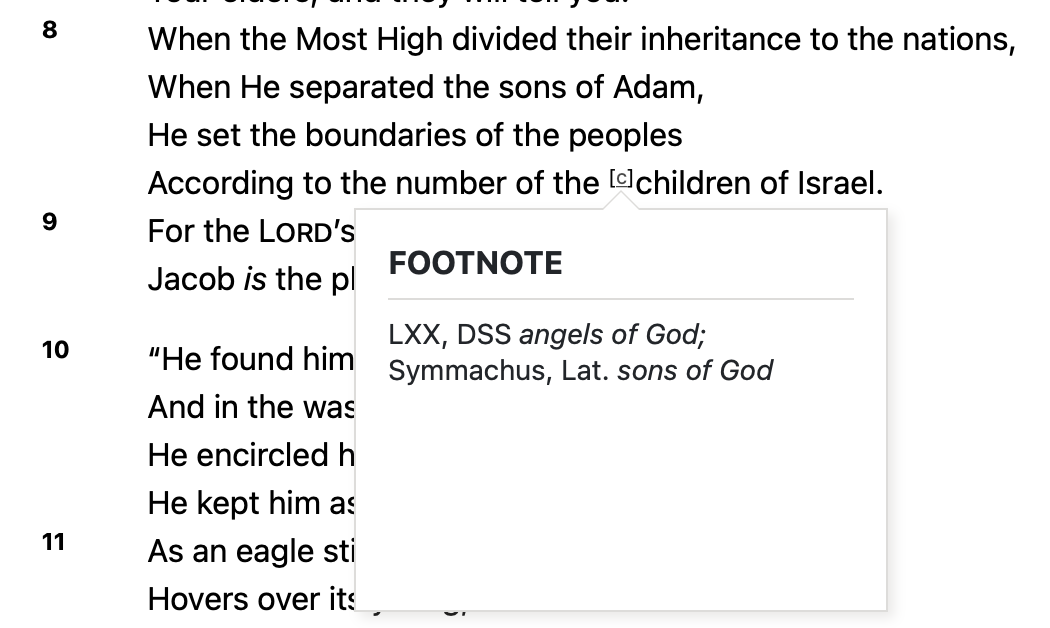
Angels of God, or Sons of God.
The "DSS" refers to the Dead Sea Scrolls, which were only recently uncovered and which are widely believed by scholars to be one of the oldest and thus most reliable translations available.
That is the correct translation.
Then read verse 9: "But Israel is the LORD's portion".
In other words, let me sum it all up for you: God is angry with what people have done at Babel. They have not disbursed and spread out on the Earth the way he instructed them, so he divides them up into Nations and he assigns each a ruler -- an Angel or a Son of God.
But God keeps Israel for himself so that in the event all other Nations become corrupt (and they do), he can still fulfill his original plan that he had in the Garden of Eden through Israel.
I hope you're tracking with me, because you're going to see the News in an entirely new light when you understand this.
It's Ephesians 6:12: "12 For we wrestle not against flesh and blood, but against principalities, against powers, against the rulers of the darkness of this world, against spiritual wickedness in high places."
I know you've all read that verse many times, but does it make a lot more sense now?
Each Nation does indeed has a ruler over it, a "Principality".
It's Daniel 1013: "But the prince of the kingdom of Persia withstood me one and twenty days; but lo, Michael, one of the chief princes, came to help me, and I remained there with the kings of Persia."
I'm telling you, this stuff is all over your Bible, and once you start to see it and connect the dots, things come alive!
Now let's really pull it home for you and especially for Clif....
It's Psalm 82:
Psalm 82
A Plea for Justice
A Psalm of Asaph.
1 God has taken his place in the divine council;
in the midst of the gods he holds judgment:
2 “How long will you judge unjustly
and show partiality to the wicked? Selah
3 Give justice to the weak and the orphan;
maintain the right of the lowly and the destitute.
4 Rescue the weak and the needy;
deliver them from the hand of the wicked.”5 They have neither knowledge nor understanding;
they walk around in darkness;
all the foundations of the earth are shaken.6 I say, “You are gods,
children of the Most High, all of you;
7 nevertheless, you shall die like mortals
and fall like any prince.”[a]8 Rise up, O God, judge the earth,
for all the nations belong to you!
If anything I have said so far makes you nervous, understand this is ALL in your Bible.
Have you ever read Psalm 82?
It connects with everything I just told you -- and it explains a lot of what Clif is saying.
YHWH takes his place in the Divine Council, in the midst of the gods he holds judgment!
(Also, verse one contains the word "Elohim" used twice in the same sentence, once singular and once plural)
Don't be made at me, I didn't write that....Jesus did! It's in your Bible!
So does that mean we have multiple gods?
No, of course not.
But we do have multiple "Sons of God" that YHWH put on his Divine Council.
And you can't read that to just be the Trinity because in the remainder of the Psalm, these other "gods" (Elohim, simply meaning spiritual beings created by God living in the spiritual realm) they all turn evil and go bad.
Psalm 82 is recounting what happens after Deuteronomy 32.
God assigned the Nations of the world each to one of his members of his Divine Council.
He trusted them to rule fairly and justly but they all turn corrupt.
Sound familiar?
So they face judgment and God/YWHW carries out his original plan through HIS PORTION, which is Israel.
This is why I say in 75% of this Clif is spot on...
Call them "space aliens" or the Fallen Angels / Elohim from the Divine Council, they're one and the same!
And yes, they are mostly evil!
They brought sin and death and destruction to the Earth.
They ruled over us (the Bible tells us that in Psalm 82)...
They ruled unfairly and unjustly!
And they will be punished for it very severely by YHWH.
But that's where Clif's analysis falls apart.
Clif lumps YHWH in with the fallen members of the Divine Council and that is simply not supported by anything in your Bible -- quite to the contrary!
It would be no different than someone observing humanity and seeing people who murder and kill and then saying all of humanity is evil and doomed!
Is that a fair analysis?
Dr. Michael Heiser does it better than I ever could....and so now I want to give you his 4-part "Supernatural Seminar" series.
It will absolutely blow your mind, and it will explain what I just told you above much better than I did.
Dr. Michael Heiser is a real treat and I think you're going to love this.
If you're at all interested in this topic, please enjoy:
This is Dr. Heiser's 4 Part Supernatual Seminar.
It covers everything I just told you but in much more detail and in the way only Dr. Heiser could do it.
Please enjoy -- and if any of this is resonating with your spirit, please share this article to people, friends, family members, or even pastors, that might need to see it.
Part 1 YouTube:
Part 2 YouTube:
Part 3 YouTube:
Part 4 YouTube:
Part 1 Rumble:
Part 2 Rumble:
Part 3 Rumble:
Part 4 Rumble:
So there you go....
I'm not going to win a debate with Clif, nor is that my intention with this article.
My intention is simply to introduce you to the wonderful and brilliant teachings of Dr. Michael Heiser and present a counterbalance to anyone who might read what Clif is posting on Twitter...
I used to wonder how the entire world would turn and wage war on Israel, especially after the Holocaust and the severe reaction to it.
The "never again" reaction.
How in the world would that happen again, I always wondered....
But seeing what Clif is posting to Twitter and knowing that the final "space alien" card will soon be played on the world stage, now I see it.
So I post this to help as many people as possible along the way.
Do not fall for the Grand Delusion!
I'll wrap up by giving you my most recent conversation with Bo Polny where he talks about being suddenly attacked by Clif on Twitter:
Bo Polny Attacked By Clif High On Twitter
I was going to say that Bo Polny and Clif High are engaged in a vicious fight on Twitter, but I don't really think that's accurate.
It can't really be a "fight" when it's all one sided.
And that's what seemingly happened this week as Clif High "sucker-punched" Bo Polny on Twitter.
Why?
For his faith in Jesus Christ.
Sad to see so much anger coming out of Clif.
Here is one such Tweet where he plainly states "no more kindness" and then references the "Elohim Worship cult":
So at this stage, and going into next year, there is no kindness in being gentle with people who are trapped (unknowingly) in the Elohim Worship cult.
Humanity simply does not have the luxury of time.@bopolny will be compelled to see the ELohim at the core of Christianity…
— clif is antiselenite (@clif_high) December 20, 2023
If you're wondering what in the world any of that even means, I chatted with Bo about it recently and I have that full video for you down below.
But first allow me to summarize....
Clif High, who we have covered here many times before and who still has an open invite to come on my show, has a belief system that the "Elohim" of the Bible are all basically evil space aliens.
Yes, that's about the most simple summary of his belief.
He calls them the "El" for short.
He believes they came to Earth 6,000 years ago and basically enslaved all of humanity.
You know what the crazy thing is?
He's not entirely off base.
(He's not entirely right either, and he misses some MAJOR big things)
But he's not entirely off base and many of you may be surprised to learn your Bible tells you about parts of this.
Let me give you my summary and you may see many large parts of both beliefs overlapping.
I believe the Bible DOES teach that there was an infiltration (as Rob Skiba once coined it, an "Archon Invasion") -- which is described right in Genesis 6:4:
"The Nephilim were on the earth in those days—and also afterward—when the sons of God went to the daughters of humans and had children by them. They were the heroes of old, men of renown."
There are MANY different interpretations of this verse, but the oldest and most predominate (and I believe most accurate) interpretation is that the "Sons of God" were Fallen Angels who left Heaven, came to Earth, and mated with Human Women.
That produced the "Nephilim" -- essentially a hybrid Giant Race on the Earth.
As always, the Bible always confirms a thing in more than one spot, and this is confirmed in several places, one of which is Jude 6:
"And the angels who did not keep their positions of authority but abandoned their proper dwelling—these he has kept in darkness, bound with everlasting chains for judgment on the great Day."
The other confirmation is all through the Old Testament....
Have you ever read the Old Testament and wondered about all the Giant Clans that are referenced in the Old Testament?
Spoiler alert: that wasn't just a metaphor or euphemism....they truly were Giants -- Nephilim -- from the unholy mixing of Fallen Angels and women.
Here's just a small list of the largest Giant Clans referenced in the Old Testament:
- Nephilim: Mentioned in Genesis 6:4 and Numbers 13:33. They are often considered to be giants or mighty warriors of old.
- Anakim: Descendants of Anak, mentioned in Numbers 13:28, 33; Deuteronomy 1:28; 2:10, 21; 9:2; Joshua 11:21-22; 14:12, 15. They were a formidable giant race in Canaan.
- Rephaim: Found in several passages like Genesis 14:5, 15:20; Deuteronomy 2:11, 20; 3:11, 13; Joshua 12:4; 13:12. They are often translated as "giants" or "dead," and are associated with a group of people living in Canaan.
- Emim: Mentioned in Deuteronomy 2:10-11 as a large and fearsome people akin to the Anakim, living in the region later inhabited by the Moabites.
- Zamzummim: Also known as Zuzim, mentioned in Deuteronomy 2:20, were a people similar to the Rephaim, living in the area later occupied by the Ammonites.
- Goliath: The famous giant from Gath, encountered by David, as narrated in 1 Samuel 17.
- The Brothers of Goliath: These include Lahmi (1 Chronicles 20:5), Ishbibenob, Saph (also known as Sippai), and a giant with six fingers on each hand and six toes on each foot (2 Samuel 21:16-22; 1 Chronicles 20:4-8).
- Og, King of Bashan: Described in Deuteronomy 3:11 as the last of the Rephaim. His bedstead, said to be made of iron, was of great size, suggesting his giant stature.
- Sons of Anak: Specifically mentioned in Numbers 13:33 as part of the Anakim, they were encountered by the Israelite spies in Canaan.
- Gibborim: While not a specific clan, this term is used in Genesis 6:4 and refers to "mighty men" or "heroes" of old, sometimes thought to be giants or demigods.
Ever wondered why God told the Israelites to utterly wipe out these clans and even kill the women and children after a victory in war?
Simple -- he was removing this hybrid, Nephilim DNA from the Earth.
It's all right there in your Bible folks!
And suddenly when you connect these dots, your Old Testament starts to make a whole lot more sense!
So Clif isn't totally far off in his analysis.
There were a group of Elohim (Fallen Angels) who came to Earth and committed some horrific acts.
And as famed Semitic language scholar Dr. Michael Heiser taught so eloquently, "Elohim" is just a word to describe spiritual beings not embodied in human flesh.
As Dr. Heiser would put it: "Yahweh was an Elohim, but no other Elohim is Yahweh."
So things get messy when we substitute the word "God" for "Elohim". That's a bad translation.
Back to Clif....
The deviation Clif takes from a view that I believe is actually documented all over the place in your Bible, is that not all Elohim are evil.
The other deviation he takes is he classifies Yahweh (YHWH) not as the supreme Creator God (God the Father) but as just a low-ranking "Elohim".
So those are two significant deviations, but he's not as far out in left-field as it may seem on first glance.
Anyway, there's your background for you!
Now back to my chat with Bo Polny.....
Bo Polny was back on my show yesterday and I'm so excited for you to see our latest interview.
This one was unlike any we've done previously....
We started out with a discussion about Clif High who recently attacked Bo on Twitter for seemingly no reason.
So I had to ask him about it.
We talked about that and then we took a look at an incredible 5-minute video that you HAVE TO see.
Oh, and of course I couldn't let Bo go without talking about Crypto and what's coming next.....
Spoiler Alert: "Got Crypto?"
You're going to want to!
Ok, I've got three ways for you to watch.....
First is here:
🟢 BO POLNY: Biblical Christmas Incoming!
👉 Download Bo's slides for free: https://t.co/enAeEoseVp
🔥 If you want Bo's trading Newsletter, go to https://t.co/fm1t2k3KI6 ➡️ use code WLT49 (LIMITED TIME DISCOUNT)
📚 For access to the Easy Crypto School, go to… pic.twitter.com/oLwYdkOXgy
— DailyNoah.com (@DailyNoahNews) December 19, 2023
Or on Rumble here:
And on YouTube here:
And as usual, I've got all the links you need right here....
Always recommend grabbing Bo's slides, they are so beautiful and you really need to Zoom In to see all the details he jams into each one.
👉 Download Bo's slides for free: https://qrco.de/bee6WF
🔥 If you want Bo's trading Newsletter, go to https://www.gold2020forecast.com/cryptocurrency-index ➡️ use code WLT49 (LIMITED TIME DISCOUNT)
📚 For access to the Easy Crypto School, go to https://www.easycryptoschool.com ➡️ use code WLT49 (LIMITED TIME DISCOUNT)
We're headed into some incredible times....and I can't wait!
It's a really exciting time to be living through if you're on the right side of this major shift in the world-wide financial system!
They are crashing this old system and rolling it right into the new one.
The old system is broken beyond repair, so they can't fix it, they just have to create a new one.
And I'm not a financial advisors, but I sleep a WHOLE lot better at night holding Gold, Silver and Crypto.....
Especially my XRP, which we also discuss in this interview!
Got XRP?
Got Gold?
Oh yeah baby!
Speaking of gold, have you seen this?
https://wltreport.com/2023/10/15/gold-now-classified-as-tier-1-risk-free/
Ok, Bo's links above will get you all set for crypto!
You're in good hands there.
But what about Gold and Silver?
If you want Gold and Silver, I have you covered there too.
Keep reading for the hookup...including for a way to get GOLD without paying anything out of pocket! Yes, really!
But first, here's the most important part you have to understand -- make sure you get PHYSICAL gold and silver.
Not paper traded garbage on the stock exchanges that isn't backed by anything.
Don't touch that stuff.
I have two special hook-ups for you.
Both involve PHYSICAL gold and silver.
Because if you do NOTHING else, make sure you own "physical" gold and silver, not paper contracts.
The paper contracts (like stock ticker SLV and GLD) could very well go POOF one day and disappear or go to zero, because they're not actually backed by the gold and silver they claim to represent.
It's a massive game of musical chairs out there and when the music stops (and I think it will stop soon...) people who only own paper might find themselves owning something not worth the paper it's literally written on.
Now...WHERE do you get physical gold and silver and how do you know it's real and safe?
And that you're getting the best price?
Oh, and how about personal one-on-one real customer service?
You know, like you were some Big Wig millionaire at Goldman Sachs who could just call their personal banker and get help?
That's what I'm about to tell you.
I have two killer connections for you...
The first is for purchasing gold and silver bullion.

That means bulk bars.
That's the cheapest and most economical way to do it, to stretch your dollar into as much gold and silver as possible.
The website is called [DELETED] and when you see my logo in the top left-hand corner, you'll know you're in the right place.
You'll get a personal phone call with Ira Bershatsky (or someone on his team) and they will work with you free of charge for as long as needed to answer any questions you have and get you taken care of.
How about that!
You don't see that much anymore, but Ira and his team pride themselves on good old-fashioned real customers service:
No sales pitch, just real, actual help.
And the best prices you will find.
Here's the only disclaimer I will give you: because they do pride themselves on dedicated service, it might take a few days before you get a phone call back. Just be patient.
Good things come to those who wait!
You can contact Ira and [DELETED] here.
Ok, that was #1.
Now I want to tell you about option #2.
An equally great company, I am so happy to be working with these guys.
This next company is called Genesis Gold and this is for people who want to purchase real physical gold or silver in their IRAs (Investment Retirement Accounts).
You know what the beauty of that is?
TAX FREE baby!
I'm not a tax advisor, but that's a general oversimplification.
Never pay more taxes than you are legally required to pay.
And that's why I love getting gold and silver in my IRA (and why I hold a large chunk in an IRA myself!).
There's so much to love about Genesis Gold, starting with the fact they are proudly and un-ashamedly Christina!
They call it "Faith-Driven Stewardship" and they put it right on the homepage of their website along with a quote from Ezekiel:
Here's more on why gold and silver in your IRA are so powerful:

Join the conversation!
Please share your thoughts about this article below. We value your opinions, and would love to see you add to the discussion!