

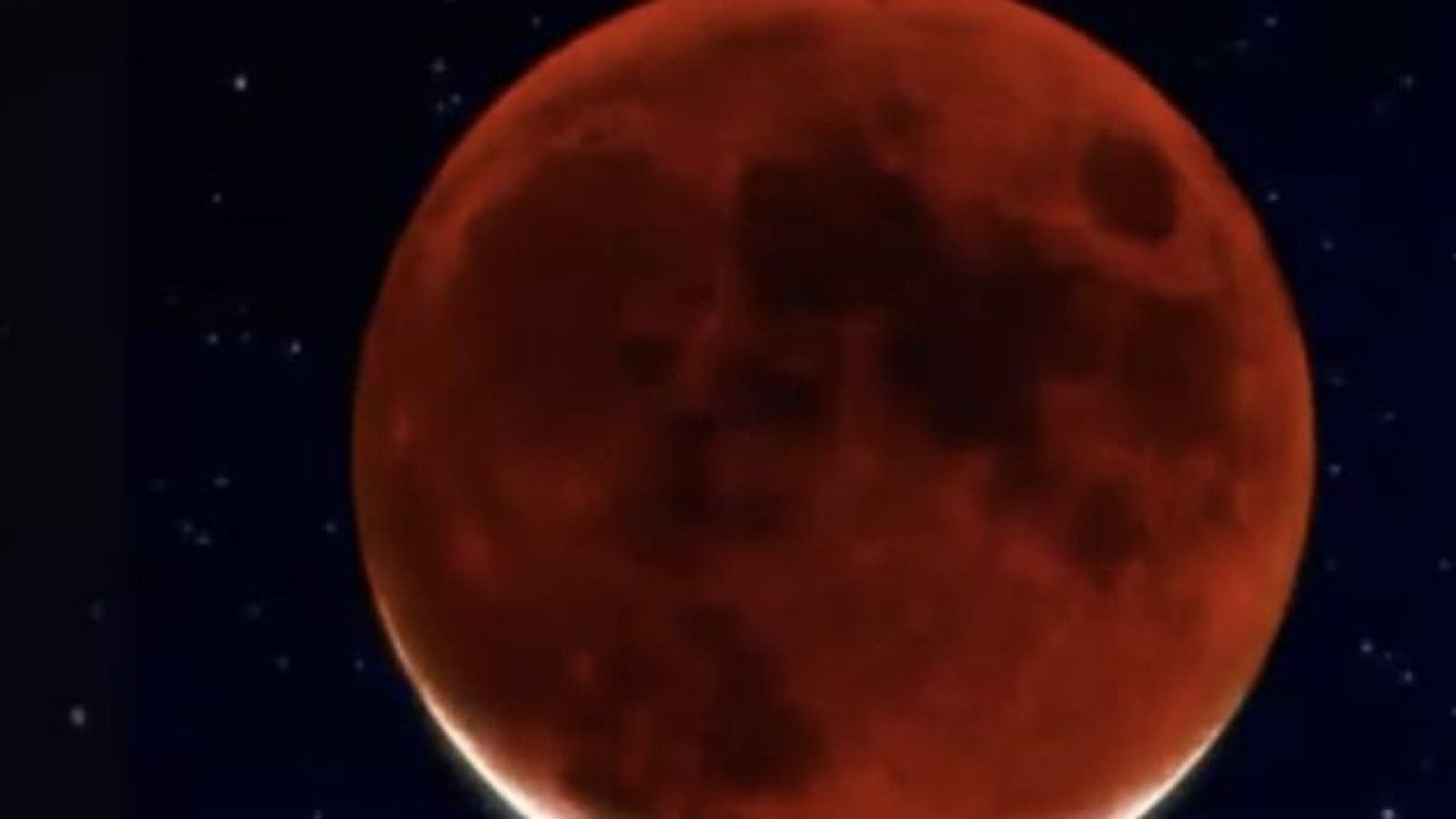
Americans will be able to catch a glimpse of a rare Blood Moon tonight.
A total lunar eclipse (blood moon) will be seen across the United States just after midnight tonight in most states.
The eclipse is expected to begin at 1 a.m. EDT Friday, and its totality will occur around 2:30 a.m.-3:30 a.m. EDT.
A rare Blood Moon will appear on the night of Thursday, March 13, into the early morning of March 14. This happens when Earth blocks the Sun, making the Moon look red. People in South America, Central America, the U.S., Canada, Mexico, and Spain will be able to see it.
(via… pic.twitter.com/4CNyJICgiJ
— Complex (@Complex) March 13, 2025
Per CBS:
Those who glance up at the sky tonight will have an opportunity to catch the March 2025 “Blood Moon,” a phenomenon that colors the full moon in shades of red, orange and yellow during a total lunar eclipse.
This month’s full moon is due to pass through the shadow of Earth either late tonight, March 13, or very early tomorrow morning, March 14, depending on the viewer’s time zone. It should be visible to people in the Americas and elsewhere in the Western Hemisphere.
Dubbed the “Worm Moon” by the Farmer’s Almanac, which has been assigning names to full moons for almost a century, this one is expected to start taking shape Wednesday evening and is supposed to last through Saturday morning, according to NASA. The full moon will technically rise in its totality early Friday.
Don't sleep on this!
In the Western Hemisphere? Step outside late tonight to see a "Blood Moon," aka lunar eclipse, as the Sun, Earth, and Moon align such that the Moon passes into Earth's shadow.
Totality begins at 2:26am ET (0626 UTC) March 14: https://t.co/9tPlMZdpfC pic.twitter.com/3YwV9rZzK7
— NASA (@NASA) March 13, 2025
Per The Weather Channel:
The eclipse is viewable anywhere in the Western Hemisphere that has clear skies, including every state in the U.S.
The moon will start to look a little different just before midnight EDT on Thursday. The eclipse will start shortly after 1 a.m. EDT Friday and totality happens between about 2:30 a.m. and 3:30 a.m. EDT.
No special equipment, including eclipse glasses, is needed to view a lunar eclipse. That’s because you’re not looking directly at the sun.
Telescopes and binoculars aren’t necessary, but they will give you a better view. So will moving away from bright light.
ADVERTISEMENT

Join the conversation!
Please share your thoughts about this article below. We value your opinions, and would love to see you add to the discussion!