

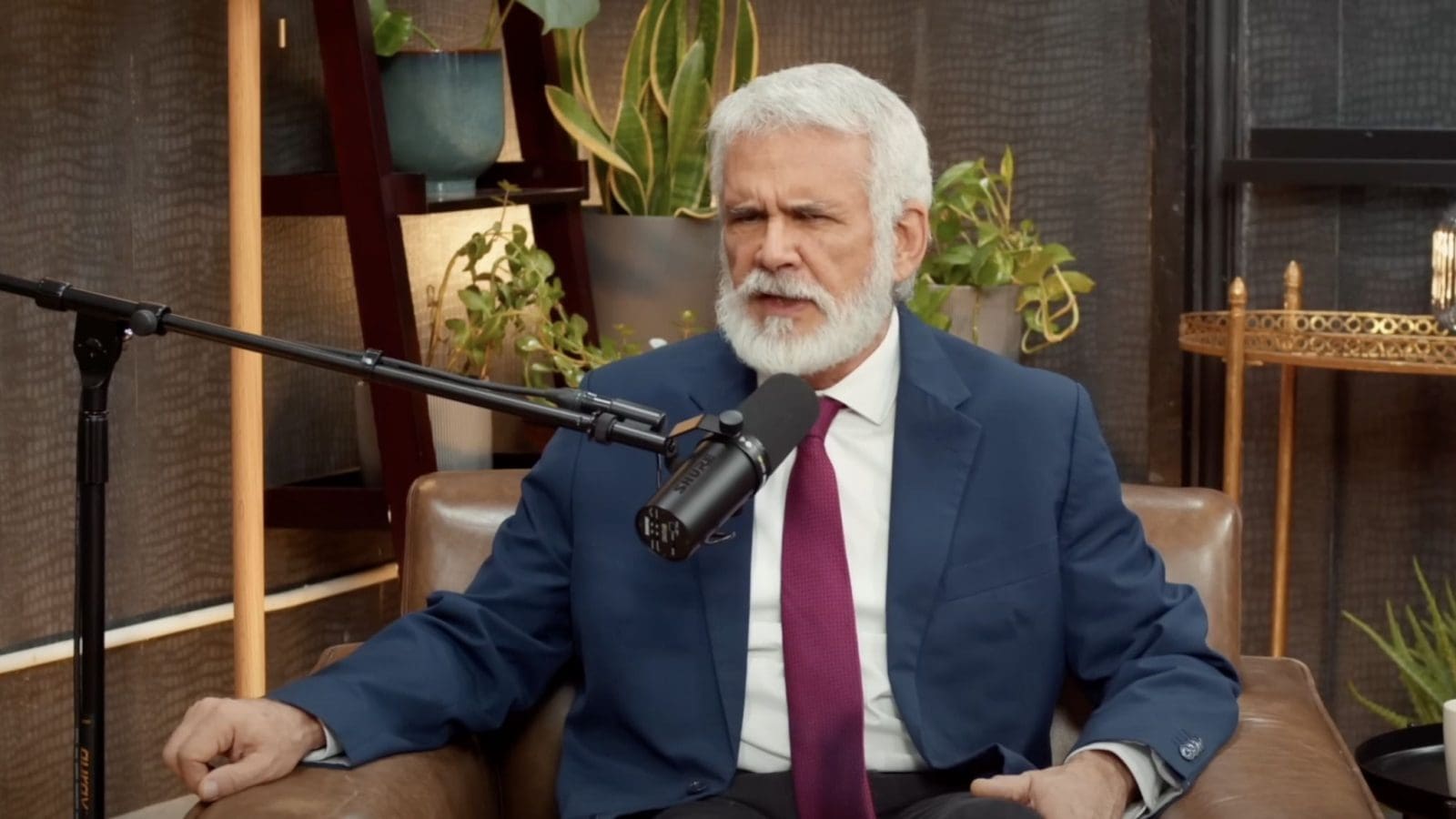
A brand new interview with Dr. Robert Malone was just posted and I really want you to see it.
Dr. Malone has been one of the few good guys we can trust in this whole COVID debacle, but the twisted irony here is that he was also the inventor of mRNA technology.
So to say he is in quite a unique spot in all of this is an understatement!
I have valued his input throughout this whole process, and I think this latest interview is perhaps his best he’s ever done.
Please enjoy (and I will put the full transcript down below if it’s easier for you to read instead of watch/listen):
FULL TRANSCRIPT:
do you have any guilt? I had nothing to do with these vaccines.
Do you work for the CIA? They don’t realize that I took a lot of risk in disclosing these things that I know.
The investment that the United States government made in biowarfare research is larger than the investment they made in thermonuclear weapon research.
I mean, this is the basis for my work in psychological warfare.I’m pretty convinced that I got used. These guys are really good at lying.
You got to understand if you’re dealing with anybody in the intelligence community, that are operatives—they are trained liars, trained psychological manipulators.
That’s what they do.
This looked like it was an engineered pathogen.These people are absolutely out there. I just assume you are C, and I was not going to just sit by and let these guys have their way with all of us.
I have known that they want every adult lining up for vaccinations without question.
If mRNA comes as a tidal wave, they can start vaccinating for every bacteria and virus on the planet.
If they can convince you, get the government to mandate—there’s going to be a pandemic.They’ve got to get all of you to believe you need a vaccine.
It’s not about the kids—already vaccinating them—they want…
[Music]
You, Dr. Robert Malone, I want to thank you.From Disease Centric To Health Promotion for joining the Maha podcast today—it’s my honor, Dell, and thank you for the invitation.
Absolutely—I mean, you’re at the top of the list as soon as I decided I wanted to do this.
You and I have had many private conversations about Maha—really, I mean even before there was M, there was a Maha; Maha was a Maha, or we were Maha.
But in your mind, when someone asks you—because you’re getting asked this question a lot—you’ve been an adviser to Bobby on many levels, so what is Maha?How do you divine it to someone that’s asking?
Let’s start off with the acronym: Make America Healthy Again.
And when I’m hit with that kind of question of, “What is Maha? What are the agenda? What do they hope to accomplish?”
I, you know, I’m not part of Bobby’s inner circle, unlike yourself, so I can’t really represent what Maha is as it’s structured right now.What that initiative represents—I can only look at the artifacts and things that people have said.
So what I always start with is that it involves a focus on redefining, in the context of the federal government, the orientation of most of the HHS R&D and scientific enterprise activities from a disease-centric focus to a health promotion focus.
And that seems like a trivial statement, but it’s profound, and it underscores one of the fundamental problems associated with how HHS R&D and other activities are structured.
I’m talking about CDC, FDA, NIH primarily—not CMS, Medicare, etc.I think it’s good that Bobby selected Dr. Oz, and he’s going to be able to have an experienced hand running that operation.
I’m glad that Bobby isn’t going to have to focus on it so much, because that is a beast.
But getting back to these more R&D and historically drug-focused operations—they’re siloed in the extreme, and it’s a major problem.
This focus on drugs and treatment of diseases has led us down a path where all of these activities are parsed into increasingly fine divisions, led by people that operate within that division.Notoriously, if you want to get funding for a project—let’s say, for instance, you want to develop better, safer ways to deliver RNA—just imagine that somebody might be interested in that.
Someone might want to do that, and in order to do that you would have to pitch the research program that you want to engage in in the context of a specific disease, like cystic fibrosis, or a vaccine, or whatever the particular thing is.
You can’t pitch it as a broad initiative that would enable a variety of different outcomes; it’s just not the way NIH is structured.
And this has led to a kind of strange myopia.So ultimately, you’re going to have a million studies for a million different things that mRNA could do.
Or just, staying with that example, if you want to get capital, you want to get funding—because that’s really what it’s all about in modern biomedical research—you have to pitch your insight, or your opportunity, or your thrust into the context of a specific disease, cardiovascular disease, or kidney disease, or whatever.
You can’t—this is what we’re going to cure, right?
Precisely.So it’s this disease-centric focus, and that also—in parallel—you have the CDC that’s largely structured again around disease-centric initiatives.
People aren’t generally aware that the CDC has a very strong R&D component that overlaps significantly with the NIH.
There’s a lot of mission creep in all three of these key agencies: FDA, CDC, and NIH.
And that overlap results in bureaucratic fighting, and of course the FDA is siloed on exactly that kind of structure.So there’s a cardiovascular division, there’s a pulmonary division, etc., and each of those operates like its own little feom, which is a major gripe for small- to mid-size pharmaceutical developers.
They don’t necessarily know what they’re going to encounter.
So the point is—I’ve kind of gone off into the weeds.
Yeah, the point, the point is that what is Bobby up against is, what you’re talking about, that’s a bigger—We’ll get into that a bigger question. Let me leave you on track here.
So what I’m trying to express is that I’m trying to help the listener understand that while this may seem like a subtle distinction—a focus transition from a focus on disease and disease silos to a focus on health promotion—is a profound change.
Because health promotion involves identification of things which can act in a broad sense to advance general health.
So when we talk about chronic inflammatory disease, chronic inflammatory disease and obesity are two of the major problems that Bobby is explicitly going to be taking on, specifically also within pediatrics, children’s health.If you look at the president’s executive order in establishing the Maha commission—Maha commission had that order—it has very specific items not mentioned in there as the mandate that Bobby has to show a demonstrable improvement in measurable metrics for citizens’ health within 12 to 18 months.
Is that possible?
Absolutely—it depends on what the metric is.
And I have been making the argument that he’s inheriting a situation that, you know, it’s a mixed message, but it is already going to bias him toward success.That’s the use of these GLP-1 inhibitors, like AIC, which is having an impact on the obesity epidemic that we have in those cohorts that are able to access that drug.
It’s very expensive, and I think that there will be measurable improvements.
You know, there’s a lot of controversy about Ozempic and the related drugs.
I mean, you’re stepping right on what I would say—behind closed doors, really, is—I don’t know if it’s a third rail—it’s the complication, it’s the open wire that everyone’s grabbing.A lot of people are telling Bobby, Bobby, and, you know, first of all, Cali means has really come out against OIC, especially this idea of having, like, everybody in the Medicare-Medicaid system—let’s throw them loose, lose that weight.
And there are a lot of people very close to Bobby—I will say, and I’m just, you know, I won’t name names, so I think I’m safe to say it—but saying that Bobby, if you really want to show a marked difference, you’ve got to embrace these GLP-1s because they’re going to reduce it, you know, and there’s lots of arguments.
Let’s just look at the extreme cases of obesity—bringing them down.
I mean, you know, that’s going to—and what people need to realize is that the sicker the person is that you reverse, the more effect they’re going to have on your overall stats.You know, getting you and me to lose three or four pounds—which, you know, I probably need it—you’re looking pretty good, but it’s not going to do a whole lot.
I’ve dropped 50—I’ve dropped 50 pounds over the last two years.
Did you use a GLP-1? I do.
I haven’t disclosed that previously—interesting—but also a major dietary change, lifestyle change.We’ve really cut the carbs out.
My wife and I were, like, three-decade vegetarians, but increasingly had come to rely on these ultra-processed, soy-based products.
Yeah, and I had a pro-inflammatory syndrome—absolutely, I had all the classic markers.
The whole situation with the COVID crisis, in which I had long COVID from getting infected in February of 2020 with the original strain, and then I took two doses of the vaccine—unfortunately, U mRNA—and the second dose, I got one of the bad batches.This was really before we knew what we know now about the full spectrum of adverse events, and I had a lot of those classic events, including cardiac damage, and, uh, POT syndrome, restless leg, and a number of other adverse events.
Yeah, and so the consequence of that was, between the two things—the long COVID and the vaccine damage—I really couldn’t work the farm in the same way that I could before; I just didn’t have the stamina.
So I’m sitting around more, writing all the time, doing podcasts a lot more, sedentary in a high-stress situation, traveling all the time.
And my wife and I just put on weight and got less and less healthy.And fortunately, we hooked up with a non-traditional physician, a primary care physician that lives nearby to us, Brook Miller, who happens to also be an Angus rancher.
And Brook was adamant: “You guys—you know, I went to him and I said, ‘Okay, Brook, everything’s on the table. I’m not doing well. Tell me what I need to do.'”
And he did the blood draws, looked at my inflammatory markers, etc., and concluded, “Robert, you’ve got to change your diet.”
And I really strongly recommend that you start eating beef and cut out the carbs—it worked.So you did, after years of being a vegetarian—total flipped over to eating beef.
Was it hard? Was it a hard transition?
Was there—let me ask you this—’cause I was a vegetarian for years and years, and ultimately I recognized I was a junk attarian—I’m eating a lot of pizza, I’m eating, precisely, totally addicted to Italian food.
Yeah, and so, you know, what good is that really doing?But were you a vegetarian for ethical reasons? Like, did you have a real issue with eating animals, or was it just more a health decision?
No, originally.
So Jill and I are both longstanding people committed to ethical choices, and also Jill was a zookeeper at both the San Diego Zoo Wild Animal Park and the Brookfield Zoo in Chicago, so we’ve always been around animals.
And so we take that—you know, we’re people who believe in ethical treatment of animals and humans, and so the logic of eating lower on the food chain, combined with the logic of not eating animals, not preying on animals—I like to say, “If mice have a place in heaven, I toast; I’m going straight to hell,” because of all of the animal research work that we did for many years, which we don’t do anymore.And so it was that kind of mixture of things—the ethics of eating lower on the food chain, having less impact on the world, and respecting life—it really comes down to that.
Yeah, but I guess time passes, you get older, and when you’re facing the issue of whether you’re going to be able to be healthy or continue along this path that was clearly not healthy, then I think the decision we made under Brook’s guidance was to go ahead, but to do everything we can to assure that those meat products that we’re consuming are ethically sourced.
Yeah, so we do eat a lot of eggs.
I have a bunch of the roosters that Jill and I killed in process that came off of our own egg hatching last year—still in the freezer—and, uh, just because, like, Henry and June and Chuckles—you can’t name them—so they’re stuck in the freezer.Can’t eat them yet, or we don’t name our chickens.
We do not name our chickens—that’s a rule.
We name our horses, but we don’t eat our horses.
So, yeah, and then we get locally—we’re fortunate in Virginia to have good access to locally produced, grass-fed beef, and we like to buy direct from farmers to the extent possible.Because that way we can be assured that we can see and know the people that are caring for the animals.
We know that they take care of them, that they are managing their herds ethically.
You know, it’s a lot harder when you start talking about poultry if you’re buying poultry in the supermarket.Yeah, we have our own eggs, etc., so that’s where we’re trying to move even more in that direction.
Jill has plans—it turns out that many Jerseys—we’ve had many Jerseys before, many Jersey cows.
Many Jerseys are actually a practical thing for a breeder.
We’ve been breeding animals for a long time, and horses primarily, also dogs, and we used to have many Jerseys, but we just ended up with way too much milk and we were getting fat.
But we’re going to go back to that and try to get some cows.How big is a mini Jersey? Is it—you mean, you know, is…
Raw Milk & Bovine Tuberculosis—they’re kind of hip-high, really.
Yeah, they’re smaller, and you can get them A2 A2 now, so that’s the more digestible milk.
Yeah, the backstory is that the island of Jersey is kind of rough, windy, stormy, and the cows that came off of that—milk cows that they kept—were stunted just because of the genetic selection in that harsher environment.Then they were imported into the United States, and American cow breeders heaved them up to get the big Jerseys with huge milk production.
Yeah, that’s the Jersey that everybody thinks about—real high butterfat, etc.—but those old Jerseys back from the source have given rise to this breed that has really gotten popular among homesteaders like ourselves and small farmers, hobby farmers as they call them.
But increasingly, these are people that are, like, us—committed to a lifestyle in which they’re more self-sufficient.
Yeah, so where are you at with the raw milk thing? I mean, it’s shockingly controversial, I find.I mean, like, the medium makes a big deal out there, right?
And the data is in on fluoride, right?
Okay, so we’ve done multiple deep dives into the raw milk thing, and we’re personally absolutely okay with raw milk.
And we were consuming raw milk straight from our own cows that we were milking on a daily basis for a while when we were in North Georgia.And I’m sure if we get back in the M—my wife tells me she’s put a deposit down now—so we are going to have some Jerseys, whether I like it or not, it’s going to happen.
So the historic story was that the justification was that there was a risk associated with bovine tuberculosis, and that the bovine version of tuberculosis was contributing significantly to human tuberculosis.
This is another one of these zoonotic infection stories.
Okay, like, I’ve never heard this—like what was told to us for the origins of SARS-CoV-2 that turned out to be fraudulent, I think we can call it now.Yeah, and also that’s the justification for all the fear around the bird flu.
It’s not that bird flu is killing off hundreds and hundreds of dairy workers that are getting it from milking cows, you know, or…
Right, right—there’s no sustained human-to-human transmission; there’s no significant disease or death associated with H5N1.
But still, the fear is just constantly pushed by corporate media.And if you unpack all of that, the fear that they’re promoting is that, well, this might at some point jump from birds into humans.
And if so, in the few cases where humans have been infected and they’ve come to the attention of the WHO, Bob Redfield cited the source—the statistics of a 50% case fatality rate for bird flu according to the WHO—that’s false.
That’s a data artifact, because for a case to be reported to the WHO it’s got to be a serious case, and so WHO has an intrinsic selection bias that leads to that 50% number.
But you can see the reality: if you look at the data from the United States, there are over 600 people that have been infected with bird flu—they mostly get conjunctivitis, in other words, red eye—and they rarely go to the hospital.There are two cases now that are asserted to have died with bird flu.
Remember that story with Co?
Yes, of course—the old… so two cases: one was a car accident that had nothing to do with it, or the gunshot wound, and, for instance, the guy down in Louisiana—they made so much of it—an older gentleman, heavy exposure to carcasses, and infected, and significant pre-existing conditions, where we heard that story before, right?
So that’s… so, getting back to the cows and unpasteurized milk: the logic was that bovine tuberculosis—which absolutely exists—was a risk factor for human tuberculosis.But it turns out that Mycobacterium tuberculosis in humans is a different species; it’s related, but the line tuberculosis rarely infects humans.
So it’s another one of these stories—like the Spanish Flu—that is spread around like a boogeyman, used to scare us into compliance with our annual flu vaccine that most countries don’t require.
Yeah, but the same was done with bovine tuberculosis, and at the time we can say that it was out of ignorance, and it was a reasonable hypothesis.
But as we’ve seen happen with the science again and again—hypotheses in the hands of bureaucrats often transform themselves into edicts and into a religion.That’s exactly the religion of scientism.
Yeah, and so the same thing happened with bovine tuberculosis, and then once it’s established as the storyline in public health, it gets propagated forever.And it’s very hard to point out the irony, because, you know, I’m not a scientist, but I’ve interviewed enough of you guys now, and, you know, when you think of Edward Jenner—there’s an irony here—because Edward Jenner made this conclusion, the father of the smallpox vaccine, “Hey, look, the milkmaids aren’t getting smallpox—maybe it’s because they’re coming in contact with cowpox.”
So I find it interesting that nobody came… like, you could have easily had a hypothesis that drinking bovine, you know, tuberculosis—maybe could that create an immunity that would be protective to, you know, human TB?Couldn’t you? I mean, you could, like, think of a theory—why is that, or hypothesis—why is it not in there?
Whether you actually are aware or not, you’ve now blundered into a domain that’s really interesting, because the tuberculosis vaccine that’s used globally—BCG, or BCG—what does BCG stand for?
You know, “Bovine Calmette-Guérin.”
Okay, so it’s an attenuated bovine TB, and it is administered as a vaccine in many places in the world.And there are some really odd things about BCG vaccination: is it really protective against human tuberculosis?
It turns out—I worked for the AYS Global TB Vaccine Foundation back in the day, which is one of the first nonprofits funded by Bill and Melinda Gates—so that’s where I learned about the nature of BCG.
And furthermore, the founder of AYS kind of trained the Gates Foundation on the way that MC does business, because he’d come from MC—and that has, that’s a whole other threat.
This could be a 15-hour interview, so we’ll try—and…So the fascinating thing about BCG is that people that are vaccinated with BCG, or potentially treated with BCG—because it’s now being used as treatment—it’s effective for bladder cancer, and it seems to have a protective effect against breast cancer.
That is a little paradoxical, and it seems to be associated with a kind of chronic, low-level infection state, which of course is what TB does.
But you know, the pathologic cascade ends up chewing up your lungs, but in BCG it doesn’t.
And it’s one cluster of hypotheses: that the BCG is eliciting a selective pro-inflammatory state that is shifting the immune response profile of your baseline immune system set points, in ways that are making your immune system better able to control a variety of cancers.And that’s a core concept: that cancer is really—if you unpack it in many ways—it’s an immunologic disease, because it’s our immune system that’s keeping cancer at bay.
Cancer is happening all the time in all of us, right?
But it’s our immune system that’s keeping it down.
So, well—let me jump in here, ’cause I actually have a little background on BCG also, and you’re probably aware of this.I did a show about a scientist—doctor in Boston—I’m probably going to mess up her name now because it’s been several years—but I want to say Diane Bman or something like that.
Diane, wherever you’re out there, if I got your last name wrong—but it was a fascinating story.
She was doing trials using the BCG vaccine—two shots inside of one month—with type 1 diabetes, and three years later, the diabetes goes away.
Yeah, and what’s so fascinating about this story, typical to the things we talk about all the time, and that drew my attention to it, was that the FDA was trying to shut the trials down.Then suddenly the manufacturer of the BCG vaccine she was using shut down—they stopped making BCG vaccine, I think in the country but certainly in the area she was living in.
So she ramped up her own manufacturing plant for BCG, so she could continue her trials.
And I, you know, I’m considered an antivaxxer—which is a pejorative—and I have, you know, more death, but I decided I would challenge my audience.
So the show—I said, “You know, the promo for the show was, ‘Did Dell just find a vaccine he likes?'”And I brought her on the show—luckily she agreed to come on—and I, you know, you should have seen the hate that she was talking about this BCG vaccine, using it.
And first of all, it was lost on a lot of my audience that technically, it was being used as a treatment, so it’s not really even a vaccine.
But that’s a different story.I was trying to get to the question I had for her, and I let her explain how these trials she was on—she was on the fifth or sixth version of trial, more and more—and she’s having nearly 100% success.
I mean, like, really, really high rates of success—so much so that I’ve run into people with kids with type 1 diabetes and said, “See, if you get into one of these trials…”
I think it’s really fascinating.
Now, I don’t know what the long-term effects are going to be, and maybe has some other thing, but what I said to her is, “All right, after you’d explained the whole thing, I said, ‘If this works and you’re giving the shots of BCG, and then three years later suddenly type 1 diabetes disappears—which is, I mean, that shortens your lifespan—we’re talking about serious stuff.'”
And I thought to myself, “If I had a diabetic child, I’d be thinking about it.”Like, I’m going to try it out—in France, they were doing similar studies with BCG and multiple sclerosis, very similarly, giving…
And a few years later, almost to the day, I think in those cases multiple sclerosis disappeared.
This is why I said to her: “Is it possible that tuberculosis has a beneficial effect on the human body for some people?”
And at that point, half of my audience had already left and stopped, because I’m a shill for pharma, and they finally proved it.But she said, “That’s exactly what it proves.”
Yeah, she’s like, “What we now realize is that if we overprotect ourselves, we are using—like that BCG, I mean, that tuberculosis,” she said, “is probably the most prolific bacteria on the earth.
We have evolved with it—it is a part of our experience—and so now that we’re putting Clorox and everything, cleaning our water, we’ve basically erased it.
We’re now having autoimmune diseases because we’re not having our immune system primed by this interaction with it.”You said, “It’s like this low-level infection that most people cleared—it was always that.”
Right, it’s the low-level, chronic infection.
This is one of the reasons why, just to kind of amplify this, one of the reasons why you can’t take data on vaccines performed in Africa and exclusively include that in your portfolio when you submit an application to the FDA is because Africans have a very different immune response profile, because they are out there subjected to all these things—particularly worms—and all of these pathogens absolutely shift your immune response profile.
Yeah, I find that fascinating, though, about her making her own BCG.One of the things that Aeris learned—unfortunately, they were trying to make recombinant BCG that had kind of even further amplified the protective effect—and that failed.
But one of the things they learned was that BCG is really quirky in terms of the manufacturing; it’s one of these things that’s more of an art than a science.
And you know, precisely when you harvest the culture, and the way that you handle it, really affects its biologic activities, and so you end up with a situation where some manufacturers have figured out the secret sauce, of course they don’t tell everybody else what they do, and their stuff works pretty good.
And other ones don’t get it right, and their stuff doesn’t work so good, and then when you analyze the data you lump them all in the same pot and you say, “Well, maybe it works, maybe it doesn’t work,” when in fact within that you have examples that seem to work really well and others that are kind of kaput.And it has to do with the nuance of biologic manufacturing.
BCG is a fascinating story, and it absolutely has a direct socket—as you’re pointing out—to human tuberculosis in general, and also to the whole milk story.
A lot of people assert that they can tolerate whole milk but they can’t tolerate pasteurized milk.
What a lot of folks don’t understand, and this is another benefit, I guess, of having cut my teeth at UC Davis, where they had animal science and dairy science as a major focus.For a while, I was collaborating with a guy that was one of the big shots in the milk world, and what they do is they take the milk product—and I actually worked at a dairy for a while when I was a kid—they take the milk product and they completely fractionate it, and then they reassemble it.
So the milk that you buy in your favorite grocery store has very little to do with what came out of the cow.
Yeah, it is truly an ultra-processed food.
It’s carefully managed—all these different components are split out and then they’re recombined to yield something that meets the specifications established by the USDA for milk.And usually, they have all kinds of excess product along the way—casein, lipids, etc.—and they split those off to sell them for other purposes.
So when you’re getting whole milk—you’re getting, uh, that’s unpasteurized—you’re getting a product that’s very different from what you can get in your local grocery store.
I saw an interesting— I don’t know if you know Sally Fallon, whose elastic check was president of Weston A. Price, that gets a lot into food and traditional foods.
Weston A. Price, being a dentist who traveled the world and realized every culture has straight teeth because they’re eating their ancestral foods.But at the heart of it, she says that raw milk is literally like medicine, but that pasteurized milk is poison.
It is so bad for your body—from, you know, she gave some detail to that—but I want to kind of stay here, because I think that this is something that needs deeper conversations, which is: What have we done to our society?
Vaccinations fit into this a little bit, but raw—like, raw milk—I know I have friends that are on a raw food diet, like they eat raw chicken, they eat raw eggs, they eat raw…
I’ve tried it out—the raw chicken thing.
No matter—I’m like, “Are you serious with this?” I mean, like, “Oh, it’s all media hype, blah blah blah.”But their point is that you want—the USDA is removing all the bacteria; the FDA is saying, “We’ve got to get all the bacteria out of the food,” and their point is you want that bacteria that is feeding your good bacteria—the more bacteria, the better, they would say.
If I could take this thread that you’re developing and kind of step back and look at it from above: the USDA has really wrapped itself around the axle of the thesis that they have to protect us from everything.
And this fits into this one health initiative, which is a whole other basket of issues—yeah, that’s actively promoted in the same way that we’ve seen the pharmaceutical industry promoted through the American Medical Association.
One Health, which is part of Agenda 2030, gets promoted by the American Veterinary Medical Association, and they played a big role in getting the One Health legislation put in place.Okay, so the same dynamics exist in the animal health world as exist in the human health world.
A lot of the same players—you know, the bird flu vaccine that was just authorized by the USDA is produced by Zotis (formerly Fiser Animal Health).
It got spun out and now it’s owned by—wait for it—BlackRock, State Street, and FARD, that was like the mantra of the Kennedy campaign.
You’re calling up—you had people cheering “BlackRock, State Street, Vanguard”—who’s ruining your world?BlackRock, State Street, Vanguard—yeah.
So plus, in that case, State Farm is the fourth major player.
So USDA has had, perhaps even more so because it’s less transparent, less visible to people, has been captured by big finance—Monsanto, I mean, a number of the directors of USDA have been former big shots at Monsanto now.
Bayer—a notoriously unethical German company.Yeah, Monsanto—the Godfather of Roundup and Roundup Ready GMO crops.
So, of course, Bobby gave them a black eye early in his career.
And ironically, right now, since we’re touching on it, they’re trying to get the same liability protection as the vaccine program that Bobby’s been speaking about.
Shocked—you know what I mean? I wasn’t aware of that, but—why not?Of course they are, like, “We’re springing all the crops—you can’t grow crops without it.”
So you got to protect us from all the harms that Robert Kennedy Jr.’s lawsuits have been pointing out.
Yeah, and that’s one of the big issues, right?
And among those harms there is strong data that—just to bring this back—that exposure to glyphosate, the chemical name for Roundup, is linked to autism and other neurologic diseases in children, particularly if there’s exposure in the womb.And of course, what many people don’t know is that Roundup is one of the agents that’s used as a “desiccant.”
Right, and so what that means is that when the farmer is growing his grain crop—and this is one of these kind of complex, system-emergent phenomena stories—
the harvesters, the combines, are super expensive.
We’re talking big money.Yeah, and so the only way that you can kind of afford to be in the grain business is you have to hire one of these contract operations that has combines that they drive around from place to place.
And you have to schedule that your farm will be harvested on such and such a day, so the guy, the operator, can come in and do his business.
And he’s operating, you know, he’s probably in debt to his teeth to BlackRock, State Street, Vanguard, whoever else, right?
To buy this huge piece of machinery—which, by the way, benefits John Deere.You know, we can go down that road, but—you’ve got to schedule it, which means that you can’t wait for your crop to naturally dry; you’ve got to be able to say, “Yeah, on August 22nd I’m going to be ready for you to come through and harvest my wheat, oat, corn, fill in the blank.”
Right, and the way you do that is that, you know, a week before you go through, you spray your whole field with a desiccant like Roundup.In other words, you basically kill all the living plant matter, right?
And then the grain dries out because it’s no longer being fed by the stem—basically, deadly poison on all of your crop, killing it really quickly.So it’s all synchronized so the harvester can come in.
I knew this, but you’re adding an element I did not know—that it was, I mean, I always thought it was like, “Well, to beat winter,” which was sort of the generalization you’re making.
Very cool—I mean, it’s like, I didn’t know.
Sure, the guy’s going to be coming through with his combine that I can’t afford—that’s what he does, so I’ve got to be ready.I’ve got to have it scheduled.
I’ve got to be ready for him when he comes, and the only way you can do that is by using a desiccant.
Right, so that’s how this ecosystem has been driven, and of course at the top of the scale, you know, of the pyramid and all this, is Wall Street money.
Because smaller—you know, what?Okay, so really to unpack this part of the story, you have to go back to the ’60s and a character named Earl Buts.
That was head of USDA, and he set AEG policy, and he came up with the plan that you have to get big or get out.
Earl Buts ended up getting run on a rail because of some really flagrant racist statements that he made—he was a good old boy, but he came up with a logic that was really supporting the logic that was promoted at the time: that the United States, in its wealth, should feed the world.
It was ethically necessary and the right thing to do—that we should feed the world.Now, you know, 50 years later we see the effects of that: we’ve decimated native agriculture all across Africa and many other places by pumping them full of American grain and Canadian grain.
But that was the logic, for all the best reasons: we should feed the world because we’re able to, and the only way we’re going to do it is by endorsing Earl Buts’ policy of “get big or get out.”
“Get big or get out” is what destroyed the small farm in the ’60s.
And when you destroyed the small farm, you destroyed rural communities—you destroyed the small towns—you destroyed the whole culture of tinkering, which is what small farmers do because if you can’t afford to buy the big combine, you’ve got to fix the creaky old one that you have.That gave rise, in many ways, to the transition from bicycles to the automobile industry.
Cuba is—the cars are all low; the tractor looks like it used to be, anyway.
Back when we talk about “Make America Great Again”—we got to realize that part of the driver—and “Make America Healthy Again” part of the driver—has been this rationalization that in every dimension we have to get big or get out.
That it’s appropriate that we let big money dictate our policies, and dictate our food supply, dictate the way we live.And it’s all driven by the economics of the most abundance at the lowest costs.
And you know, I hear stories—I bounce back and forth between Europe and the States all the time these days, particularly Italy.
Italy has really rigorous food safety laws, and if you can get Italian pasta made from Italian wheat, it’s a different thing; Italian bread—many people in Europe, many people—don’t have that.
They think they have gluten-sensitive problems; they can eat European bread.Why is that?
Well, it turns out that in America, in order to sustain our baking industry, we allow an additive into the dough that makes it so the dough can be put on hooks and rise.
And in Europe, they ban that because it’s toxic.
Wow, and it turns out that that material that’s in our dough seems to be driving a lot of this gluten sensitivity and GI tract problems.Another case of where we have product additives that make it hang on hooks, and as you’re pointing out, the glyphosate too—which I want to, you know, as Trump says, and, you know, if I had five hours…
But let’s try to weave, let’s bring this weave back in a little bit, because the glyphosate, as you pointed out, is being used as a desiccant.
And this is something that I really think people get tricked on.
GM—first of all, for anyone: glyphosate’s a deadly poison.It was an industrial pipe cleaner—bleaches all the metals out, the rust out of the pipes, cleans the pipes.
Someone dropped it on the ground and killed everything in sight.
“Hey, let’s use it as a weed killer.”
Then some genius at Monsanto said, “Hey, what if we could make plants that don’t die when you pour the stuff on them?”Then we could dump it all over—it’ll kill all the weeds—and then, boom, GMO foods, vegetables, and things come about.
But as you’re pointing out, wheat isn’t GMO; it is just, you know, treated with glyphosate.
Now they use it just—they just spray it, because they know it’s going to kill it.
They got the combine coming a couple of days out, or whatever—they kill it all.It’s the worst-case scenario because now you’re using tons of it to kill it—it’s the last thing it touches—and then it gets ground in a flour, covered in this…
Well, it’s also our oats.
Yep, it’s all the grains that you have for breakfast.
Yeah, it’s not just the red dye—it’s everything that you’re eating if you’re eating a grain-based diet.It’s very, very difficult, you know, what’s wicked hard to find, by the way, is organic peanuts, organic peanut butter.
Good luck on that, right?
So this logic that somehow safety and quality take a back seat to profit and production volume is what’s driven us into this state where we’re eating garbage all the time.But it’s cheap garbage—it can be produced at great, you know, very low cost and great volume—we ship it all over the world.
And we’re functionally poisoning our children and our population—all sacrificed on the altar of profits for Big Egg.
One of the tricks, just to sort of button up the glyphosate thing: I think one of the big tricks is people see bread and it says “non-GMO,” and in their minds that means good.
And I think for a lot of people, they think that means organic.
Actually, no—non-GMO on your bread is a trick; it’s like, “Oh, great, it’s non-GMO.”No, it means that they never protected it, and it’s been covered with this deadly poison before it’s made into bread.
You’re eating so much glyphosate in that bread—it’s insane.
So people that think non-GMO means good—not in terms of your wheat and bread—where the rubber hits the road—is the peer-reviewed studies that are out now that do things like monitor glyphosate levels in maternal urine.
So that’s a fancy way of saying, “Impregnant mothers.”And their urine—because it’s excreted in your urine, among other things—and so they’re monitoring the levels of glyphosate.
It’s almost that the entire population is producing levels of glyphosate in their urine that are above the known thresholds that are associated with a variety of consequences for the fetus, including neuroinflammation and reduced IQ, and a number of other things.
Yet another one on the list—remember all the huff and fuss over fluoride—and another one that Bobby got pilloried for, but we did what we could to put a stake in that, because Bobby had the data on his side.
And once that kind of came out, then corporate media shut up, because they were going to lose that battle.But why do they never apologize?
I mean, like, they got it wrong—like, they just… it just disappears, like, “Oh, we’re just going to act like we never covered that story.”
It’s their modus operandi—so ridiculous.
Yeah, it’s all profit-driven.There’s no profit in saying, “Oops, I screwed up.”
You know, people talk to me all the time, “Oh, do you think that somebody is going to apologize to you for what they did to you in the censorship?”
And I’m like, “Yeah, not very likely. I’m not going to wait around for that one.”
It’s just that a case can be made that fundamentally what’s happened is that we have embraced profit and monetary wealth at the expense of commitment to ethics.And that this has pervaded society—it has resulted in a society that is kind of morally hollowed out.
Yeah, it’s all about: can you get enough?
You know, the Bitcoin world is the exemplar for this, and meme coins, right?
Can you get an exit and then go live in some version of paradise in Costa Rica, or whatever it is, by grabbing enough wealth—as opposed to recognizing that satisfaction and happiness in life come a lot more from the community and the people that you’re interacting with rather than your ability to accumulate wealth?The classic biblical saying: “What does it profit a man to gain the world and lose his soul?”
That’s what we’re kind of talking about—is that as a culture we have institutionalized “gain the future and lose your soul.”
And so it’s okay—there’s nobody saying, “Yeah, but why are we doing this?”
But what about the bigger social impact?You know, I don’t want to sound like a liberal, but there’s a lot of merit to having a component of maturity and commitment to ethics, and recognition that we are a community.
I don’t want to advocate for socialism, but that as a culture somehow we need to get away from this purely profit-driven way of looking at our place in the world.
I think we’ve confused the pursuit of happiness with the pursuit of wealth or money, absolutely.
And you bring up a good point, because I thought about this—I’m probably going to piss off some of my Bitcoin friends—but I don’t see Bitcoin billionaires any differently than I see a lottery ticket winner, who has a lot of issues with self-esteem and stuff.You’re not looked at what did you do—like, what did you create?
What did you do for the world?
I bet on a, you know, meaningless token that turned into money.
You might as well have been going to the gas station, in my mind.I mean, look—it may be a great currency, may be things in the future, but I’m just talking about the human experience.
You’re not the only one.
I was just listening to a podcast, driving up here to DC a couple of days ago, where two people that are in this space were talking about that and talking about how many of their colleagues are essentially very hollow inside—what have you done in the world?
And like, you’ve pursued trying to be a truth-teller; you’ve done experiments, you’ve done science, you’ve done all sorts of things.You know, I feel—it’s nice to have some money, you know, I have a mission, I have a reason.
You have had a mission, and by God, you’ve been committed to it.
Yes—indeed, as crazy as it may be—I feel like I have to, I feel like we’re…
You know, an hour into this mRNA technology conversation…I’ve made the biggest mistake in media, which is I’m assuming everyone knows who you are, right?
I mean, like, you kind of are magnanimous now, but very quickly, one of the inventors of the mRNA technology—
We—I appreciate this narrative—it’s a defensive position so that you don’t get attacked by the likes of U.
Baron scene, yeah, as I have, for saying these things.But the honest truth—and it’s documented on our website—is: I came up with the original ideas.
I wrote the original patent disclosures; I was intimately involved.
I was the primary person in reducing it to practice, and I am the bona fide original inventor.
How? Why can I say that?Okay, then the academics, like, “It scripts,” went nuts over attacking me.
Oh, there’s 500 papers on RNA vaccines, and you’ve only got two of them—they happen to be two of the most important in the original ones.
But you’re not the inventor—these other people are just so much the inventor.
Inventorship is determined by the US Patent and Trademark Office.Okay, it’s not something that academics determine based on how many peer-reviewed publications you get.
That’s promotion and tenure—that’s a different thing.
But when I say I’m the inventor, I’ve got the documents, I’ve got the artifacts—they’re on my website.
You can see them, and all the journalists that attack me—like Davey Alba from The New York Times, who came up to my farm and actually refused to look at that documentation before she wrote her hit piece for The New York Times—are willfully blind.It’s there, and furthermore, I get attacked by various people (that I won’t name all the time) as a mass murderer because I said, “I invented this.”
I get blamed for all the harms that…So I had friends—friends back from the day when we were doing all this—working adjacent to me, that there’s an Atlantic Monthly hit piece that they published early on, “Dr. Malone, Vaccine Skeptic,” and they had two syringes like skull and crossbones in front of my face.
They interviewed a guy that I knew back in the day, Stan Gcosy, who is a potot immunologist, really accomplished, and he insists—and he’s a little salty in his language—and he said, “If I was going to give you a quote, it was going to have to be verbatim.”And his quote to them was, “I don’t know what he’s doing; he’s up his chance to get The Nobel Prize.”
You know, from your lips to God’s ears, that absolutely the Nobel Prize committee had to do backflips to give it to Krios and Weissman for their work building this particular vaccine, which they didn’t actually work on.
The work was really done at, then, NAD.
What I mean is, if I’m correct, their genius was how to make the mRNA last longer—slipping his pseudonym, is that right?What they actually did was they took some breaking research in the RNA world—”RNA world” being the insider phrase for this is RNA world—so the people that do this kind of stuff all talk to each other, they consider themselves part of the RNA world.
Okay, and they took some of the kind of breaking information at the time that was just barely out about this molecule that had been identified in natural RNA called pseudouridine that seemed to have some effect in reducing inflammation associated with RNA administration.
Together with the cationic lipids, so they didn’t actually do it to make the RNA last long—and we now know that it does.
So let me not exaggerate, but as long as the study lasts, it looks like it’s still producing—it’s still there—and what they did was they took some of the breaking research.And I know about this because Katie Caro called me about a decade after I did the initial work.
She called me and asked for advice because she wanted to work with RNA, and I gave her—I told her what the problems were, I told her who she could talk to, I invited her to a meeting that we held on this in Baltimore.
And she, together with Drew Weisman, who is a Tony Fouchy postto—yep—came up with the addition of pseudouridine, but they did it to reduce the inflammation associated with mRNA administration together with the cationic lipids.
So they didn’t actually do it to make the RNA last long, and we now know that it does.So let me not exaggerate, but as long as the study lasts, it looks like it’s still there.
And what they did was they took some of the breaking research in the RNA world—”RNA world” being the insider phrase for this—and the people that do this kind of stuff, all talk to each other, they consider themselves part of the RNA world.
Okay, and they took some of the kind of breaking information at the time that was just barely out about this molecule that had been identified in natural RNA called pseudouridine that seemed to have some effect in reducing inflammation associated with RNA in cells that were producing more of this pseudouridine.
And they said, “Well, that seems to be the problem—why don’t we put it in there and see what happens?”At the time—and still in the present—the real biology of pseudouridine was hardly even begun to be understood, and of course the FDA didn’t help matters by asking, “Well, why don’t you figure out what this is really doing?”
They just kind of said, “Oh, good—works, let’s go,” and don’t ask any questions.
And it turns out that, as we’ve learned over the last four or plus years—and even before—the science is still not settled on pseudouridine, by the way, but this natural molecule that is incorporated into RNA in very precise places in the natural state, when you jam the whole molecule full of this stuff, you get other effects that were unanticipated.And one of them is those very long-lived molecules that my original idea was—hey, what’s wrong?
I was working in a viral vector gene therapy lab, and the problem with that is that if you administer that gene therapy and something goes wrong, you can’t, like, go in—a surgeon can’t go in and cut out all the cells, you know?
You’re stuck with that problem.
And that’s only one of the problems with the traditional logic of gene therapy.
Another one is that the foreign genes, your body reacts to them as if they’re foreign antigens—it doesn’t know that they’re the good gene; it just knows it’s a different gene.So the immune system is a problem, which is why I thought about using it for vaccines.
But that’s, so that’s part of the theory.
I mean, part of the genius was: it wasn’t lasting long enough to fully, that was the idea—that you could use it as a drug.
That was the original patent disclosure: RNA as a drug.Okay, so you could put it in the cell, it would be there for a short period of time, it would produce a therapeutic protein, and then it would get degraded—be gone—and if for some reason there’s a bad effect in the patient, you just don’t dose them anymore, just like a regular drug.
So it opened up a whole new category of molecules, and by the way, boy, did I get hammered for that one.
That was not well received, because it was way out on the edge, you know, and really disturbing the dominant paradigm.
Yeah, and I was working in one of the leading gene therapy labs at the time, basically coming up with heresy, so that didn’t fly very well.But eventually I had a nervous breakdown—but that was the idea.
And then the pseudouridine modification basically took that concept with it.
And I don’t even think they—in the original patent—they don’t talk at all about vaccines; I don’t even think they were thinking about vaccines back then.
They were thinking about cancer, but I don’t even think they were aware of the logic of using RNA that I had promoted.Yeah, that it was a transient—it was a form of transient gene therapy that you could elect not to re-dose.
There was a toxicity; like, the immune system would attack it, degrade it—as you said, “come in”—and that was, isn’t that, like, as a vaccine, that’s perfect?
It’s not there too long to cause autoimmune disease—maybe I get a reaction out there better than.
So the logic was it was better than giving somebody a live attenuated virus, right?With all of the extra stuff that comes along with the whole virus, so the logic was, in the way it was set up coming out of my brain, was, “Okay, gene therapy has a problem: it generates an immune response.
Oh, we can make lemonade out of lemons.”
But we still have the problem that if you’re going to use a classic gene therapy technique—by the way, the Ad vectors in J&J and the other astroica products—
That tech was developed by the senior postdoc in the same laboratory at the same time I was there.Wow.
Dinko Valerio—and he wanted to use Ad vectors for gene therapy, and they tried that; it didn’t work out so well.
So he came to me a few years later at a meeting and said, “Robert, you got the right idea.
We’re going to take my little company, Crusell, that we’ve created to develop adenovirus vectors, and we’re going to turn it into a vaccine company.”
And that was bought out by J&J, and that’s what gave rise to this vaccine.So it all traces back to the same place.
But, you know, as I said, the logic was gene therapy wasn’t going to work.
So my whole vision was that I was going to be a pediatrician treating chronic, you know, genetic inborn errors of metabolism in these poor children with cystic fibrosis and sickle cell anemia and all those kinds of things that went right out the door.
And then what are you going to do?And I had some background in vaccinology, and then I had these insights.
So the idea that you could make something that was more like a live attenuated virus vaccine without the risks of a live attenuated virus—like, for instance, yellow fever is a live attenuated vaccine, and it’s not that attenuated; if you make it more attenuated, it doesn’t actually work very well—okay, so you need it, the slang is, you need it hot.
And if I did a consulting gig down in Brazil for a while involving vaccines, so they had a story there about their yellow fever vaccine campaigns—because in Brazil the wolf is at the door; I mean, yellow fever is not hypothetical, it’s there in the jungle waiting to come and bite you, right?
And you’re pretty motivated to not get bitten by yellow fever—that’s a nasty disease; it’ll kill you.And people would—you know, there’s, there’s—you could call them peasants or poor people, or they’re, you know, jungle people coming out of native cultures that haven’t had the benefit of a Western education.
Choosing my words, and so they would have these vaccine campaigns for yellow fever.
These people would go get their yellow fever shot, and then they would say, “Well, if one is good, two is better.”
They get back in line—wow—and get another shot and kill them.Okay, that’s the nature of these hotter live attenuated vaccines—it’s just a question of, like, getting the dose right, and if you exceed it, it’ll get you.
So the idea was, you get the benefits without some of those risks.
Yeah, what’s not to like?
And what’s overlooked is that one of the other key discoveries that was made around the same time— I think I was 29, maybe 30 at that point—at this company called Vel was the negative control.Yes, I used to do negative controls—like much of the industry.
We got you back in—and the negative control of the RNA without the fat part, without the positively charged fat globules, actually worked better for producing protein in a mouse model.
And so that gave rise to this seminal science paper that, at the time it was published, about the same time—remember cold fusion?
Yeah, cold fusion was out, and everybody’s like, “Nah, that’s not going to happen,” but they made a big deal about it, and then it turned out to be a misinterpretation of their data, and everybody thought that this naked DNA and naked RNA paper that we put out was going to be another one of those that was a flash in the pan.Turns out that we just didn’t know what we were doing, but it’s been reproduced all over the world and has a huge number of citations, and it works.
And there was a company that was advancing this tech—particularly not using pseudouridine—that was funded by an obscure investor named Elon Musk called Curvac.
And in the race for the COVID genetic vaccine product, Curvac, to my eyes, did it right.
They did more rigorous, methodical dose escalation studies and bio inch.Now, you know, they sold their stuff to Fiser, so it’s BioNTech, Fiser, and mRNA.
They kind of went for the grand slam and they dosed their animal models initially and then their human trials with really quite high doses of this stuff.
That’s been one of the problems—as they overdosed it—whereas Curvac did it with more methodical dose escalation, found the sweet spot.
And well, they never got there because they disclosed their initial results at a lower dose, and everybody else at the same time came out with their high-dose results, and the antibodies…Now you’re at a point where you understand that just because you got antibodies doesn’t necessarily say that it works, right?
Okay, but that was another one of the lies that were sold to us.
And the antibody titers were higher when you got the dose higher, but if you adjusted for dose, they’re about the same.
Okay, but in the kind of media narrative that got pushed, that guided more government decision-making and big money, it’s a bit like getting the yellow fever vaccine twice—like, “It’s just more, is better—what could possibly go wrong?”And so that, you know, remains an undeveloped thread, and Curvac tried to fight the patent battle, and they’ve largely lost, and they’re going to be constrained to the dustbin of history.
Is there a place for mRNA?
Because it looks like there’s this tidal wave everyone wants in vaccines.
I’ve had this question so many times—the first time I had it was, “Let me move,” it’s quite a different question.
I want to be boring here, and, well, here’s, let me just give you the glib answer that is my go-to now.
RELATED REPORT:
FLASHBACK: Dr. Robert Malone, Joe Rogan and Dr. Zelenko!
If you missed Dr. Robert Malone on Joe Rogan's podcast, allow me to bring you up to speed.
Because it was FANTASTIC!
No offense to Joe Rogan, but who would have expected an MMA fighter, actor and comedian would be doing CIRCLES around the so-called Mainstream Media and showing them what REAL journalism looks like.
It's incredible.
Joe Rogan conducts a better interview than anyone on any of the MSM channels, and it's not even close.
This is what real news looks like!
This is what real questions look like...
This is what an unfiltered and unscripted interview looks like.
You can be forgiven for not recognizing it because other than Rogan there is almost no one doing this anymore.
Now let's explore some clips:
[CENSORED]
True:
Of you haven’t already, go listen to Dr. Malone on @joerogan podcast. Just came out today and it is as good as I anticipated. #JoeRogan #RobertMalone https://t.co/Ilod1qoYDO
— JP Williams 🌲 (@john_p_w) December 31, 2021
This one is a must-see:
[CENSORED]
More:
[CENSORED]
Exactly right:
#JoeRogan is an excellent interviewer. He didn’t interrupt #RobertMalone , like most egotistical hosts do. Thank God for doctor Malone and #PeterMcCullough and all the other doctors with balls and morals.
— Jen Lea 🇦🇺 (@jenleahhh) January 1, 2022
This part needs extra attention:
30 Seconds of The Interview Nobody Is Talking About... pic.twitter.com/WcdvQMeul1
— Spiro (@Spiro_Ghost) January 1, 2022
Now watch as he explains how the government killed HCQ and ivermectin:
Dr. Robert Malone’s take on the government suppression of Ivermectin & HCQ… @joerogan #JoeRogan pic.twitter.com/ss77GOHxMd
— LEAHmemes (@itsreallyleah) January 1, 2022
Dr. Robert Malone explains to Joe Rogan that having natural immunity to covid (prior infection) puts you at higher risk of adverse events from the vaccine, and that it provides far greater protection from the virus than the vaccine. #COVID19 #JoeRogan pic.twitter.com/773Dat6VeZ
— Prosperity Canada 🇨🇦 (@CanadaProsper) January 1, 2022
PCR testing fraud:
#joeRogan and Dr. Robert Malone discuss PCR deaths take a listen! pic.twitter.com/k7EFc1Xega
— William - BC Freedom (@HansensHemp) December 31, 2021
Are you awake yet?
More on the Global Mass Formation Psychosis. Do you see it yet? #JoeRogan #massformationpsychosis #WakeUp pic.twitter.com/ay0ckBbwpu
— LEAHmemes (@itsreallyleah) January 1, 2022
Truth:
They kicked #RobertMalone out.
He is going to be on #JoeRogan.
This cannot be a worse self goal.. pic.twitter.com/VkYwlFvKM4— Krittika (@KrittikaSkandan) December 30, 2021
Dr. Malone even took time to praise Dr. Zelenko and his ZStack Zelenko Protocol.
Watch here on Rumble:
The ZStack is finally back in stock.
Dr. Zelenko: “Zinc Is The Bullet — It Kills The Virus. The Only Problem Is The Bullet Doesn’t Get To The Place Where It Needs To Be”
In the early days of COVID, Dr. Vladimir Zelenko became a hero for using hydroxychloroquine to save his patients.
Until his efforts were halted by a Democrat governor.
But Dr. Zelenko didn't let politicians stop him from helping sick people.
He kept working -- and found a legal, over-the-counter way to get patients what they need.
He called it "a gift from God in response to tyranny."
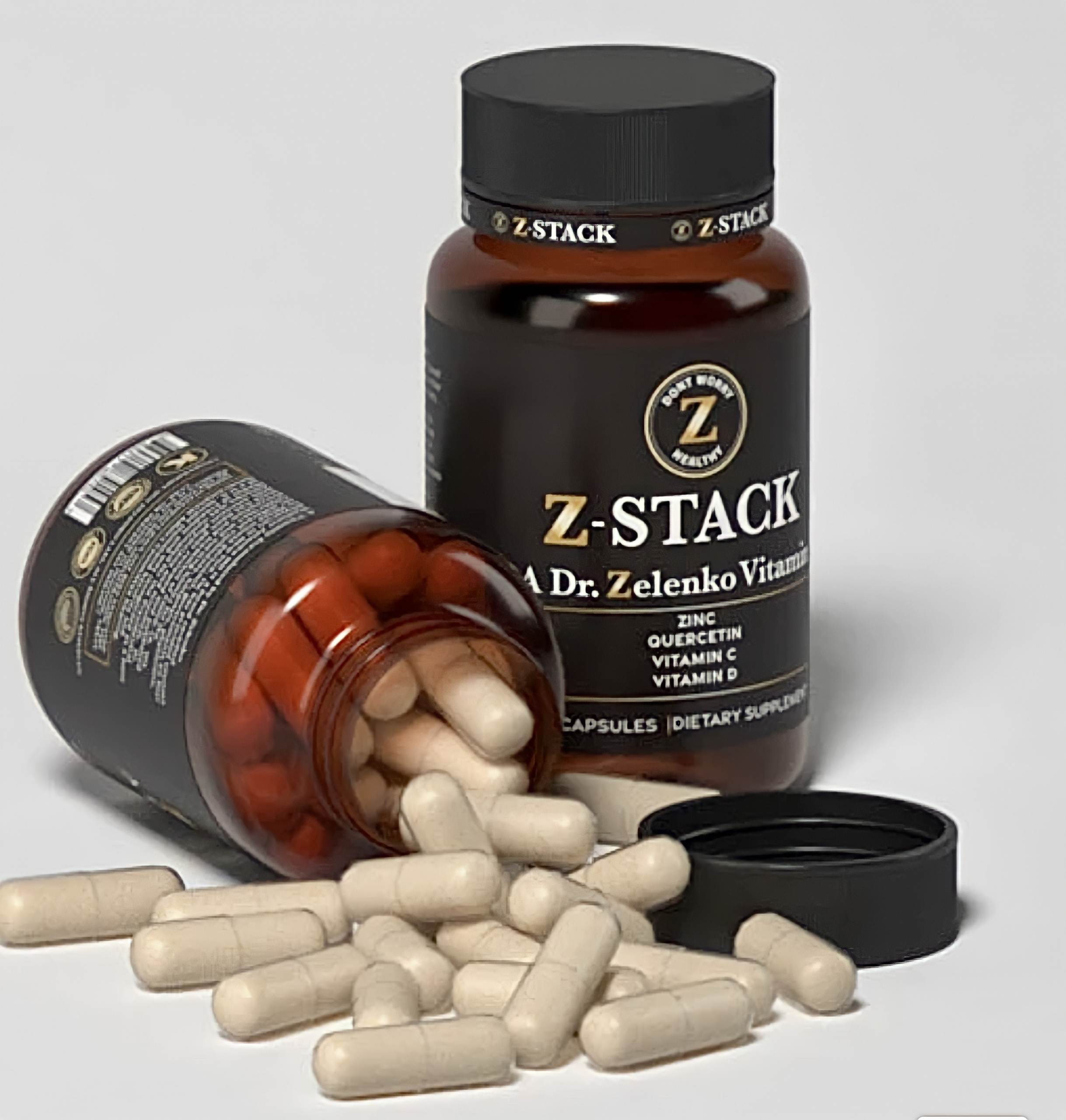
It's a combination of quercetin, zinc and vitamins -- he created what became the widely popular Z-Stack.
Why are quercetin and zinc so important for stopping viruses?
Watch Dr. Zelenko explain "the bullet and gun" approach for understanding zinc ionophores (transcript of highlights is below):
From the video:
"Zinc is the bullet - it kills the virus. The only problem is the bullet doesn't get to the place where it needs to be.
The virus is inside the cell. The enzyme is inside the cell. And the zinc on its own cannot get into the cell. You have a bullet without a gun - useless.
Now, it turns out there's a class of medications called 'zinc ionophores' or a class of substances called 'zinc ionophores' -- what they do -- is they open up a channel, a door, which allows zinc to go from outside the cell to inside the cell . . .
. . . They're the guns that shoot the bullet. The bullet then gets into the cell and stops the virus enzyme from helping the virus replicate.
So you have a gun and bullet. Only the synergy of the two creates a functioning unit . . .
. . . Patients were having trouble sourcing it, because it was four different ingredients that weren't always available in the same place. They had trouble finding the right doses.
It was a puzzle that was a little too complex for people to put together.
So I was asked as a necessity -- as a favor to people -- to produce something that has everything in one package.
It made sense to me, so with the help of my colleagues, we were able to produce a substance -- a compound called Z-Stack -- that has Vitamin C, Vitamin D, and most importantly has quercetin and zinc."
Carrying on Dr. Zelenko's legacy, Z-Stack is now available to everyone.
Z-Stack is:
-- Made of real, all-natural ingredients
-- Gluten-free
-- GMP-certified
-- Proudly made in the USA
To order Z-Stack directly from Dr. Zelenko's store, click here.
Click here to go directly to Dr. Zelenko's store.
Stay SAFE and stay HEALTHY!

(Note: Thank you for supporting businesses like the one presenting a sponsored message in this article and ordering through the links in this article, which benefits WLTReport. We appreciate your support!)
Add your vote here:
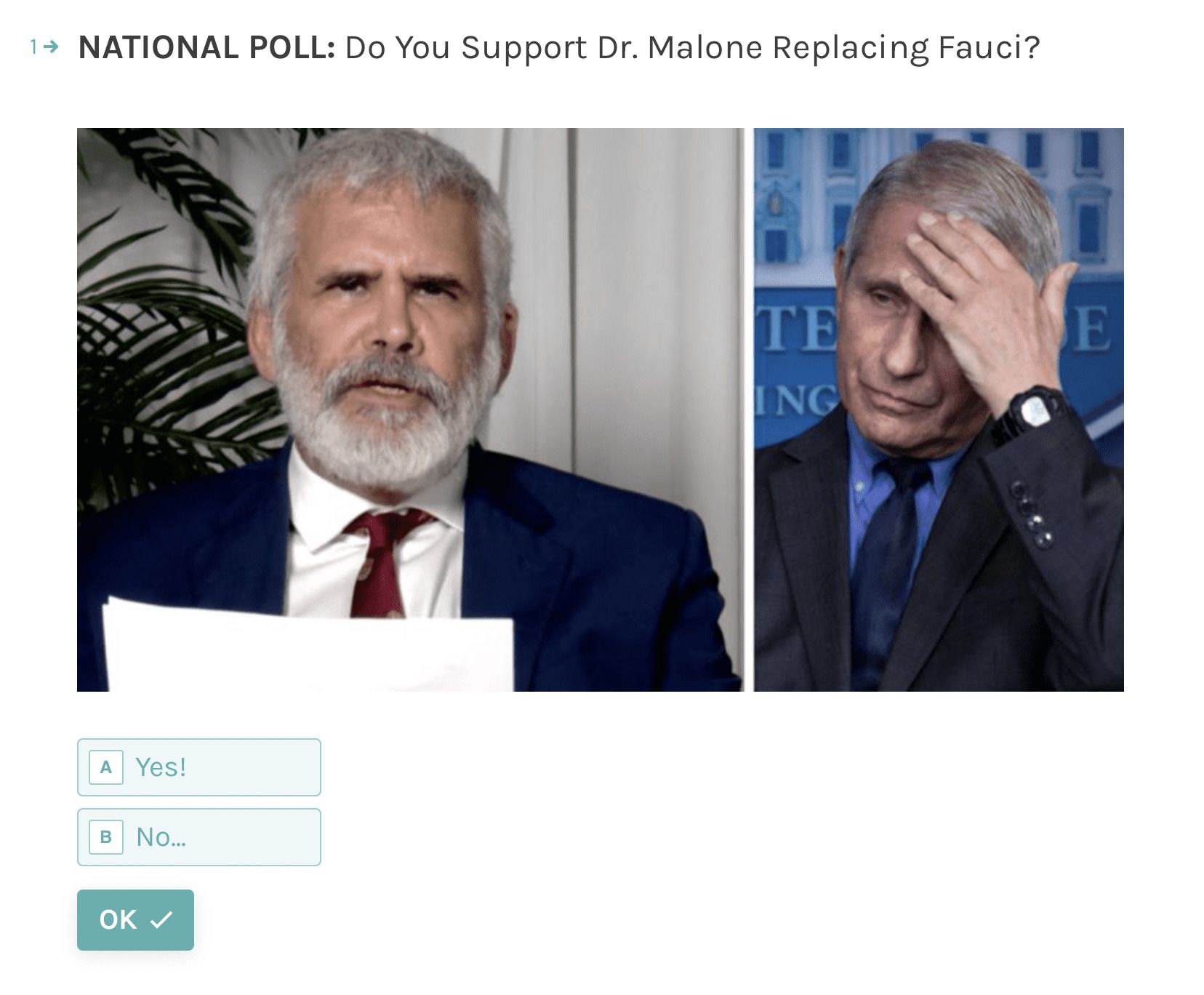
NATIONAL POLL: Do You Support Dr. Malone Replacing Fauci?
And if you're looking for Ivermectin, check this out....it might just blow your mind:
Can Ivermectin Treat Cancer? We Read The Medical Journals And The Results Might Surprise You!
Ok, one quick confession: I didn't read all the medical journals....I had my buddy ChatGPT assist me to read 200 MILLION medical journals and scholarly articles.
But the results most definitely may stun you!
I've covered this topic before but it continues to fascinate me so I'm covering it again and going WAY deeper!
Can Ivermectin treat, stop, reverse or even CURE cancer?
**At the end of this article, I'll show you where you can GET Ivermectin for yourself**
First, I have to give my standard disclaimer:
I'm not a doctor.
I'm not even a scientist.
Nothing in this article has been evaluated or approved by the FDA -- but let's be honest, that probably just means you should pay EXTRA attention to it, right?

Ok, we all good with the disclaimer?
Ok good!
Now, why am I even investigating this?
Because the more I look into it, the more I find!
When I first saw them come out so strong against Ivermectin, I knew it had to be pretty powerful and pretty good for humans in general!
I've never seen such an aggressive pushback by BigPharma, so I figured it probably did more than just treat COVID19.
Then I started seeing reports that it could treat cancer.
And I'm not just talking about posts on Twitter or TikTok....I'm talking about peer-reviewed medical journals!
I'll post my original report farther below, but first I want to show you what I found on ChatGPT.
I installed a special plugin that connects the OpenAI to a database of 200 million scholarly and medical journals and then I asked it to give me all peer reviewed medical journals that suggest Ivermectin can be effective in treating cancer.
I think you'll find this fascinating -- and for those of you who want the nitty gritty details, each article is linked so you can go read the full thing for yourself.
From ChatGPT:
Here are some scholarly articles focusing on the use of Ivermectin in treating cancer, organized by their publication date (newest first):
- The Detrimental Effect of Pre-Treatment with Ivermectin on Myocardial Ischemia
- Publication Date: 2023-10-25
- Authors: Sara Cheraghi, Shabnam Babataheri, H. Soraya
- Abstract: This study explores the effects of Ivermectin (IVM) on cardiovascular diseases, particularly focusing on myocardial ischemia in both ex vivo and in vivo.
- Neuroprotective effects of ivermectin against transient cerebral ischemia-reperfusion in rats
- Publication Date: 2023-09-27
- Authors: Behdad Seyyedabadi, Shabnam Babataheri, Ismail Laher, H. Soraya
- Abstract: Not available.
- Ivermectin induces nonprotective autophagy by downregulating PAK1 and apoptosis in lung adenocarcinoma cells
- Publication Date: 2023-09-23
- Authors: Man-Yuan Li, Jiao Zhang, Xiao Lu, Dong Zhou, Xufeng Deng, Quan-xing Liu, J. Dai, Hong Zheng
- Abstract: Not available.
- Outcome of Ivermectin in Cancer Treatment: An Experience in Loja-Ecuador (PDF)
- Publication Date: 2023-02-22
- Authors: Yuliana Jiménez-Gaona, Oscar Vivanco-Galván, Gonzalo Morales-Larreategui, Andrea Cabrera-Bejarano, Vasudevan Lakshminarayanan
- Abstract: This paper analyzes the use of ivermectin-based antiparasitic as a cancer treatment in the rural area of the Loja province, Ecuador, and the medical opinion regarding its use in humans.
- Drug repurposing of ivermectin abrogates neutrophil extracellular traps and prevents melanoma metastasis (PDF)
- Publication Date: 2022-09-05
- Authors: Hongjun Zhang, Xiaozhuo Xu, Rui Xu, T. Ye
- Abstract: This study identifies Ivermectin (IVM) as significantly inhibiting neutrophil extracellular traps (NETs) formation and preventing melanoma metastasis, with a focus on its effects on myeloid-derived suppressor cells (MDSCs) and CD8+T cells in a mouse melanoma model.
- Ivermectin: recent approaches in the design of novel veterinary and human medicines
- Publication Date: 2022-09-05
- Authors: M. C. Velho, Diego Fontana de Andrade, R. Beck
- Abstract: This review discusses strategies proposed in the last decade to improve the safety and efficacy of Ivermectin and to explore its novel therapeutic applications, including in cancer and viral infections.
- Ivermectin and gemcitabine combination treatment induces apoptosis of pancreatic cancer cells via mitochondrial dysfunction (PDF)
- Publication Date: 2022-08-26
- Authors: D. Lee, H. Kang, So Yi Kim, Myeong Jin Kim, Jae Woong Jeong, Woosol Chris Hong, S. Fang, Hyung Sun Kim, Yun-Sun Lee, H. Kim, Joon Seong Park
- Abstract: This study evaluates the anticancer effects of the combination of ivermectin and gemcitabine in pancreatic cancer, indicating that ivermectin exerts synergistic effects with gemcitabine, preventing pancreatic cancer progression.
- Forging Ahead the Repositioning of Multitargeted Drug Ivermectin
- Publication Date: 2022-05-16
- Authors: S. Atmakuri, Shweta Nene, D. Khatri, S. B. Singh, V. Sinha, Saurabh Srivastava
- Abstract: This review highlights the role of Ivermectin in unexplored avenues towards the repositioning of this multitargeted drug in cancer, viral, and bacterial infection, and malaria, providing insights into regulatory considerations of drug repurposing and current formulation strategies.
- Ivermectin and gemcitabine combination treatment enhances antitumor effect in pancreatic cancer through mitochondria dysfunction (PDF)
- Publication Date: 2022-04-30
- Authors: Daeun Lee, H. Kang, So Yi Kim, Myeong Jin Kim, Y. Lee, Hyung Sun Kim, Jung Min Lee, H. Kim, Joon Seong Park
- Abstract: This study explores the combination of Ivermectin and gemcitabine in enhancing the antitumor effect in pancreatic cancer, focusing on mitochondria dysfunction.
- Topical ivermectin: an off-label alternative to treat neonatal Scabies in the era of permethrin resistance
- Publication Date: 2022-02-21
- Authors: A. Bassi, V. Piccolo, G. Argenziano, C. Mazzatenta
- Abstract: This article discusses the use of topical ivermectin as an off-label alternative for treating neonatal Scabies, focusing on the era of permethrin resistance.
- Repurposing Ivermectin to augment chemotherapy’s efficacy in osteosarcoma
- Publication Date: 2022-01-01
- Authors: B. Hu, H. Tan, L. Yu, Q. Liao, W. Guo
- Abstract: This research investigates the potential of repurposing Ivermectin to enhance the efficacy of chemotherapy in osteosarcoma, focusing on its effects on proliferation, migration, and apoptosis in osteosarcoma cells.
- Ivermectin induces apoptosis of esophageal squamous cell carcinoma via mitochondrial pathway (PDF)
- Publication Date: 2021-12-01
- Authors: Nana Xu, Mengmeng Lu, Jiaxin Wang, Yujia Li, Xiaotian Yang, Xiaoshuang Wei, J-L Si, Jingru Han, Xiaojuan Yao, Juanmei Zhang, Junqi Liu, Yanming Li, Hushan Yang, D. Bao
- Abstract: This study examines the induction of apoptosis in esophageal squamous cell carcinoma by Ivermectin, focusing on the mitochondrial pathway.
- Progress in Redirecting Antiparasitic Drugs for Cancer Treatment (PDF)
- Publication Date: 2021-06-01
- Authors: Haoyang Huang, Qing He, Binghua Guo, Xudong Xu, Yinjuan Wu, Xue-Rong Li
- Abstract: This review discusses the redirection of conventional drugs, including Ivermectin, into cancer treatment, focusing on their anticancer potentials and underlying mechanisms.
- Computational Drug Repositioning and Experimental Validation of Ivermectin in Treatment of Gastric Cancer (PDF)
- Publication Date: 2021-03-31
- Authors: Hanne-Line Rabben, G. Andersen, Aleksandr Ianevski, M. K. Olsen, D. Kainov, J. Grønbech, T. Wang, Duan Chen, Chun-Mei Zhao
- Abstract: This study focuses on the repositioning of Ivermectin in the treatment of gastric cancer, combining computational predictions with in silico, in vitro, and in vivo approaches.
- Ivermectin converts cold tumors hot and synergizes with immune checkpoint blockade for treatment of breast cancer (PDF)
- Publication Date: 2021-03-02
- Authors: Dobrin D. Draganov, Z. Han, A. Rana, Nitasha R. Bennett, D. Irvine, Peter P. Lee
- Abstract: This research shows that Ivermectin induces immunogenic cancer cell death and enhances T cell infiltration into breast tumors, demonstrating synergy with immune checkpoint blockade.
- Antiviral Drug Ivermectin at Nanomolar Concentrations Inhibits Glycine-Induced Chloride Current in Rat Hippocampal Neurons (PDF)
- Publication Date: 2021-03-01
- Authors: J. Bukanova, E. Solntseva, R. Kondratenko, V. Skrebitsky
- Abstract: This study examines the effect of Ivermectin on chloride currents in rat hippocampal neurons, contributing to the understanding of its potential use in cancer treatment.
- Quantitative proteomics reveals a broad-spectrum antiviral property of ivermectin, benefiting for COVID-19 treatment (PDF)
- Publication Date: 2020-09-22
- Authors: Na Li, Lingfeng Zhao, X. Zhan
- Abstract: This study identifies ivermectin-related virus infection pathway alterations in human ovarian cancer cells, revealing its broad-spectrum antiviral property, including against COVID-19.
- Ivermectin converts cold tumors hot and synergizes with immune checkpoint blockade for treatment of breast cancer (PDF)
- Publication Date: 2020-08-24
- Authors: Dobrin D. Draganov, Z. Han, A. Rana, Nitasha R. Bennett, D. Irvine, Peter P. Lee
- Abstract: This research demonstrates how Ivermectin induces immunogenic cancer cell death and enhances T cell infiltration into breast tumors, showing synergy with immune checkpoint blockade.
- Antitumor effects of ivermectin at clinically feasible concentrations support its clinical development as a repositioned cancer drug
- Publication Date: 2020-05-30
- Authors: M. Juárez, Alejandro Schcolnik-Cabrera, G. Domínguez-Gómez, A. Chávez-Blanco, J. Díaz-Chávez, A. Dueñas-González
- Abstract: This article supports the clinical development of Ivermectin as a repositioned cancer drug, highlighting its antitumor effects at clinically feasible concentrations.
- Progress in Understanding the Molecular Mechanisms Underlying the Antitumour Effects of Ivermectin (PDF)
- Publication Date: 2020-01-01
- Authors: Jian Liu, Kun Zhang, Lin Cheng, He Zhu, Tianmin Xu
- Abstract: This review summarizes the antitumor effects of Ivermectin and its potential roles in cancer treatment, including its impact on various pathways and cellular functions.
I could have kept going but I cut it off after 20 results.
I also asked it to sort the results by date with newest first, and we ended with 1/1/2020, which means these 20 articles all came out within the last 3 years.
How many more do we have in the past decade or two?
A lot.
Now here's my original report which gives you a ton more information:
Can Ivermectin Treat Cancer? New Evidence Might Surprise You!
Let's get something out of the way right up front in this article....
I'm not a doctor.
I'm not even a scientist.
Nothing in this article has been evaluated or approved by the FDA -- but let's be honest, that probably just means you should pay EXTRA attention to it, right?
Ok, we all good with the disclaimer?
Great!
I'm a reporter and I report on what I see....
And right now I'm seeing a ton of people talking about Ivermectin as a possible treatment for cancer.
Let me give a SECOND disclaimer: do NOT read this article and stop taking cancer treatments or stop doing what your doctor tells you to do.
Listen to you doctor!
But....Ivermectin has been called a "Wonder Drug" (more on that in a minute) and NINE new scientific, peer-reviewed studies are showing it may be effective in treating or curing cancer....AND it's safer that Aspirin!
So if it were me, and I can only tell you what I would do, but if it were me or one of my family members, we'd listen to our doctor but I think I'd also be taking a high dose of Ivermectin on the side.
Read this for more on how incredibly SAFE Ivermectin is:
Now let's dig in and I'll show you everything I'm seeing about Ivermectin and Cancer...
We start on Twitter but we will end with peer-reviewed, scientific studies.
Nine of them, to be exact.
Let's start here:
https://twitter.com/StewVet/status/1711943721430729088
Once again, I can only talk about what I would do, but I'm considering going on a high dose Ivermectin treatment once per year as preventative medicine:
Believe it or not, high-dose Ivermectin may very well cure cancer.https://t.co/vwUCWFVqFM pic.twitter.com/OsTXkc90wX
— HatRabbit 🎩🐰🐭 (@HatRabbit17) October 7, 2023
And is this why Big Pharma hates it so much?
Knew it.
I said this well over a year ago.
How many times did I tell people to search the NIH site for "ivermectin and cancer" & then read the many the peer reviewed papers? #Ivermectin kills tumors. And cancer. @AprilHunter pic.twitter.com/bIYi6ADs1L— RealAprilHunter☯️ (@realaprilhunter) October 4, 2023
Now let's get scientific....
You know, REAL science, not "Fauci-ism".
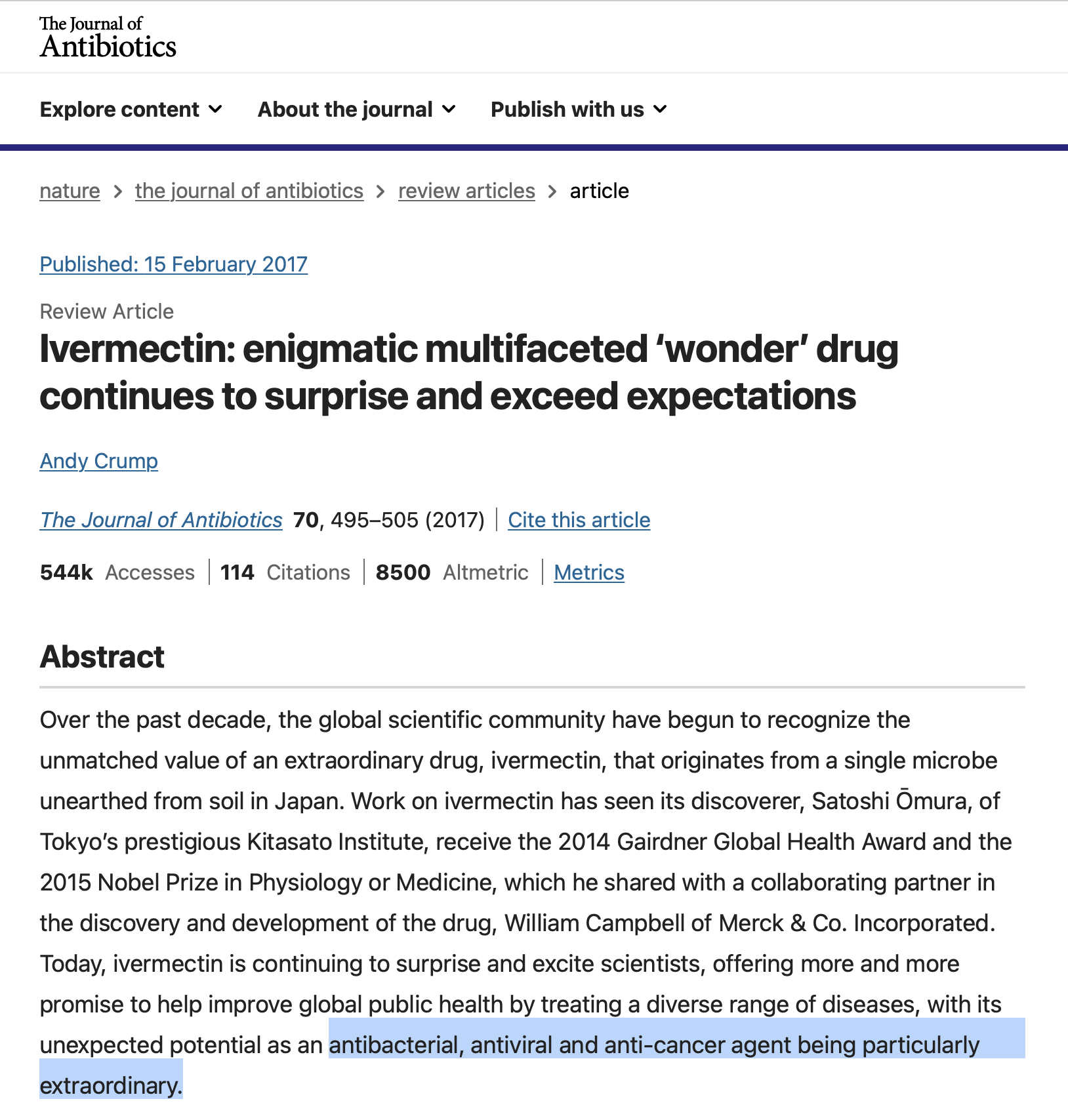
From The Journal of Antibiotics, published 2/15/17:
Read the full article yourself here.
"...unmatched value of an extraordinary drug..."
"...Antibacterial, antiviral and anti-cancer agent..."
Folks, that isn't my take or someone on Twitter or TikTok.
That is a medical journal.
Let's do another one....
From PubMed:
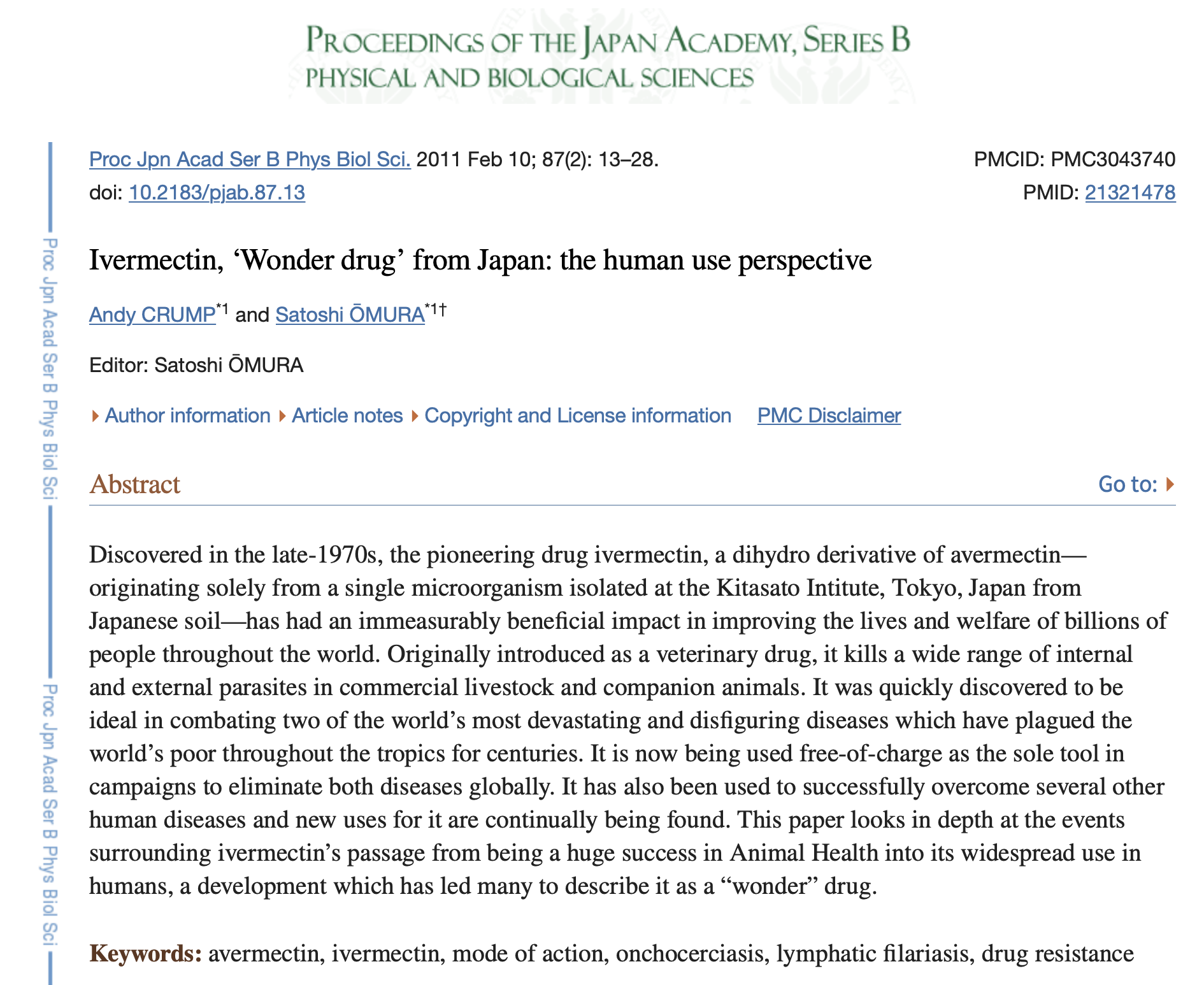
Read the full article yourself here.
"...led many to describe it as a 'wonder' drug."
Let's do another...
From the NIH.gov:
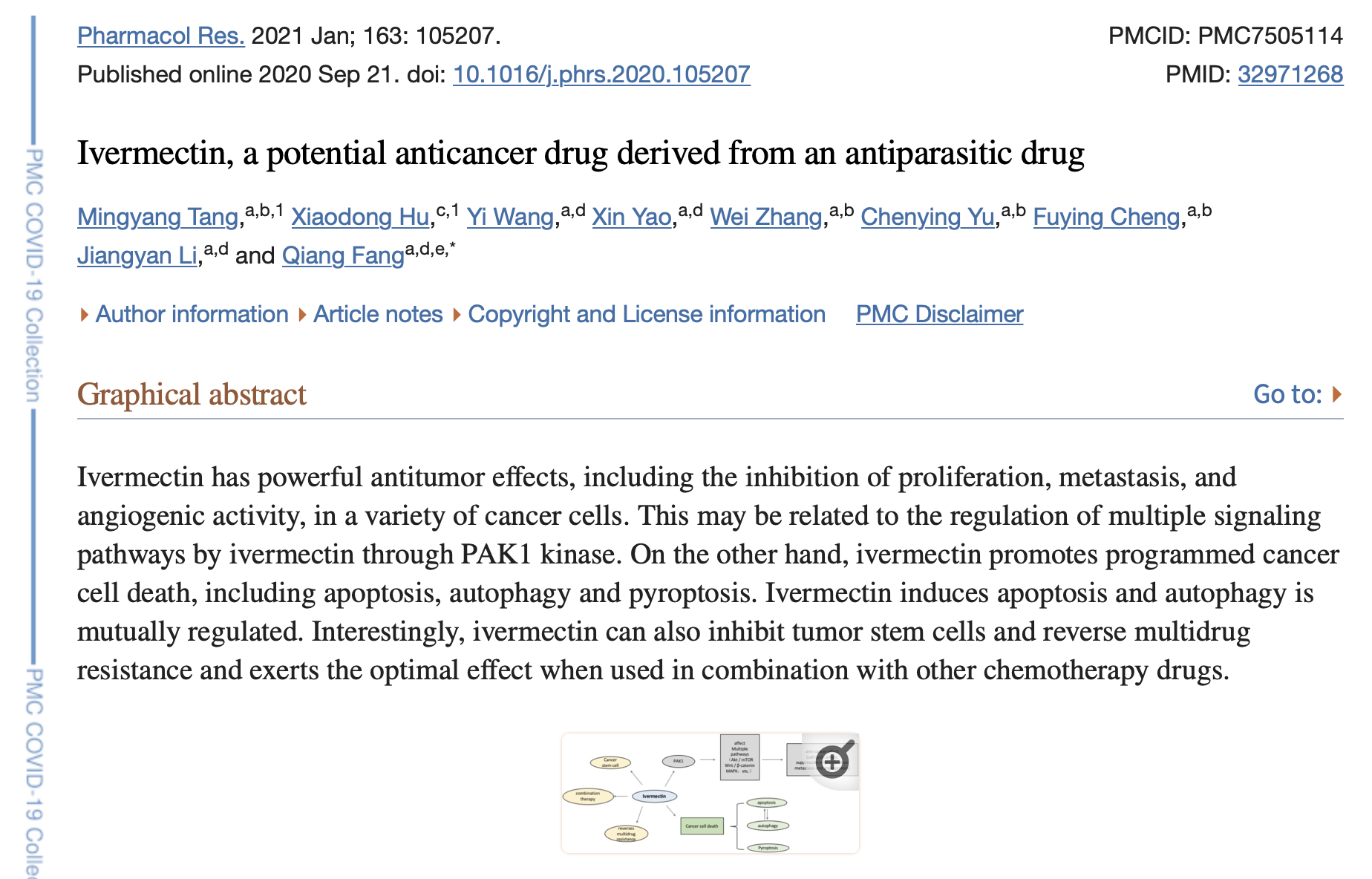
Read the full article here.
"...powerful antitumor effects...in a variety of cancer cells."
I repeat, this is not MY opinion, this is a medical journal!
In fact, there are MANY articles that all come to the same conclusion, across multiple different types of cancers.
Can Ivermectin Treat “Turbo Cancers”? - 9 Ivermectin Papers Reviewed
The drug once labeled “horse de-wormer” is now showing AT LEAST 15 anti-cancer mechanisms of action.https://t.co/Nt6kr0j8VH
— The Vigilant Fox 🦊 (@VigilantFox) October 10, 2023
Here are 9 of them, from VigilantNews:
Papers reviewed:
- 2023 Sep.23 - Man-Yuan Li et al - Ivermectin induces nonprotective autophagy by downregulating PAK1 and apoptosis in lungadenocarcinoma cells
- 2023 May - Samy et al - Eprinomectin: a derivative of ivermectin suppresses growth and metastatic phenotypes of prostatecancer cells by targeting the β-catenin signaling pathway
- 2022 Nov - Lotfalizadeh et al - The Anticancer potential of Ivermectin: Mechanisms of action and therapeutic implications
- 2022 Oct - Jian Liu et al - Progress in Understanding the Molecular Mechanisms Underlying the Antitumour Effects of Ivermectin
- 2022 Jun - Daeun Lee et al - Ivermectin suppresses pancreatic cancer via mitochondria dysfunction
- 2021 Aug - Shican Zhou et al - Ivermectin has New Application in Inhibiting Colorectal Cancer Cell Growth
- 2021 Jan - Mingyang Tang et al - Ivermectin, a potential anticancer drug derived from an antiparasitic drug
- 2019 Sep Intuyod et al - Anti-parasitic Drug Ivermectin Exhibits Potent Anticancer Activity Against Gemcitabine-resistant Cholangiocarcinoma In Vitro
- 2018 Feb - Juarez et al - The multitargeted drug ivermectin: from an antiparasitic agent to a repositioned cancer drug
You can see that FULL article over on MakisMD Substack here.
Now for the most obvious question:
Need LEGAL and SAFE Ivermectin? Read This!
We just reported yesterday that a new leaked report says airlines are looking to BRING BACK MASKS in October.
Yes, really.
I fully expect a new "planned-demic" will show up right in time for the 2024 election.
Oh they might not call it "COVID" again and probably they won't.
But I fully expect a new one to hit.
And I'm going to be prepared this time.
Whether it comes in the form of a bioweapon or something much more mundane like a tick bite or a Bill Gates' mosquito – you and your family need to be prepared. That’s where The Wellness Company comes in.
You know the Wellness Company and their great doctors – like Dr. Peter McCullough and Dr. Jim Thorp – are regularly in the media speaking out against the broken medical establishment.
Dr. Thorp, one of the nation’s leading critics of the corrupting influence of big pharma, believes that now – more than ever – people should be prepared for the next pandemic.
“I’ve strongly recommended “stock piling” critical medications including antibiotics since the turn of the century. This has been an incredible investment as many friends, family and patients have benefited. Now, in summer of 2023, this recommendation is even more crucial.” – Dr. Jim Thorp
The Wellness Company and their doctors are medical professionals that you can trust and their new medical emergency kits are the gold standard when it comes to keeping you safe and healthy.
Be ready for anything, this medical emergency kit contains an assortment of live-saving medications – including ivermectin and Z-pak. The medical emergency kit provides a guidebook to aid in the safe use of all of these life-saving medications.
From anthrax to tick bites to COVID and even to a bioweapon like the plague – the Wellness Company’s Medical Emergency kit is exactly what you need to have on hand to be prepared.
Rest assured knowing that you have emergency antibiotics, antivirals and anti-parasitics on hand to help keep you and your family safe from whatever the globalists throw at us next!
The Wellness Company Medical Emergency Kit includes:
- Amoxicillin-Clavulanate (generic Augmentin) 875/125 mg - 28 tablets
- Azithromycin (generic Z-Pak) 250 mg - 12 tablets
- Doxycycline Hyclate 100 mg - 60 capsules
- Metronidazole (generic Flagyl) 500 mg - 30 tablets
- Trimethoprim-Sulfamethoxazole (generic Bactrim) 800/160 mg - 28 tablets
- Ivermectin 18mg - 7 compounded capsules
- Fluconazole (generic Diflucan) 150 mg - 2 tablets
- Ondansetron (generic Zofran) 4mg - 6 tablets
- 1 virtual consult from a doctor you can trust
- 1 Emergency Medication Guidebook written by our Chief Medical Board for safe use.
The Wellness Company Medical Emergency Kit treats:
- Anthrax
- Bacterial Vaginosis
- Bite Wounds
- Bronchitis
- Chlamydia
- Clostridioides difficile
- Colitis
- COVID - 19
- Gonorrhea
- Giardiasis
- Lice
- Nausea & Vomiting
- Pharyngitis
- Pinworms
- Plague (bioterror)
- Pneumonia
- Rickettsial Infections
- Scabies
- Shigella Infection
- Sinusitis
- Skin Infection
- Strep Throat
- Syphilis
- Tetanus
- Tick Exposure
- Tonsillitis
- Traveler’s Diarrhea
- Trichomoniasis
- Tularemia (bioterror)
- Urinary Tract Infection
- Vaginal Candidiasis
- Viral Upper Respiratory Infection
Don’t be caught unprepared. Don’t be reliant on the broken and corrupt medical industrial complex. Don’t regret not acting today.
Order The Wellness Company’s Medical Emergency Kits today!
(Note: Thank you for supporting businesses like the one presenting a sponsored message below and ordering through the links below, which benefits WLT Report. We appreciate your support!)
RELATED:
👇
We Were RIGHT About Ivermectin From Day One!
PAGING DOCTOR FLIP-FLOP!
DOCTOR FLIP-FLOP, PLEASE REPORT TO THE OPERATING ROOM!
In a 180 degree flip-flop a politician would be jealous of, the U.S. Food and Drug Administration (FDA) now admits doctors can prescribe Ivermectin to treat COVID-19.
Yes, really.
During the COVID-19 plandemic, the FDA did everything possible to prevent doctors from prescribing the antiviral to treat COVID-19.
The corrupt agency compared people seeking ivermectin to horses.
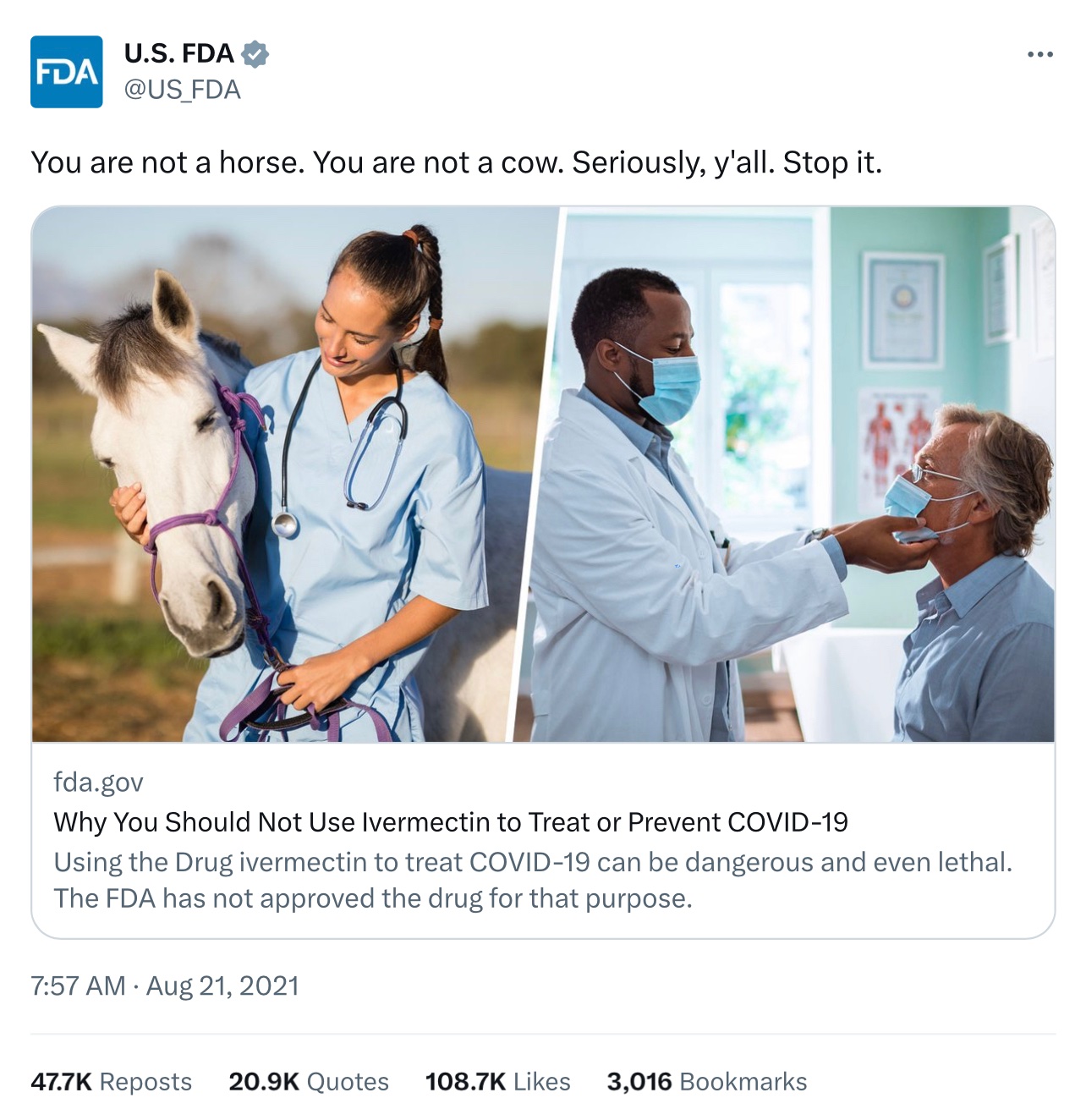
The federal government, mainstream media, Big Tech, and pharmacies created numerous barriers to prevent COVID-19 patients from obtaining ivermectin for treatment.
After millions of Americans lined up to take the experimental COVID-19 shots, the FDA changed course to say doctors can prescribe ivermectin for COVID-19.
Straight from the horse’s mouth. Now time for @US_FDA to issue a statement so my patients can get their prescriptions filled at @cvspharmacy and @Walgreens.https://t.co/r5khovfAfe
— Mary Talley Bowden MD (@MdBreathe) August 11, 2023
According to The Epoch Times, the "'FDA explicitly recognizes that doctors do have the authority to prescribe ivermectin to treat COVID,' Ashley Cheung Honold, a Department of Justice lawyer representing the FDA, said during oral arguments on Aug. 8 in the U.S. Court of Appeals for the 5th Circuit."
"FDA explicitly recognizes that doctors do have the authority to prescribe ivermectin to treat COVID."
Doctors are free to prescribe #Ivermectin to treat #COVID19, a lawyer representing the #FDA said this week. https://t.co/2IaViQTfjX
— The Epoch Times (@EpochTimes) August 10, 2023
From The Epoch Times:
The government is defending the FDA's repeated exhortations to people to not take ivermectin for COVID-19, including a post that said "Stop it."
The case was brought by three doctors who allege the FDA unlawfully interfered with their practice of medicine with the statements. A federal judge dismissed the case in 2022, prompting an appeal.
"The fundamental issue in this case is straightforward. After the FDA approves the human drug for sale, does it then have the authority to interfere with how that drug is used within the doctor-patient relationship? The answer is no," Jared Kelson, representing the doctors, told the appeals court.
The FDA explicitly stated that ivermectin "isn’t authorized or approved to treat COVID-19."
However, the agency attempted to excuse its corruption.
"FDA made these statements in response to multiple reports of consumers being hospitalized, after self medicating with ivermectin intended for horses, which is available for purchase over the counter without the need for prescription," Honold said.
In an interview with Maria Bartiromo, Senator Ron Johnson described the destruction caused by the actions of the FDA.
"The doctors I've been dealing with and talking to for yours now, they believe that probably hundreds of thousands of Americans lost their lives because they were denied early treatment," Johnson said.
"And they were denied it because the FDA sabotaged, for example, ivermectin. And they said, come on, you all, you're not a cow, you're not a horse. You know, this is supposedly horse medicine. No, this was a Nobel Prize-winning medicine that could have saved hundreds of thousands of lives."
WATCH:
The FDA has now endorsed treating COVID with Ivermectin! The FDA has blood on its hands. How many Americans senselessly died because Big Medicine called this cheap, readily available Nobel Prize winning medicine horse paste?
Thank you Ron Johnson your leadership and bravery. pic.twitter.com/m0d6EonC5Q
— Charlie Kirk (@charliekirk11) August 11, 2023
Read more from the court exchange from The Epoch Times:
Ms. Honold said that the FDA didn't purport to require anyone to do anything or to prohibit anyone from doing anything.
"What about when it said, 'No, stop it'?" Circuit Judge Jennifer Walker Elrod, on the panel that is hearing the appeal, asked. "Why isn't that a command? If you were in English class, they would say that was a command."
Ms. Honold described the statements as "merely quips."
"Can you answer the question, please? Is that a command, 'Stop it'?" Judge Elrod asked.
"In some contexts, those words could be construed as a command," Ms. Honold said. "But in this context, where FDA was simply using these words in the context of a quippy tweet meant to share its informational article, those statements do not rise to the level of a command."
The statements "don't prohibit doctors from prescribing ivermectin to treat COVID or for any other purpose" Ms. Honold said. She noted that the FDA, along with the statements, said that people should consult their health care providers about COVID-19 treatments and that they could take medicine if it was prescribed by the provider.
"FDA is clearly acknowledging that doctors have the authority to prescribe human ivermectin to treat COVID. So they are not interfering with the authority of doctors to prescribe drugs or to practice medicine," she said.
We actually told you all of this YEARS ago!
Our reporting has been spot on from Day 1, nice to see the FDA catching up to us, but very sad it took so long.
Here is one of our prior reports:
CONFIRMED: The True Story of Ivermectin Now Coming Out!
I continue to bring you the REAL news about Ivermectin....
Real, unfiltered news with no bias.
Just the facts, ma'am!
Like this one for example:
Two Separate Doctors Claim OVER 100 Members of Congress Treated With Ivermectin!
Anyone else mad yet?
But here's the deal...
Now the FDA is backtracking big time, trying to claim they never said you couldn't take Ivermectin.
Yes, really...hard to even believe!
But it's true, look at this:
The scumbags are backtracking. They knew all along Ivermectin and Hydroxychloroquine prevented covid. But the drug dealers would not making hundreds of billions on these functional drugs. So they poisoned billions of people with the mRNA test drug. Crimes against humanity. https://t.co/nia76r41lW
— Phenix Evely, PhD (@evely_phenix) November 22, 2022
And this:
I'm not making accusations. This will all come out in the wash eventually. The FDA in the US is already backtracking by claiming that when they said don't use ivermectin it was only a "suggestion."
— ConnectALLtheDots ...🟣⚪️🟢... (@thedotconnectr) December 12, 2022
They knew all along:
https://twitter.com/wolsned/status/1603157314147868672
In fact, some studies are now showing it MIGHT be highly effective at destroying cancer:
The horse dewormer strikes again. https://t.co/6qofYPNGHV
— Dr. Urso (@richardursomd) December 15, 2022
Catturd right again:
Remember when they said Ivermectin was only horse paste - and the low IQ, anti-science, useful idiots clapped like trained government seals.
— Catturd ™ (@catturd2) December 14, 2022
A wave of truth is coming out:

Join the conversation!
Please share your thoughts about this article below. We value your opinions, and would love to see you add to the discussion!