
Well, well well.
You try to ban chemical food dyes and guess who shows up?
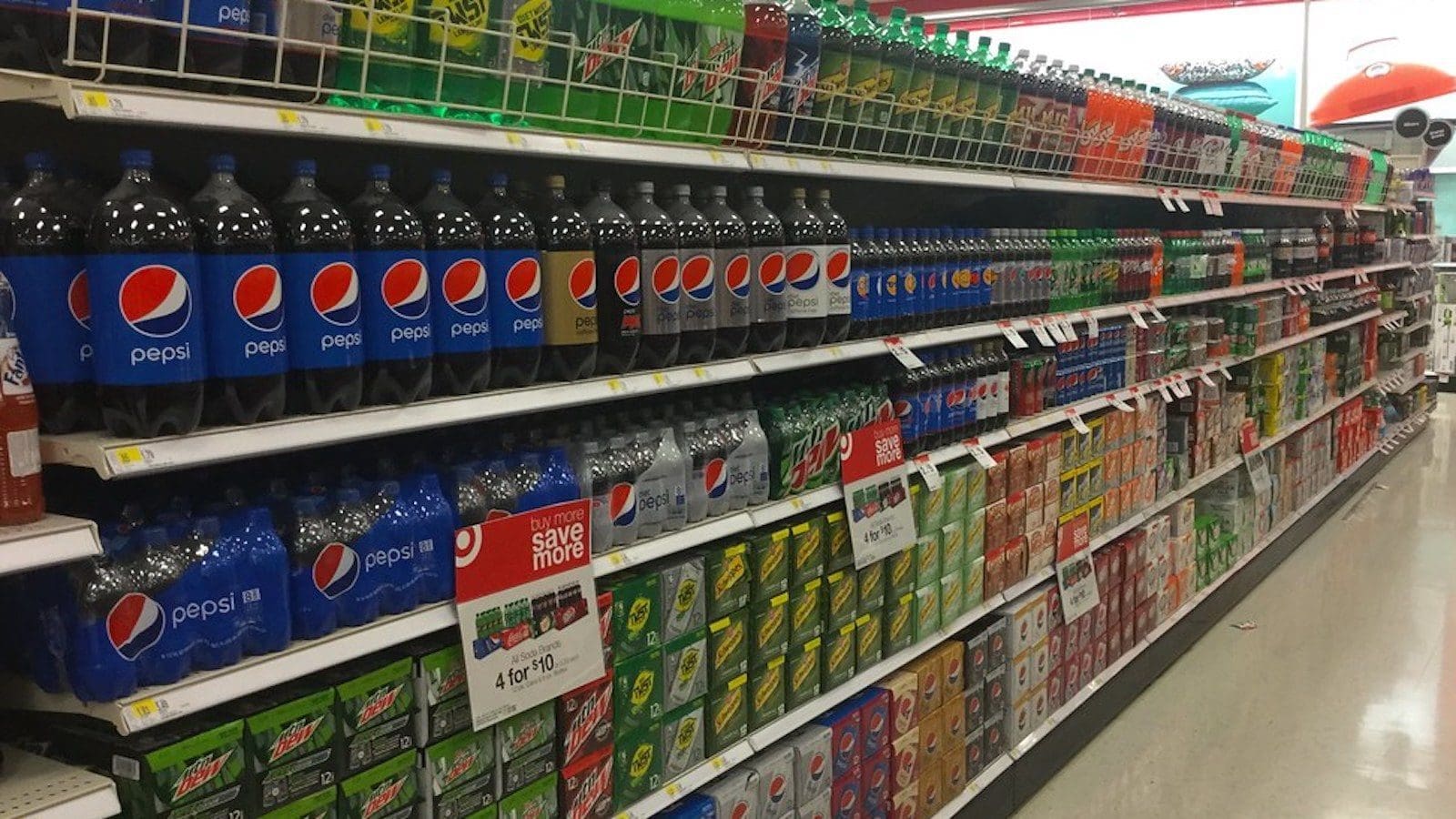
Well, the American Beverage Association just sent in the cavalry.
They’re swarming West Virginia’s Capitol to stop a bill banning synthetic food dyes.
Health Secretary RFK Jr. wants the dyes gone, linking them to kids’ behavioral issues, and other health issues.
West Virginia is set to be the first state to pull the plug, but Big Soda is trying to fight it.
Apparently they don’t want to spend the extra cost to use natural dyes in the sodas.
NEWS: Big Soda is trying to stop West Virginia lawmakers from banning harmful chemical food dyes, warning elected officials their state will face job losses and empty grocery store shelves if they go ahead with the health mandate.
"My question to them is, why aren’t the kids of… pic.twitter.com/71nxtoVojE
— Amber Duke (@ambermarieduke) March 12, 2025
RFK Jr has been saying for years that food dyes are not healthy.
A new report, described as “the most rigorous assessment of the behavioral effects of food dyes ever conducted,” is based on a review of the results of 27 clinical trials in children performed on four continents over the last 45 years. #TheDefender https://t.co/TB4NzOUt9m
— Robert F. Kennedy Jr (@RobertKennedyJr) May 11, 2021
Daily Caller reports:
Lobbyists from the American Beverage Association (ABA) descended on West Virginia’s state Capitol building Tuesday in an attempt to thwart a bill that would ban synthetic food dyes, lawmakers told the Daily Caller.
National lobbyists, who rarely, if ever, show up to Charleston, came out in full force to oppose HB 2354, which would ban the in-state sale of any food products containing Red 3, Red 40, Yellow 5, Yellow 6, Blue 1, Blue 2 and Green 3.
Newly minted Health and Human Services Secretary Robert F. Kennedy Jr. has lambasted the synthetic dyes and touted studies which show the dyes are linked to negative neurobehavioral outcomes in children.
ADVERTISEMENTKennedy Jr. held a meeting with top executives from the food and beverage industries Monday, making clear his desire to eliminate synthetic dies from American food products before he leaves office.
Following suit, West Virginia appears poised to become the first state to enact sweeping legislation to ban nearly all synthetic dyes, though not before the lobbyists have their say.
“I don’t think that they really care about what West Virginia does,” state senator Jason Barrett, who sponsored the senate’s version of the bill, told the Daily Caller. “I think they care about the message that West Virginia is sending to the rest of the country, that we’re willing to have the courage and we’re willing to be the first one to ban these harmful synthetic food dyes.”
The legislature passed the bill by a large margin on March 4. Out of 100 state house delegates, 93 voted in favor, as did 31 of 34 senators.
Typically after the state senate amends a bill as they did last Wednesday, the house would take it up the next day to concur, state Rep. Evan Worrell, who chairs the West Virginia House Health and Human Resources Committee, told the Daily Caller.
However, the House held the bill from concurrence last Thursday, then again on Friday.
“It’s frustrating because we have a new governor, he’s very Trump, MAGA. He supports the MAHA agenda but he is being worked over by the beverage association,” Worrell explained.
ABA, who represent PepsiCo, Coca-Cola and a plurality of other non-alcoholic beverages and soft drink corporations in America, have had national representation in West Virginia’s capital, Charleston, since the bill’s passage.
ADVERTISEMENT“It’s very uncommon for ABA to send a DC lobbyist to Charleston,” Barrett, who rolled his own bill banning synthetic dyes in school lunches into the larger senate bill, told the Caller.
The lobbyists have been threatening lawmakers with job losses and barren grocery store shelves.
“The natural result will be empty store shelves and sky-high grocery prices,” West Virginia Beverage Association (WVBA) president Larry Swann told legislators in an email obtained by the Daily Caller.
Swann also threatened Worrell with a shutdown of a new Pepsi distribution center in his district. “The first thing he told me two weeks ago was that all these people are gonna lose their jobs if I run this bill,” he told the Caller.
ADVERTISEMENT“I got mad and slammed my fist on the table and I told him, ‘Don’t ever threaten me with jobs again. I’ll make sure everybody knows who you really are.’”
Swann, Worrell noted, had hardly ever made his presence in the capital known, until now.
“I’ve been here seven years in the house, this is the most I’ve ever seen him. I’ve never even seen him in our hallway. He’s never been around. Very rarely have I seen him but now he’s been in the halls every day since this bill,” Worrell said.
Swann’s email claimed that 60% of grocery store items in the state would disappear. A spokesperson for Americans for Food and Beverage Choice reiterated the claim, noting that a mass ban of food dyes would impact consumers negatively because of widespread supply chain disruptions.
Seems like they’re really panicked over this bill.
Vani Hari writes:
The American Beverage Association is saying if States ban dyes, 60% of their store shelves would be empty.
Admitting that 60% of grocery store food has petroleum and coal tar based ingredients in them – this in itself is a travesty and why we desperately need this legislation to pass.
ADVERTISEMENTWhen Europe regulations took place in 2010, it was less than a year for the top food companies to reformulate their products without dyes. They don’t need to reinvent the wheel, they already have the formulations and are using scare tactics to keep poisoning Americans with ingredients they don’t use in other countries.
The American Beverage Association is saying if States ban dyes, 60% of their store shelves would be empty. Admitting that 60% of grocery store food has petroleum and coal tar based ingredients in them – this in itself is a travesty and why we desperately need this legislation to…
— Vani Hari (@thefoodbabe) March 12, 2025
I guess Big Soda wasn’t happy about RFJ Jr wanting to ban a $113 billion program that benefited them.
RFK Jr. suggests banning candy and soda from the $113 billion government program for low-income families: ‘We shouldn’t be subsidizing people to eat poison’.
I would go one step further and ban processed foods. #MAHA pic.twitter.com/xXl1rePvhE
— Jill McGowan (@Arizona4RFKJR) February 23, 2025
And how much of it are we funding?
Did you know that our tax dollars essentially subsidize Coca-Cola and PepsiCo?
Our SNAP program spends $115B a year and about 10% goes to Big Soda. Nearly $11.5B to Big Soda. SNAP's motto is supposed to be "putting healthy food within reach."
How does subsidizing Coke do that? pic.twitter.com/MZD22KV3PC
— Robby Starbuck (@robbystarbuck) February 18, 2025
Time to remove the high fructose syrup from soda, along with the dyes.
Sean Hannity: “Do you have a problem with sugary drinks or Diet Coke?”
RFK Jr: “Yes.”
“I'm not gonna take them away from people, but we shouldn't be subsidizing them.”
“We need to change that, and we are gonna change that. We're gonna do that very quickly.” pic.twitter.com/AgYCJwUVDQ
— American Values 🗽 (@AVPac_US) March 12, 2025
They can avoid the whole issue with chemical dyes by bringing back Crystal Pepsi, made with sugar.
Problem solved.
Who remembers Crystal Pepsi? pic.twitter.com/NYmuDoIKt9
— Jaime (@jayhawk4life519) January 21, 2025

Join the conversation!
Please share your thoughts about this article below. We value your opinions, and would love to see you add to the discussion!