

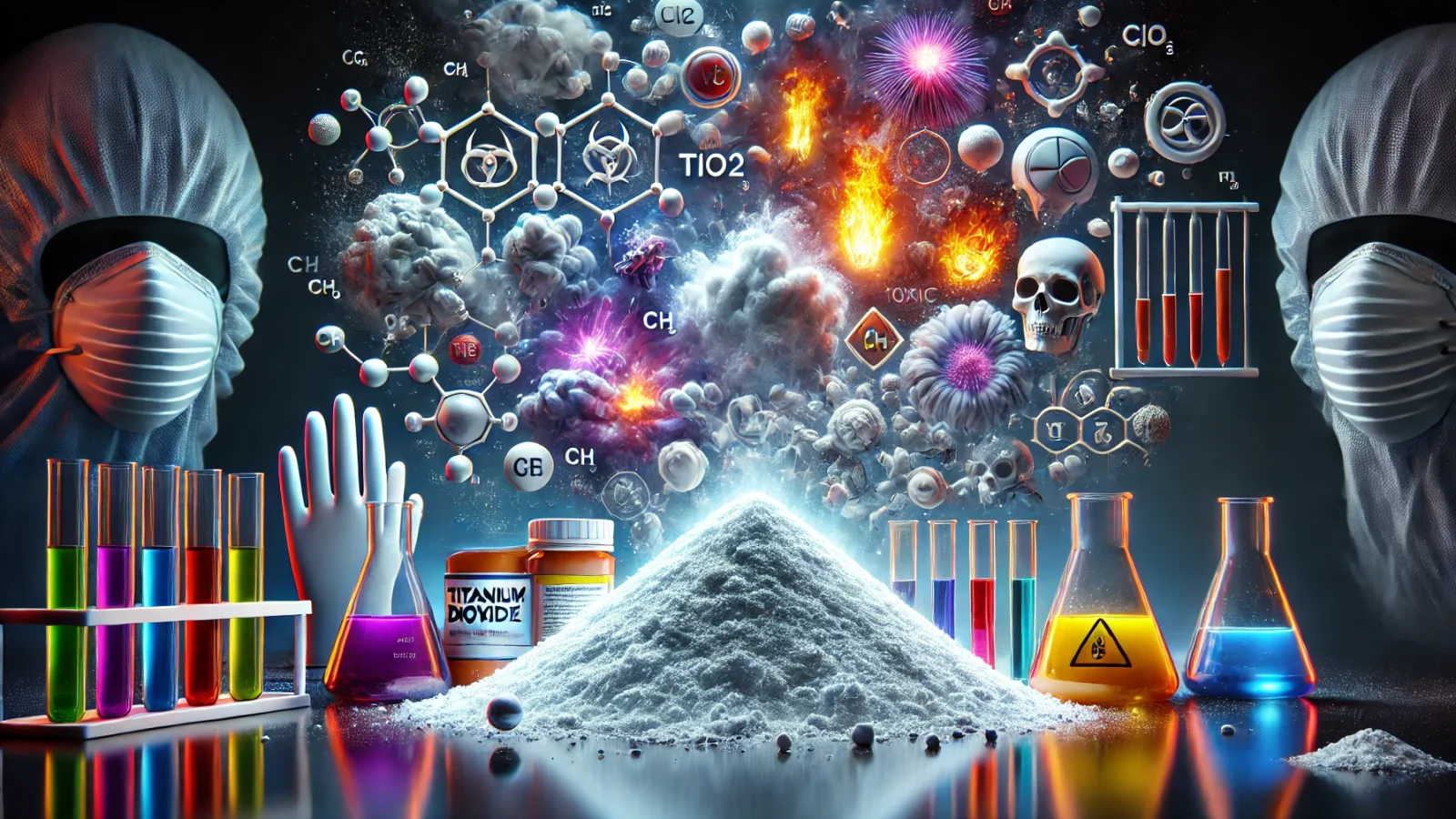
- Titanium dioxide (TiO2) is a white, powdery substance used as a pigment in paints, plastics, cosmetics and food. It has no nutritional value and is purely aesthetic.
- Titanium dioxide nanoparticles, which are extremely small, can penetrate cells and tissues, accumulating in the gut, liver and spleen. Studies link them to DNA damage, inflammation and cancer.
- Research shows TiO2 can harm good gut bacteria, cause intestinal inflammation and contribute to colorectal cancer and inflammatory bowel disease.
- The European Union banned titanium dioxide as a food additive in 2022 due to concerns about genotoxicity.
- In contrast, the U.S. FDA still considers it safe, relying on outdated safety reviews from 1973. Critics argue the U.S. lacks adequate oversight and precautionary measures.
What is titanium dioxide?
Titanium dioxide is a white, powdery substance used primarily as a pigment in paints, plastics and cosmetics. In food, it’s labeled as E171 and added to products like candies, chewing gum, baked goods and even some dairy items to enhance their color and texture. It has no nutritional value; its sole purpose is aesthetic. Despite its widespread use, titanium dioxide has come under scrutiny in recent years due to growing evidence of its potential harm to human health. Studies have linked it to DNA damage, inflammation and cancer. The primary concern with titanium dioxide lies in its nanoparticle form. Nanoparticles are incredibly tiny particles that can easily penetrate cells and tissues. When ingested, these particles can accumulate in the body, particularly in the gut, liver and spleen. Research has found that titanium dioxide nanoparticles can cause genotoxicity, meaning they can damage DNA and potentially lead to cancer. A study published in Food and Chemical Toxicology found that titanium dioxide nanoparticles induced DNA damage in human intestinal cells, raising concerns about their role in colorectal cancer. (Related: FDA proposes ban of popular food additive linked to negative side effects.) Additionally, titanium dioxide has been linked to intestinal inflammation and disruptions to the gut microbiome, the community of beneficial bacteria that plays a crucial role in digestion, immunity and overall health. A study published in Nanotoxicology also found that mice fed titanium dioxide experienced significant gut inflammation and changes to their gut bacteria, which could increase the risk of inflammatory bowel disease and other chronic conditions.The brain-gut connection
The dangers of titanium dioxide aren’t limited to the gut. Emerging research suggests that nanoparticles can cross the blood-brain barrier, potentially harming the nervous system. A study published in the Archives of Toxicology found that titanium dioxide exposure in mice led to changes in gut bacteria and locomotor dysfunction, suggesting a link between the additive and neurological issues. Even more alarming, a 2025 study published in Alzheimer’s and Dementia found that titanium dioxide nanoparticles can bind to neurons, triggering oxidative stress and inflammation — two key factors in the development of neurodegenerative diseases like Alzheimer’s.Why is titanium dioxide still allowed in the U.S.?
In 2022, the European Food Safety Authority (EFSA) concluded that titanium dioxide could no longer be considered safe for human consumption due to concerns about genotoxicity. This led to a ban across the European Union. In contrast, the Food and Drug Administration (FDA) maintains that titanium dioxide is safe for use in food. According to reports, the agency last reviewed the additive’s safety in 1973, long before the rise of nanotechnology and the growing body of research highlighting its risks. Public health advocates also argue that the FDA’s outdated safety standards are putting Americans at risk.What can you do to protect yourself?
While policy changes are needed to address the widespread use of titanium dioxide, there are steps you can take to reduce your exposure to this harmful chemical: Read labels carefully Titanium dioxide may be listed as “E171” or simply as “artificial color.” Avoid products that contain these ingredients. Choose whole foods Opt for minimally processed foods, which are less likely to contain artificial additives. Support advocacy efforts Organizations like the Center for Science in the Public Interest (CSPI) are pushing for stricter regulations on food additives. Supporting these efforts can help drive change. The case of titanium dioxide highlights a broader issue: The lack of oversight and transparency in the U.S. food system. While Europe has taken a precautionary approach – banning additives until they are proven safe – the U.S. often allows chemicals to remain in use until they are proven harmful. As a consumer, you have the power to demand better. By staying informed and making conscious choices, you can protect your health and push for a food system that prioritizes safety over profit. Watch the video below for more information about titanium oxide in Skittles. This video is from the Andrew Zebrun III channel on Brighteon.com.More related stories:
Common ingredient used in baked goods and processed foods linked to LOWER sperm counts. The battle for a safer food supply: Consumers demand FDA ban cancer-causing Red Dye No. 3. FDA finally takes action on toxic Red Dye 3. Check out these 7 food additives that are BANNED in Europe but commonly used in the U.S. Sources include: ChildrensHealthDefense.org NSF.org CSPINET.org Brighteon.com RELATED REPORT:WAKE UP AMERICA…Your Food Is BANNED In 30+ Countries!
WAKE UP AMERICA...Your Food Is BANNED In 30+ Countries!
Why are Americans fat, sick and diseased? Sure, lack of willpower may be part of it.... But I think there is a much bigger reason. FOOD. The "food" we eat, and yes I have to put that in quotes. We all know that some things we eat aren't good for us, but you might not know that even when you're trying to eat good food, you're often eating things that are literally BANNED in other countries. But they feed them to you by the gallon here in America! It's why you'll often hear stories (or tell them yourself) of people who travel over to Europe and they'll say "we ate all the time, but we never felt sick and we actually started to feel a lot better during our stay." Why? Because they're not eating all the literal poisons that are in our foods. Allow me to explain... Let's start off right here with 13 chemical additives that are banned in most other countries, but still used in the USA: I asked ChatGPT to give me a more comprehensive list and this is what it gave me -- pretty mind-blowing (and depressing):
Creating a comprehensive list of 100 specific American foods and food additives that are allowed in the USA but banned in other countries on the spot is quite challenging, given the vast number of food items and the differences in regulations across countries. However, I can highlight some well-known examples to give you an idea of the types of products and additives that often face bans or restrictions outside the United States. This will not reach 100 items, but it will provide insight into some key substances:Here's another list... Do you see Arsenic? That's LITERAL rat poison, and it's approved for use in our food here in the USA in certain quantities:
- rBGH (Recombinant Bovine Growth Hormone) - Used to increase milk production in dairy cows. Banned or restricted in the EU, Canada, and other countries due to animal welfare and potential health risks.
- Brominated Vegetable Oil (BVO) - Used in some soft drinks and sports drinks to stabilize the emulsion. Banned in the EU and Japan due to health concerns.
- Azodicarbonamide (ADA) - Used as a bleaching agent in flour and a dough conditioner. Banned in the EU and Australia due to potential health risks.
- BHA (Butylated Hydroxyanisole) and BHT (Butylated Hydroxytoluene) - Used as preservatives in various foods, including snacks and cereals. Banned or restricted in parts of the EU and Japan due to potential carcinogenic effects.
- Artificial Colors (e.g., Blue 1, Blue 2, Yellow 5, and Yellow 6) - Used in candies, beverages, and other processed foods. Banned or restricted in Norway, Finland, and Austria, among others, due to health concerns.
- Olestra (Olean) - A fat substitute used in some snack foods. Banned in Canada and the EU due to gastrointestinal side effects.
- Potassium Bromate - Used as a flour improver to strengthen dough. Banned in the EU, Canada, and China among others due to carcinogenic concerns.
- Arsenic - Found in some animal feeds, especially in poultry industry. Banned or restricted in the EU.
- GMOs (Genetically Modified Organisms) - Specific GMO crops are banned or heavily regulated in many countries, including much of the EU, due to environmental and health concerns.
- Propylparaben - Used as a preservative in various food products. Banned or restricted in the EU for use in certain foods due to potential endocrine-disrupting effects.
- High Fructose Corn Syrup (HFCS) - While not banned in many countries, it's subject to higher regulations and less commonly used in countries like the EU due to health concerns.
- Diacetyl - Used for butter flavoring in microwave popcorn and other foods. Restricted due to respiratory health concerns in occupational settings.
- Neonicotinoid Pesticides - While not a food additive, these pesticides used on crops are banned or restricted in the EU due to concerns about their impact on bee populations.
- Trans Fats (Partially Hydrogenated Oils) - Used in processed foods and baked goods. Severely restricted or banned in several countries due to heart disease risk.
- Aluminum-based Additives - Used in processed foods and as colorants. Restricted in some countries due to potential health risks.
- Theobromine - Used in some baked goods and to enhance flavor in chocolate products. Subject to regulation in some countries due to its effects similar to caffeine.
- Carrageenan - Used as a thickener and emulsifier in dairy and other products. Banned or restricted in infant formula in the EU due to digestive system concerns.
- Sodium Nitrite/Nitrate - Used for curing meats. While not banned, it is more heavily regulated in some countries due to potential cancer risks.
- Red Dye No. 40 (Allura Red AC) - A common food dye. Restricted in parts of the EU and associated with hyperactivity in children.
- Soylent - A meal replacement product. Banned in Canada for not meeting a meal replacement classification.
- Glyphosate-Based Herbicides - Widely used agricultural chemical. Banned or restricted in several countries due to potential carcinogenic and environmental effects.
- Meat from Cloned Animals - While not a substance, the sale of meat from cloned animals is allowed in the US but banned or restricted in the EU.
- Ethoxyquin - Used as a preservative in pet foods and some human foods like spices. Banned in the EU for certain uses due to potential health risks.
- Acrylamide - Not an additive, but a chemical that forms in some foods during high-temperature cooking. EU has stricter regulations to limit exposure.
- TBHQ (Tertiary Butylhydroquinone) - A preservative used in many processed foods. Limited use or restrictions in the EU due to potential health effects.
- Chlorpyrifos - A pesticide used on crops. Banned or restricted in the EU and other countries due to developmental risks.
- Dimethyl Dicarbonate (Velcorin) - Used in the beverage industry for microbial control. Restrictions vary due to toxicity concerns.
- Methyl Silicone - Used in non-food products but can migrate to food from treatments like antifoaming agents. Regulations vary.
- Phosphate Additives - Used in various processed foods. More heavily regulated in some countries due to health concerns related to heart disease.
- Quaternary Ammonium Compounds (Quats) - Used in food processing as antimicrobial agents. Restrictions vary due to potential health risks.
- Acesulfame Potassium - An artificial sweetener. While approved in the US, it faces more scrutiny and limitations in other countries due to safety concerns.
- Sucralose - Another artificial sweetener. Some countries recommend more moderate consumption due to potential health impacts.
- Titanium Dioxide - Used as a whitening agent in foods. Banned as a food additive in the EU due to concerns over nanoparticle effects on health.
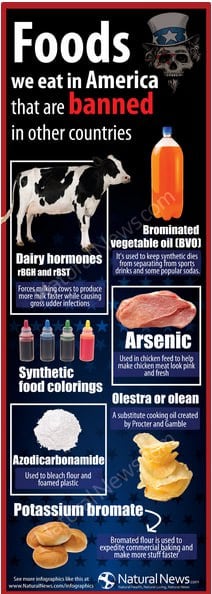 Here's what ChatGPT says about arsenic in our American food -- my favorite part is how they work to "reduce" the amount of arsenic in baby food. REDUCE? How about eliminate and ban???
The FDA actively monitors and regulates the presence of arsenic in foods within the United States to ensure the safety of the food supply. Arsenic, a toxic element, can be present in food due to environmental contamination in soil, water, or air. The FDA's efforts to manage arsenic levels include testing foods for total arsenic, distinguishing between organic (less harmful) and inorganic (more harmful) forms, and conducting risk assessments to understand the potential health risks associated with arsenic exposure from food. One significant focus has been on reducing arsenic exposure in foods commonly consumed by infants and young children, such as rice and rice products, because of their vulnerability to the harmful effects of these contaminants. The FDA's actions include establishing "action levels" for inorganic arsenic in infant rice cereals and apple juice to minimize exposure. The action level for inorganic arsenic in infant rice cereal, for example, aims to protect the health of the most vulnerable populations, including babies, by setting a recommended maximum amount of inorganic arsenic allowed in these products. The FDA emphasizes the importance of a balanced diet to reduce the risks associated with arsenic and other contaminants, suggesting that diversifying foods can help limit exposure. Additionally, the FDA's "Closer to Zero" plan outlines steps to reduce exposure to arsenic, lead, cadmium, and mercury in foods eaten by babies and young children to the lowest possible levels.Ok, now let's take SPECIFIC foods and I think you'll be blown away by this. Starting with good old Kraft Macaroni and Cheese. Look at what your kids eat in the USA vs what they give you in the UK:
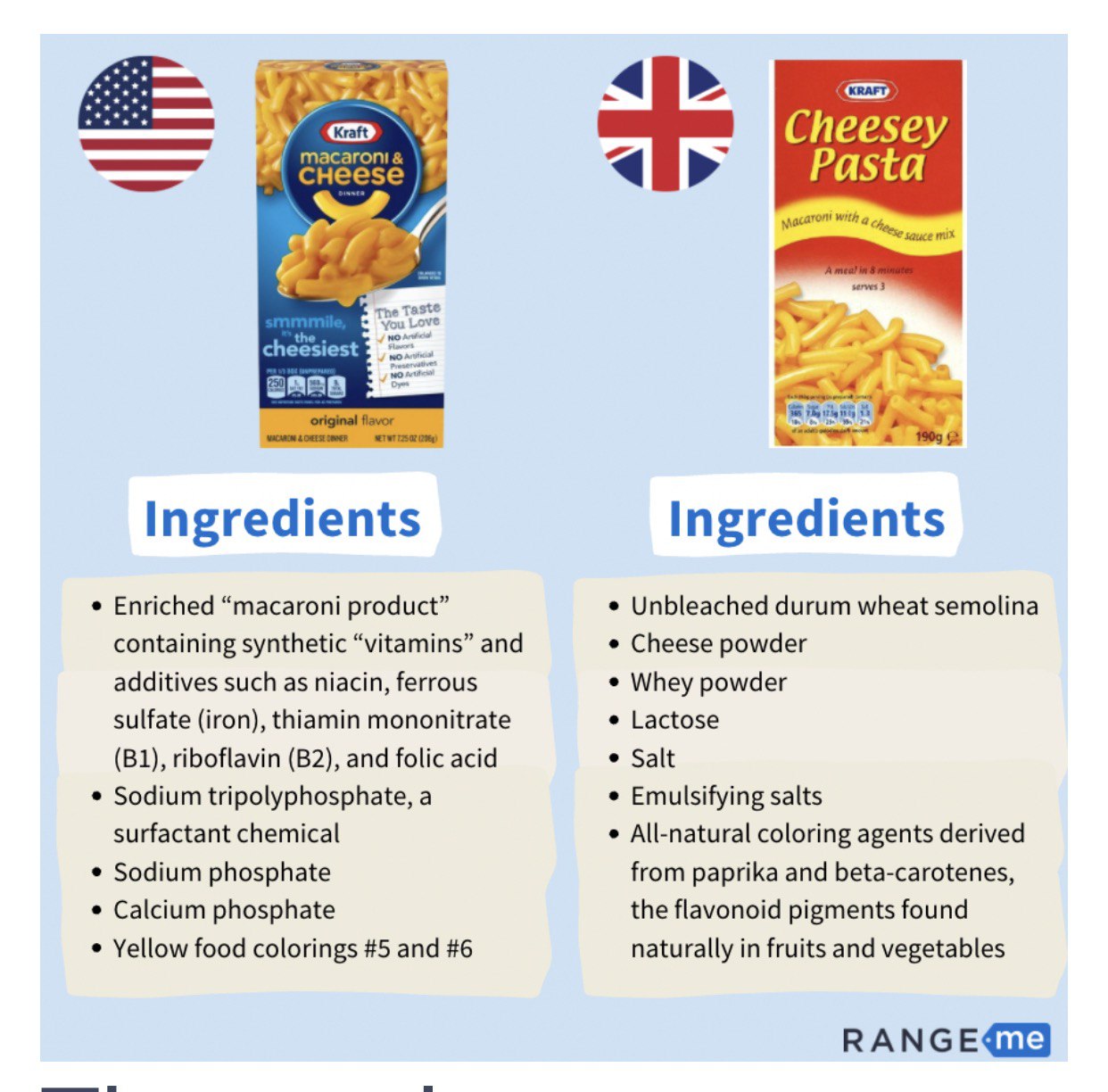 We all know Mac and Cheese isn't the most healthy in the first place.
But say you're trying to eat better and you go for Oatmeal?
Here's what you get in the USA vs. the UK:
We all know Mac and Cheese isn't the most healthy in the first place.
But say you're trying to eat better and you go for Oatmeal?
Here's what you get in the USA vs. the UK:
 Which one do you want to eat?
Now let's do McDonalds fries:
Which one do you want to eat?
Now let's do McDonalds fries:
 And Mountain Dew (an old favorite of mine that I had to give up years ago):
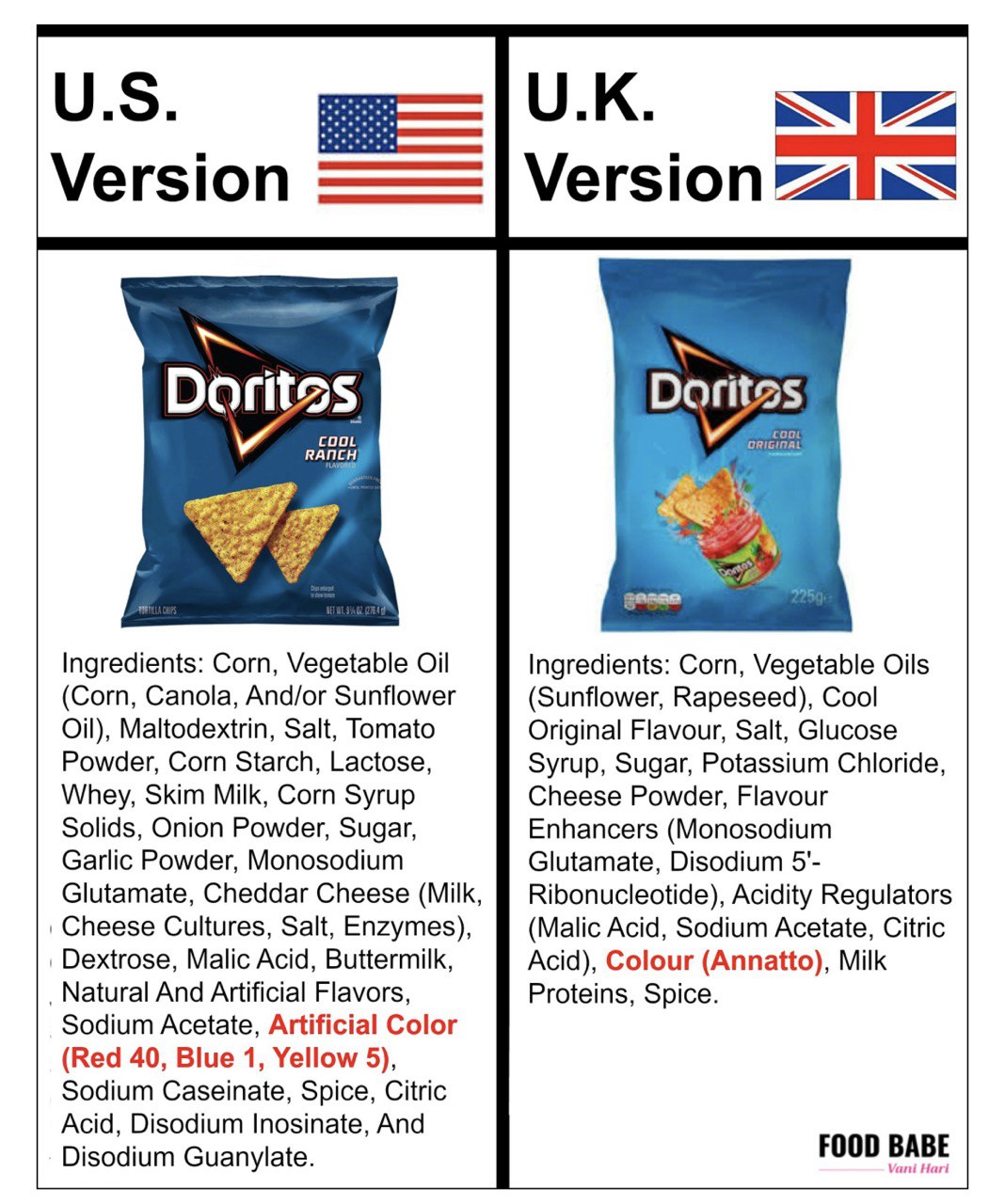
 Check out this list of ingredients for Doritos:
 And Frosted Flakes:
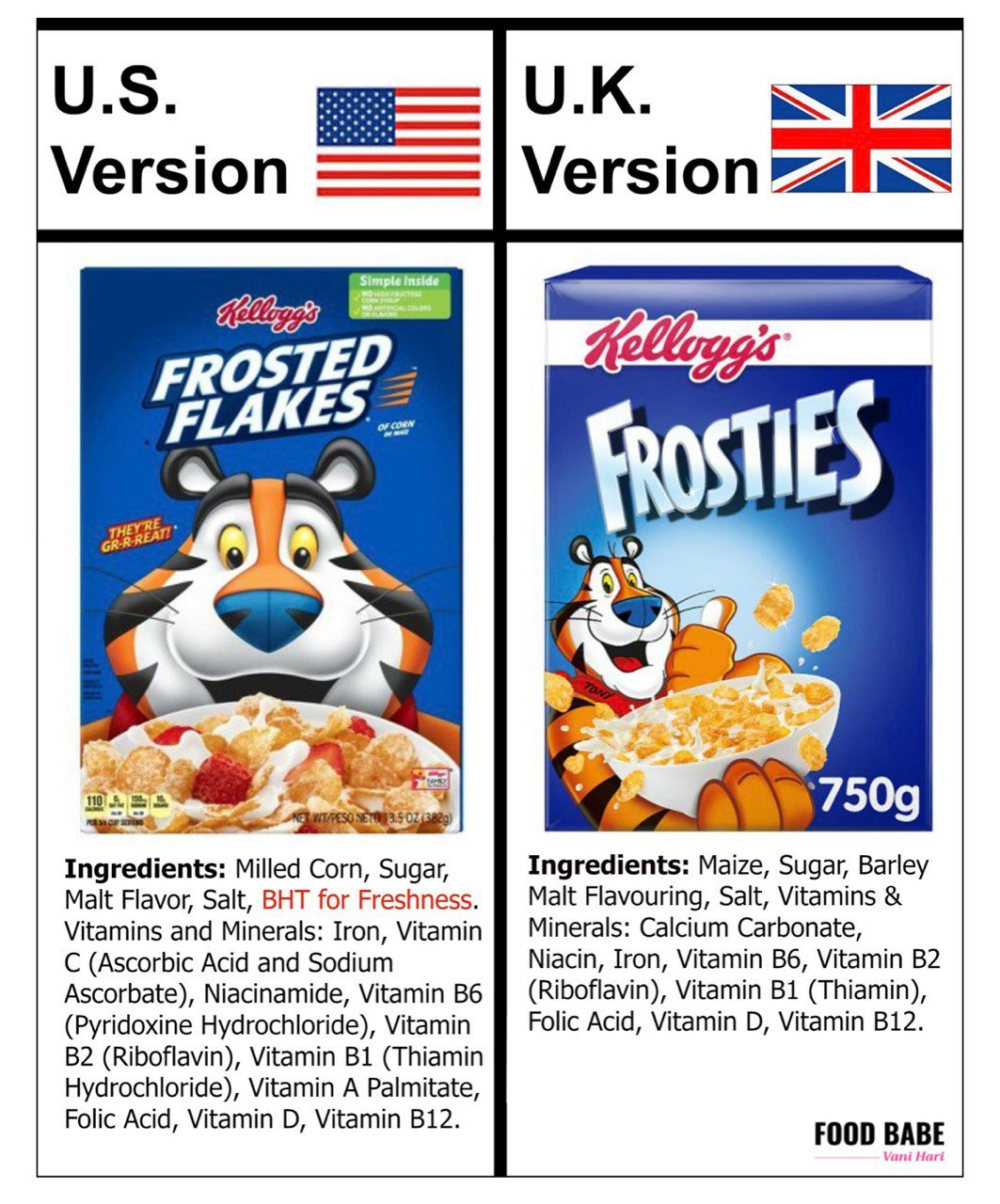 Tony the Tiger is all hopped up on CRAP here in the USA.
It's not grrrrrrreat......
Which I shamelessly stole from this moment on Norm Macdonald Live:
Now back to the food....
Here's even more (and then keep reading because I have a SOLUTION for you so you can start to take action today!):
Tony the Tiger is all hopped up on CRAP here in the USA.
It's not grrrrrrreat......
Which I shamelessly stole from this moment on Norm Macdonald Live:
Now back to the food....
Here's even more (and then keep reading because I have a SOLUTION for you so you can start to take action today!):
"Fake Food" EXPOSED: Watch For These Signs!
I think this is going to open up a lot of eyes... Is your food FAKE? I think on some level we all know it is. We all know it's full of chemicals and fillers and all sorts of other toxic things. We know that, but sometimes a picture is worth a thousand words.... ....and a video is worth a lot more. So I know you know it deep down already, and so do I, but I was STUNNED to see this video to see all the ways it is fake and toxic. It's only 3 minutes long but it's a huge eye opener. Take a look, from Rumble: Crazy, right? Speaking of fake food, let's keep it going.... Have you heard of Bill Gates' new company called "Apeel"? Bill Gates seems to think he IS God...and he won't stop messing with our food supply. Here's the latest.... It's a company called "Apeel" and they place a "protective coating" over the outside of fruits. Gee, what could go wrong? Take a look:Here's what people are saying:Beware - this is GM Gates 'Apeel' crap - DO NOT BUY! https://t.co/C6PphHTXcV
— TheSmallestMinority (@G0dsW8r) April 12, 2023
If you see the Apeel logo on any fruit and veg do not buy it, this is a Bill Gates and WEF company, this chemical makes things last 3x longer and cannot be washed off, in US and Canada at the moment. pic.twitter.com/vvby1dZVxE
— Ella Proud Refusenik✨ 🕊💕🎶💫 (@EleftheriaElpis) April 12, 2023
Checking on Wikipedia, we confirm this IS INDEED a Bill Gates funded company:@asda Asda is the first UK retailer to introduce Apeel’s plant-based protection to increase shelf life and help reduce food waste.
— Step #NoLockDowns (@beatthesystem1) April 12, 2023
Apeel was founded in 2012 after receiving a $100,000 grant from the Bill and Melinda Gates Foundation.https://t.co/HzVEoWrM4S pic.twitter.com/iGirpJPkQ0
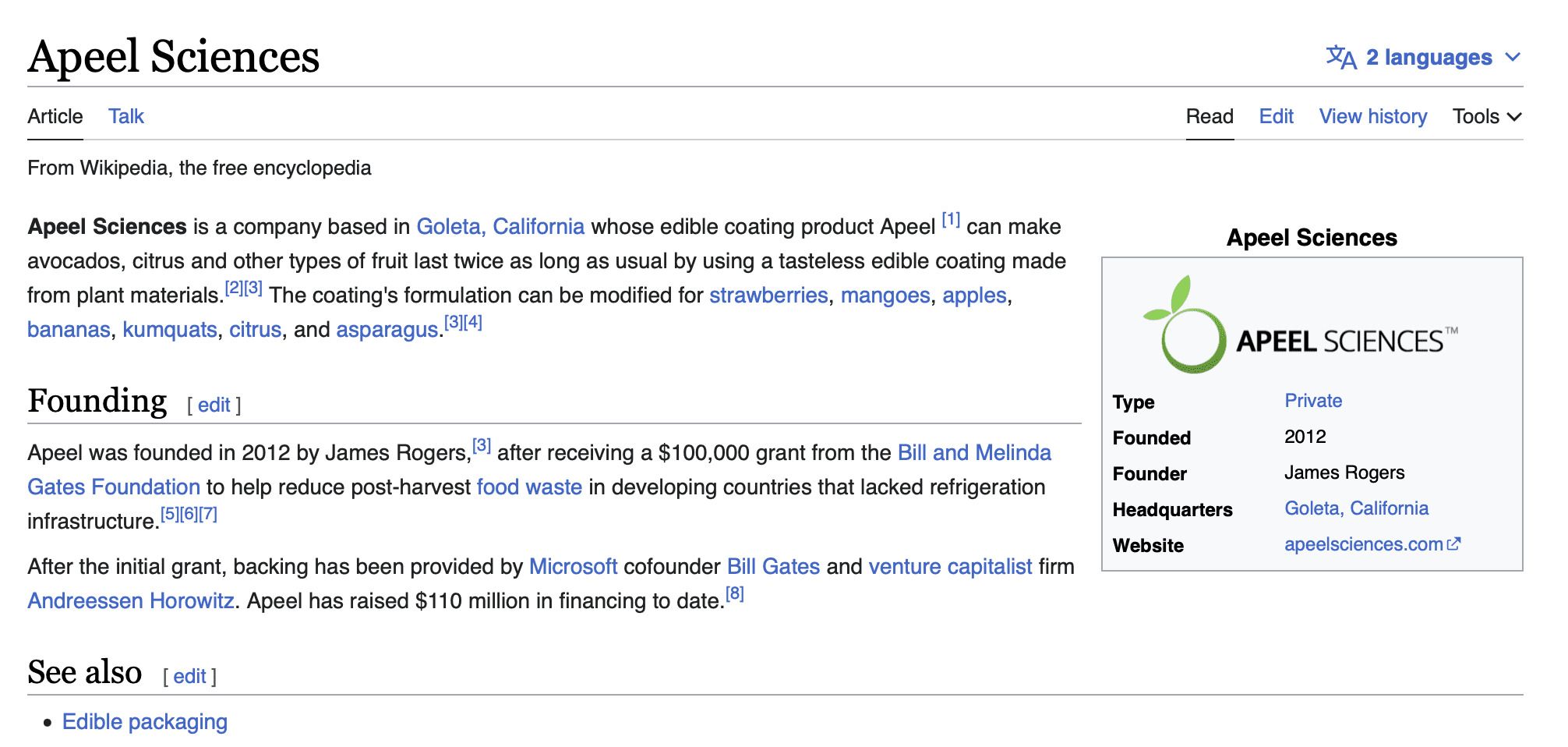 So basically, Bill Gates has decided he needs to put a "protective cover" over fruit.
You know, the "peel" that God created is no longer good enough.
Unreal the arrogance and evil of this man:
According to Apeel, the Avocados will last twice as long!
Just spray this stuff on your food, no problemo:
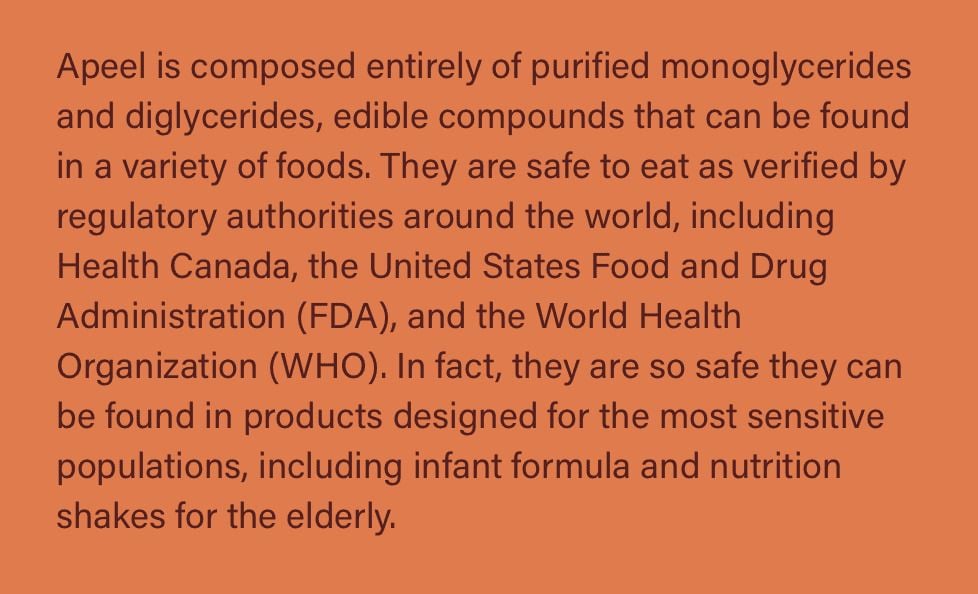
Here's what they say from their website:
So basically, Bill Gates has decided he needs to put a "protective cover" over fruit.
You know, the "peel" that God created is no longer good enough.
Unreal the arrogance and evil of this man:
According to Apeel, the Avocados will last twice as long!
Just spray this stuff on your food, no problemo:
Here's what they say from their website:
 From Eater.com:
Throwing out spoiled avocados may be a thing of the past, thanks to a California-based startup that counts Bill Gates among its backers. Apeel Sciences says it’s devised a way to keep avocados at peak ripeness for twice as long, Bloomberg reports, which could drastically cut back on food waste at grocery stores (and at the homes of avocado toast-loving millennials). Apeel uses recycled plant material to make a powder, which is then mixed with water and used to wash the avocados, resulting in a kind of “second skin” being applied to the fruit. According to the company, “Apeel keeps moisture inside produce and oxygen out, which dramatically slows the rate that produce spoils.” Apeel says its product is odorless, colorless, and tasteless, and has been tested on more than two dozen different types of fruits and vegetables, though for now it’s focusing on the pricey and popular avocado. The company is currently testing its product on avocados in a partnership with produce supplier Del Rey Avocados; they will be available in more than 100 Midwestern grocery stores, including 30 Costco locations. While avocados that stay ripe for longer would seemingly be welcome just about everywhere, it makes particular sense for them to be sold at Costco, the bulk retailer where avocados are sold in multi-count bags rather than individually.Speaking of Bill Gates, if making the fruit toxic isn't enough, he's also trying to put the mRNA vaxx in Cattle! Hello mRNA steaks! Would you like your steak well done? Medium? Medium rare? No matter what you choose it's about to also come with a side of the mRNA poison vaxx! How wonderful!
👇 👇 👇
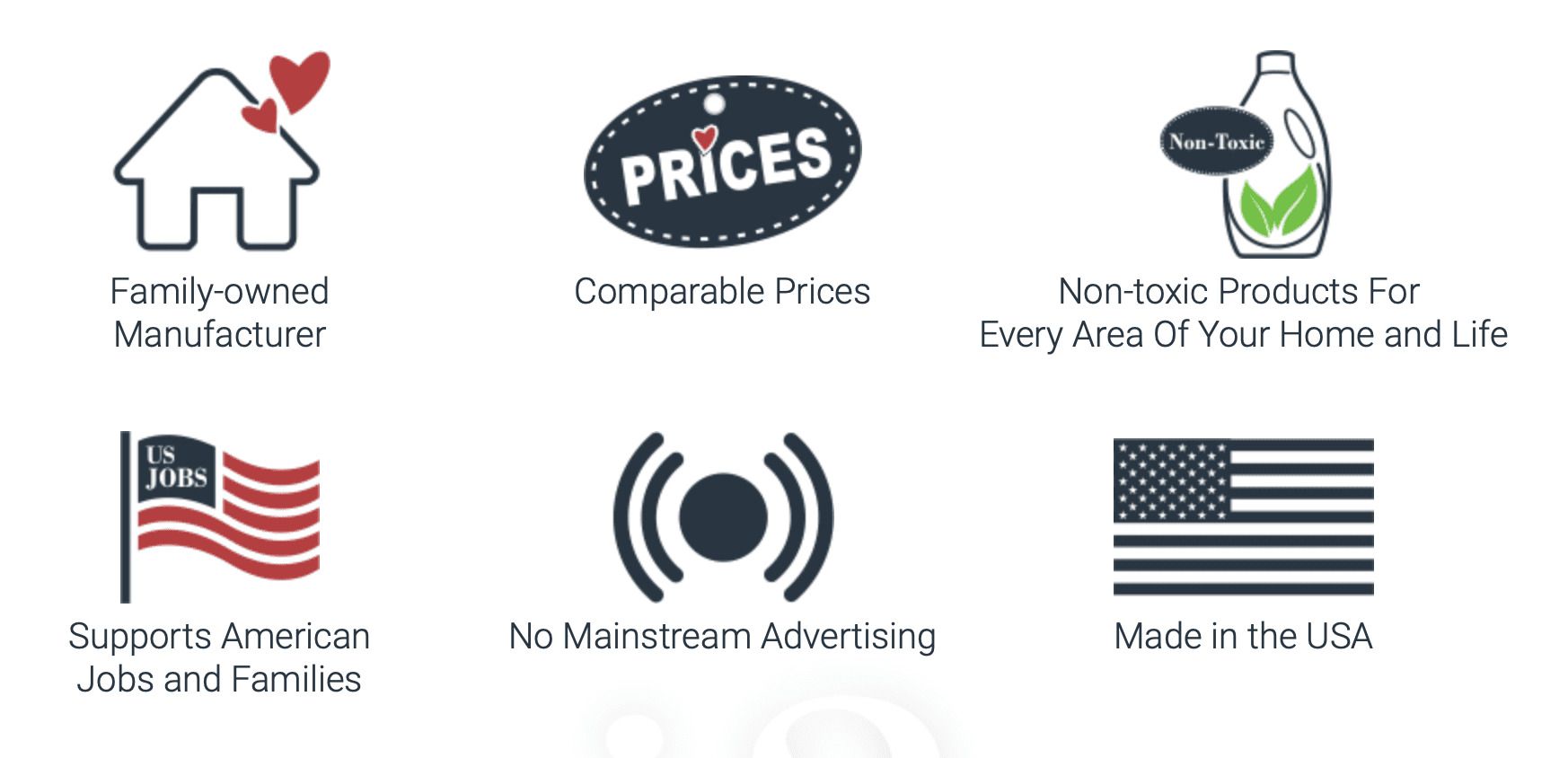
**BUT KEEP READING, I HAVE THE SOLUTION DOWN BELOW** Look, I don't know about you but I don't want mRNA in my meat. I want to eat big, beautiful Black Angus RED MEAT the way God made it! The very fact they're trying to poison the meat tells you all you need to know. Meat must be very good for you. Especially meat without antibiotics, without growth hormones, without chemicals....and definitely without mRNA! But thanks to "Kill Gates" and his friends like Klaus (Anal) Schwab, that kind of unadulterated meat is becoming harder and harder to find. Why do the big companies pump the cattle full of all this crap? In Bill Gates' case, I think he truly believes in a depopulation agenda. For all the rest? It's business, baby! Big business! Toxic Big Business! These big companies raise the cattle in stalls with no space in between them. The result? One cow gets sick, they all get sick! So to keep the operation going, they are constantly pumped full of hormones and antibiotics....and then guess what goes into your body when you eat them? Guess what goes into your kids bodies? Ever wonder why kids are starting puberty at younger and younger ages? Couldn't be related to them eating meat pumped full of cow steroids, could it? But enough about the problem.... I NEVER leave you with just the problem. You better know I've got the solution! I'd like to introduce you to Black Angus beef, pasture raised on hundreds of thousands of acres. Free roaming with plenty of open air between all the cattle. Grass fed. No hormones and no antibiotics. Never! Oh, and it's CHEAPER than Omaha Steaks! BOOM, who loves ya baby! The only "catch"? It's Invite only. Good thing you know someone that has the invites....(me!). If you'd like to find out more and get a FREE personal invite, just go here and tell them Noah sent you: https://SwitchWithNoah.com More info on the beef here:U.S. Ranchers Banding Together To Save Our Food Supply! $300 Million Raised!It's the real deal, and because they don't raise the Black Angus like the big companies do, they may have the SHUT OFF invites if they grow too fast. So if you want in, let me know soon. It's all part of something bigger I've just started working on. Let me fill you in... When I started this website back in 2015 I started it because I was on a mission... I wanted to get the truth out to as many people as possible. The truth that wasn't being covered anywhere else. I started with literally 0. Zero experience... Zero money... Zero backers... Zero readers... Zero of any of you! Along the way, we've built a massive community of people who love America and want to see our country become great again. We now average between 4 and 6 million readers EACH MONTH! And we're growing again, pretty quickly. More importantly, the MISSION is growing! But we've also faced major opposition. Oh it hasn't been easy by any stretch of the imagination. We were DELETED from Facebook after having 1.5 million people Follow and Love our Page! Just poof....one day, gone! We've been censored on almost every platform out there, emails sent to Junk or just "disappeared" despite people signing up over and over. Speaking of email, we've had two email companies ban us because they went Far-Left. So it hasn't always been easy... But we're on a MISSION and mission always wins out in the end. And today I want to tell you about an expansion of that mission. From Day 1, our mission has been about getting the truth out to as many people as we possibly can. But after being deleted, banned and censored by almost everyone out there, I realized pretty quick that we need a Parallel Economy! We need to stop sending our dollars to the corporations that hate us and want to see us gone! Remember the Georgia Guidestones? They literally told us they wanted to reduce us from 8 billion people on the Earth down to only 500 million. No big deal, right? Just an elimination of 94% of all people living right now. And yet we continue to shop at their big stores and send them our money, because until now we've had little choice. Well, today that changes. And today my mission EXPANDS... And I'm SO excited! Allow me to introduce you to the solution. It's time to "Make The Switch" and change where you send your dollars each month. What if I told you instead of sending your money to Jeff Bezos and Costco and Walmart, you could shop at the LAST pro-America, freedom-loving, American designer, manufacturer and shipper of all the stuff you buy each month! Oh, and what if I told you the products are BETTER and often CHEAPER? Yes, for real. And what if I told you this is the best kept secret you've never heard of before, but that this company has been doing this for the last 37 years? And their founder was once placed on Barack Hussein Obama's list of the Top 10 most "Dangerous Conservatives" in America? (a list I one day hope to make myself!) All of that is real and I'm so excited to tell you about it and I hope you'll join the MISSION with me. Here's a quick summary of this company that I'm so excited to now be partnered up with on this mission:
 Sound good to anyone else?
Me too!
The reason you've never heard of them is because it's Invite Only.
I can get you in, but you can't just go sign up.
They only want people on the same mission to join and they're happy to say "no" to the Far-Left Libs!
They've been doing it for 37 years and it's been working great.
Oh, and did I mention the products are non-toxic and don't have all the chemicals and crap like Red Dye 40 that all the Big Corporations put in their products to weaken you?
To wear you down?
To make you -- and your family -- sick?
Because then when you get sick you'll buy their drugs!
Sorry folks, I don't play that game and neither does my family.
We're talking the LAST all natural, grass fed, no hormone, massive beef cattle ranch in the United States....
Sound good?
We're talking Fluoride Free Toothpaste, chemical free cleaners, Deet-free mosquito repellant!
What novel concepts, right?
Stop sending you money to these 11 corporations that do NOT have your best interest at heart:
Sound good to anyone else?
Me too!
The reason you've never heard of them is because it's Invite Only.
I can get you in, but you can't just go sign up.
They only want people on the same mission to join and they're happy to say "no" to the Far-Left Libs!
They've been doing it for 37 years and it's been working great.
Oh, and did I mention the products are non-toxic and don't have all the chemicals and crap like Red Dye 40 that all the Big Corporations put in their products to weaken you?
To wear you down?
To make you -- and your family -- sick?
Because then when you get sick you'll buy their drugs!
Sorry folks, I don't play that game and neither does my family.
We're talking the LAST all natural, grass fed, no hormone, massive beef cattle ranch in the United States....
Sound good?
We're talking Fluoride Free Toothpaste, chemical free cleaners, Deet-free mosquito repellant!
What novel concepts, right?
Stop sending you money to these 11 corporations that do NOT have your best interest at heart:
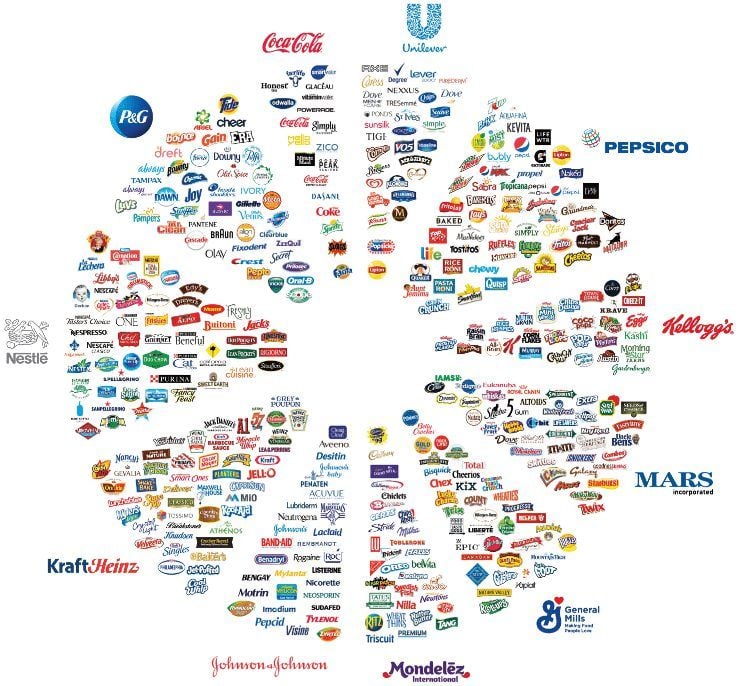
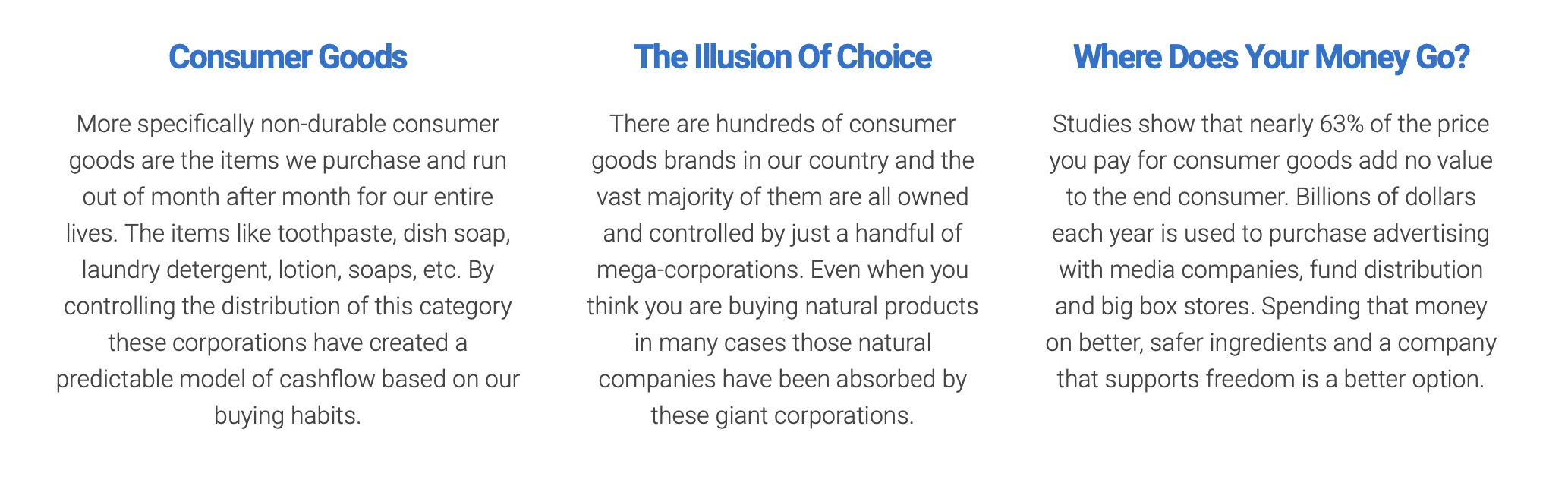 It's an ILLUSION of choice.
There's only one pro-American, American made and manufactured, chemical free, toxin free, hormone free, company left....and I'm teaming up with them to FIGHT BACK!
Who's with me?
Watch this:
As I said, it's Invite Only and the invite is completely free!
In fact, I've assembled a team of patriots who will personally get you invited and signed up....if you want in.
It's called "Patriot Switch" and I think the name says it all.
Folks, we don't have many strongholds left.
This is one.
And I'm all in.
If you'd like to find out more and get a FREE personal invite, just go here: https://SwitchWithNoah.com
Tell them Noah sent you and I promise you will get a personal call, text or email.
Don't freak out when you do.
And make sure you tell them you are interested in the Black Angus beef!
I know I tend to get concerned when I get messages from numbers I don't recognize, but if you request a Free Invite (Link here: https://SwitchWithNoah.com) you WILL have someone from my Inner Circle reach out to you....so be ready!
These are awesome people and I think you'll love getting a chance to talk with them.
And they'll help get you all set up.
Who's with me?
- Noah
p.s. Since everyone gets personal attention, we will take these in the order in which they come in. So if you are excited, ask for your invite now or you might be far down on the list. I have a great team, but they can only do so much and they'll work on a first-come, first-served basis.
Request a free Invite here: https://SwitchWithNoah.com
It's an ILLUSION of choice.
There's only one pro-American, American made and manufactured, chemical free, toxin free, hormone free, company left....and I'm teaming up with them to FIGHT BACK!
Who's with me?
Watch this:
As I said, it's Invite Only and the invite is completely free!
In fact, I've assembled a team of patriots who will personally get you invited and signed up....if you want in.
It's called "Patriot Switch" and I think the name says it all.
Folks, we don't have many strongholds left.
This is one.
And I'm all in.
If you'd like to find out more and get a FREE personal invite, just go here: https://SwitchWithNoah.com
Tell them Noah sent you and I promise you will get a personal call, text or email.
Don't freak out when you do.
And make sure you tell them you are interested in the Black Angus beef!
I know I tend to get concerned when I get messages from numbers I don't recognize, but if you request a Free Invite (Link here: https://SwitchWithNoah.com) you WILL have someone from my Inner Circle reach out to you....so be ready!
These are awesome people and I think you'll love getting a chance to talk with them.
And they'll help get you all set up.
Who's with me?
- Noah
p.s. Since everyone gets personal attention, we will take these in the order in which they come in. So if you are excited, ask for your invite now or you might be far down on the list. I have a great team, but they can only do so much and they'll work on a first-come, first-served basis.
Request a free Invite here: https://SwitchWithNoah.com


Join the conversation!
Please share your thoughts about this article below. We value your opinions, and would love to see you add to the discussion!