
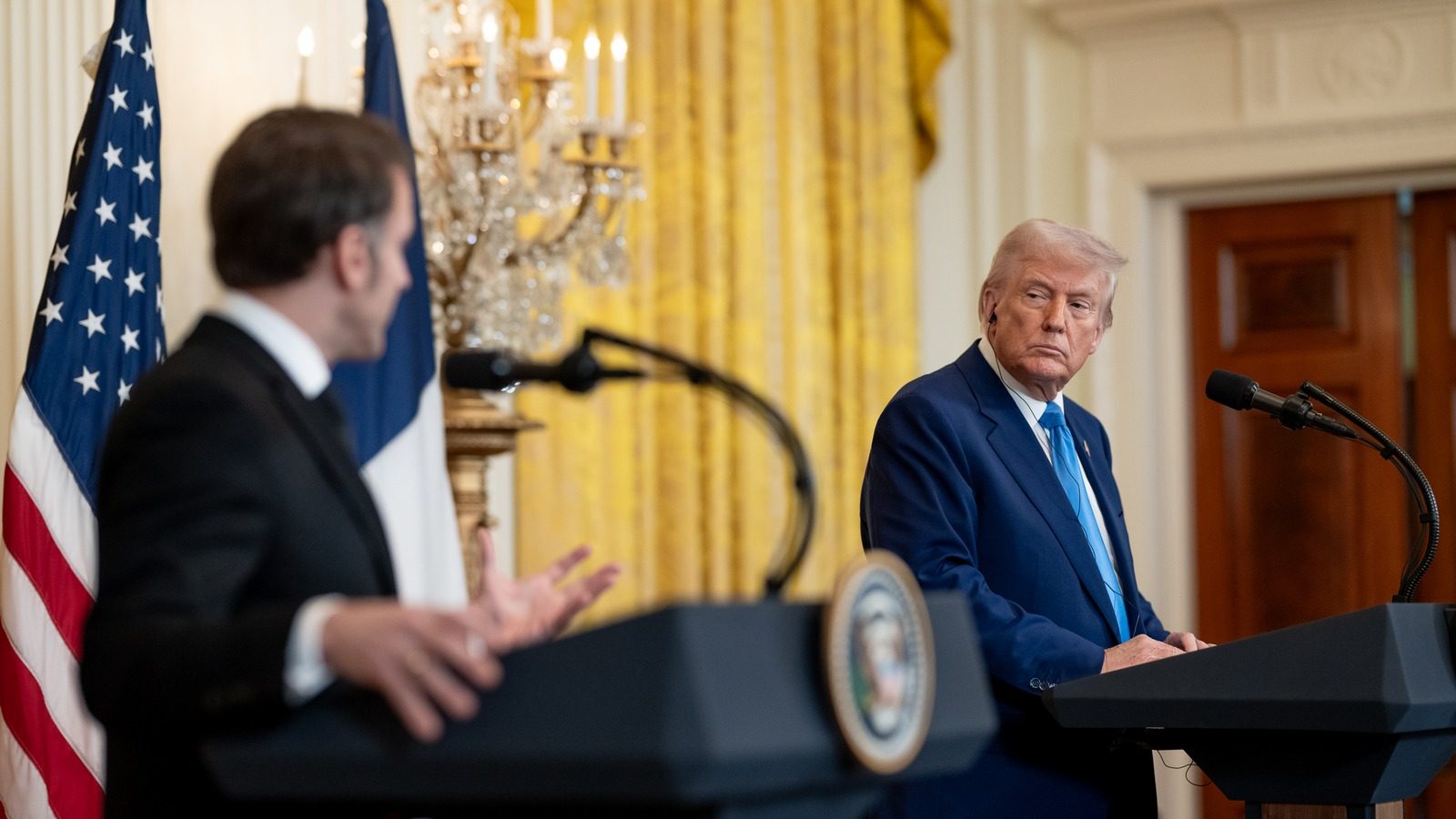
President Trump just put Emmanuel Macron and France on notice.
The fight is bigger than wine. France is taxing American technology companies through its digital services levy.
The fight broke open Monday as Trump arrived for the G7 summit in France.
According to the New York Post, Trump warned France to scrap the tax on American tech giants or face steep retaliation against one of France’s most famous export industries.
Trump said he asked Macron not to tax American companies, then said the United States would have “no choice” if France keeps the levy in place.
Trump warns France in exclusive interview with The Post: Kill tech tax or face 100% wine tariffs: 'I have no choice' https://t.co/DHKozyzXeI pic.twitter.com/0pkuTewzOd
— New York Post (@nypost) June 15, 2026
That is classic Trump leverage. France wants access to American markets, but it also wants to keep reaching into American companies’ pockets.
Fox Business reported that the tax at the center of the fight is France’s 3% digital services tax, often called the GAFAM tax.
The levy has been in force since 2019 and targets revenue earned in France by large digital companies, which means it lands heavily on U.S. firms like Google, Apple, Meta, Amazon, and Microsoft.
Macron is not publicly backing down.
The Guardian, citing AFP, reported that Macron told TF1 he wanted a “respectful but firm discussion” with Trump.
Macron also argued that tariffs between G7 countries do not help anyone and said Europe, not Washington, decides European law.
That is the European line in a nutshell. They want American innovation, American customers, and American markets, but they do not want American pushback.
This fight did not come out of nowhere.
The White House laid out the broader policy in a February memorandum:
In recent years, the gross domestic product of the United States’ digital economy alone, driven by cutting-edge American technology companies, has been bigger than the entire economy of Australia, Canada, or most members of the European Union.
Instead of empowering their own workers and economies, foreign governments have increasingly exerted extraterritorial authority over American companies, particularly in the technology sector, hindering these companies’ success and appropriating revenues that should contribute to our Nation’s well-being, not theirs.
Beginning in 2019, several trading partners enacted digital services taxes (DSTs) that could cost American companies billions of dollars and that foreign government officials openly admit are designed to plunder American companies.
Foreign countries have additionally adopted regulations governing digital services that are more burdensome and restrictive on United States companies than their own domestic companies.
Additional foreign legal regimes limit cross-border data flows, require American streaming services to fund local productions, and charge network usage and Internet termination fees.
All of these measures violate American sovereignty and offshore American jobs, limit American companies’ global competitiveness, and increase American operational costs while exposing our sensitive information to potentially hostile foreign regulators.
My Administration will not allow American companies and workers and American economic and national security interests to be compromised by one-sided, anti-competitive policies and practices of foreign governments.
ADVERTISEMENTAmerican businesses will no longer prop up failed foreign economies through extortive fines and taxes.
In other words, Trump is not freelancing. He is enforcing a policy position his administration had already put in writing.
A companion White House fact sheet described the tariff lane even more plainly:
This Administration will consider responsive actions like tariffs to combat the digital service taxes (DSTs), fines, practices, and policies that foreign governments levy on American companies.
ADVERTISEMENTDSTs allow foreign governments to collect tax revenue from American companies simply because they operate in foreign markets, even though those companies are generally not otherwise subject to foreign jurisdiction.
President Trump will not allow foreign governments to appropriate America’s tax base for their own benefit.
This memorandum directs the United States Trade Representative (USTR) to renew the DST investigations under Section 301 that were initiated during President Trump’s first term, and investigate any additional countries that use a DST to discriminate against U.S. companies.
The Administration will review whether any act, policy, or practice in the European Union or United Kingdom incentivizes U.S. companies to develop or use products and technology in ways that undermine free speech or foster censorship.
Foreign governments will invite responsive actions from the Administration if they take steps to coerce U.S. businesses to hand over their intellectual property.
The timing matters, too.
The official schedule listed Trump for a bilateral meeting with the President of the French Republic at the Evian Resort on June 15, according to Roll Call Factba.se.
That means the warning landed as Trump was preparing to see Macron in person.
No tariff order on French wine has been signed yet, and Macron has not backed down in public.
Trump still walked into the G7 with the pressure already on the table.
The message is simple: if France wants to tax American tech, France may have to explain why its own prized exports should keep enjoying easy access to America.
America First means the United States is done serving as Europe’s piggy bank.

Join the conversation!
Please share your thoughts about this article below. We value your opinions, and would love to see you add to the discussion!