

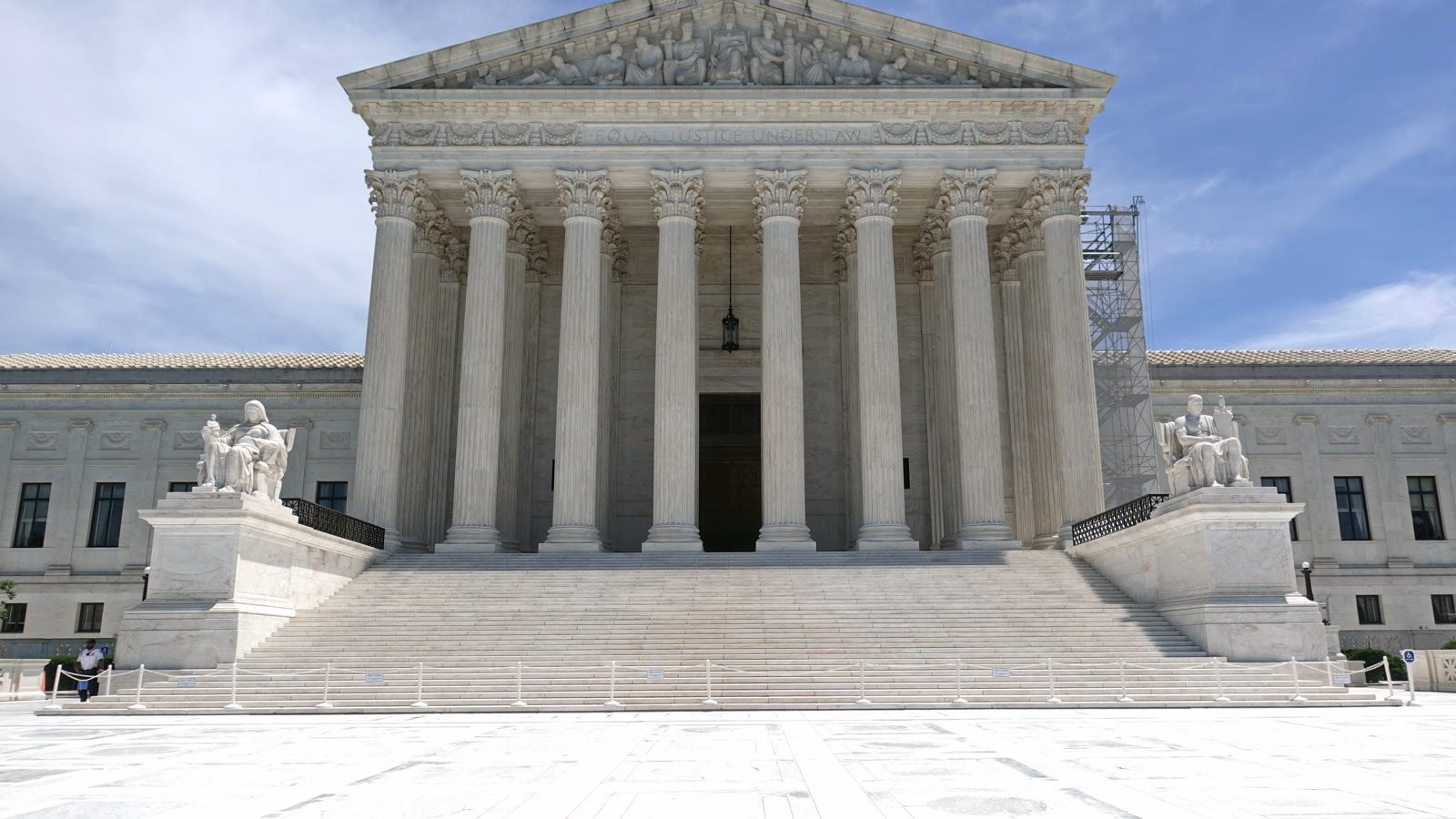
The Supreme Court sided with President Trump’s administration on Tuesday in Margolin v. National Association of Immigration Judges, reversing a Fourth Circuit decision that had attempted to rewrite the terms of a federal employment dispute no one had asked it to rewrite.
The case started simply enough.
The Executive Office for Immigration Review required immigration judges to get supervisory approval before giving public speeches related to their official duties.
Their union, the National Association of Immigration Judges, sued on First and Fifth Amendment grounds.
The district court dismissed the case, ruling the claims were channeled through the Civil Service Reform Act to the Merit Systems Protection Board.
On appeal, the union made a narrow argument: yes, the CSRA covers most federal employment claims, but constitutional challenges fall outside the scheme.
Then the Fourth Circuit did something the Supreme Court found unacceptable. Rather than deciding the question the parties actually presented, the appeals court raised an entirely different issue on its own: whether the CSRA system was still functioning as Congress intended, given recent removals of MSPB members and the Special Counsel.
Neither party briefed this question.
Neither party asked for it.
The Fourth Circuit ordered it anyway, vacating and remanding with instructions for the district court to investigate whether the administrative review framework was operational.
The Supreme Court reversed. The principle at stake is called party presentation, and it is foundational: federal courts decide the issues the parties bring to them, not issues judges dream up on their own.
This is an important distinction.
The Supreme Court did not decide whether the speech-approval policy is constitutional.
That question remains open.
Lower courts cannot manufacture new legal theories to keep cases alive in federal district court when the law says those disputes belong somewhere else.
The ruling fits a pattern.
Lower federal courts have repeatedly stretched their authority to second-guess Trump administration policies, often inventing procedural workarounds to reach outcomes they prefer.
The Supreme Court has now told them, again, to stay in their lane.
For President Trump’s broader fight to maintain executive authority over the federal workforce, the decision reinforces a basic structural point.
Congress built the CSRA framework for a reason, and judges unhappy with the current political landscape cannot casually route around it.
The union’s constitutional claims may still be litigated.
But the Fourth Circuit’s attempt to turn a routine jurisdictional question into a referendum on the Trump administration’s personnel decisions just got reversed.
Reuters flagged the ruling as a win for President Trump in the immigration-judge speech fight:
Supreme Court sides with Trump in fight tied to speech curbs on immigration judges https://t.co/4e80ArC https://t.co/4e80ArC
— Reuters (@Reuters) May 26, 2026
A legal explainer account broke down why the Supreme Court focused on judicial power, not the final merits of the speech policy:
Immigration judges wanted to speak publicly about their work without asking permission first. That simple workplace dispute just became a Supreme Court ruling about the limits of judicial power.
Decided 5/26/26, Margolin v. NAIJ started when EOIR required immigration judges to obtain supervisory approval before giving speeches related to official duties. Their union, NAIJ, challenged the policy on First and Fifth Amendment grounds.
The district court dismissed, finding the claims channeled through the CSRA to the MSPB. On appeal, NAIJ made a surgical argument: yes, the CSRA covers most federal employment claims, but our constitutional challenges fall outside that scheme.
Then something unusual happened. The Fourth Circuit, apparently concerned about recent removals of MSPB members and the Special Counsel, vacated and ordered the district court to determine whether the CSRA was functioning as Congress intended. Neither party asked for this. Neither briefed it.
The Supreme Court reversed. The party-presentation principle means courts decide what parties present, nothing more. Transforming a narrow coverage dispute into a referendum on administrative functionality crosses a clear line.
Political circumstances don't alter statutory meaning. The CSRA's exclusive review scheme stands. And federal courts, the Court emphasized, aren't "roving commissions looking for wrongs to right."
The union's constitutional claims remain unresolved. But the rules of engagement just got reinforced.
— Ruling Breakdown (@RulingBreakdown) May 27, 2026
The Supreme Court opinion laid out the core issue this way:
The Supreme Court identified the case as Daren K. Margolin, Director of the Executive Office for Immigration Review, v. National Association of Immigration Judges, No. 25-767.
ADVERTISEMENTThe Court said EOIR adopted an October 2021 policy requiring immigration judges to obtain supervisory approval before public speeches related to their official duties.
The policy was designed to keep employee speech that could appear to carry EOIR’s imprimatur consistent with the agency’s official positions.
The National Association of Immigration Judges challenged the policy in federal district court in Virginia.
The union asserted First and Fifth Amendment claims on behalf of its members.
The district court dismissed the challenge, holding that it had to proceed through the Civil Service Reform Act’s administrative review system.
The Fourth Circuit agreed the claims were covered by the CSRA, but it vacated and remanded after raising a new question the parties had not presented.
The Supreme Court said that move violated the party-presentation principle.
The Court reversed the Fourth Circuit and sent the case back for further proceedings consistent with the opinion.
ADVERTISEMENTJustice Clarence Thomas, joined by Justice Amy Coney Barrett, wrote separately to say the Fourth Circuit was wrong on the merits as well.

FedSmith explained why the procedural ruling matters for federal employee lawsuits:
FedSmith described the ruling as narrow and procedural, but not minor.
The site said the decision reinforces limits on lawsuits by federal employees and unions trying to bypass the Civil Service Reform Act.
According to the analysis, the Supreme Court faulted the Fourth Circuit for raising and relying on an issue neither side had briefed or argued.
The Fourth Circuit had agreed with the district court and the government that the immigration judges’ First Amendment challenge was covered by the CSRA.
That meant the challenge generally had to be routed through the Merit Systems Protection Board and the Office of Special Counsel, not launched as an initial case in federal district court.
FedSmith noted that the appeals court then shifted to a different concern: whether the administrative review system was still functioning as Congress intended.
The Supreme Court rejected that shortcut.
FedSmith also highlighted the Thomas concurrence, which argued that courts cannot treat changed political circumstances as a license to rewrite a statutory scheme.
The practical result is a procedural win for the government and a warning to federal worker groups seeking a different forum.
The Associated Press confirmed the broader context:
The Supreme Court sided with President Trump’s administration in the dispute over immigration judges’ speech restrictions.
The report emphasized that immigration judges are federal employees rather than Article III federal judges.
The judges want to sue over a policy restricting public speeches tied to their work.
The administration argued the dispute belongs in the federal employee complaint system overseen by the Merit Systems Protection Board.
The Court ruled on procedural grounds, not on whether the speech policy is constitutional.
Justice Thomas’s concurrence, joined by Justice Barrett, rebuked the Fourth Circuit for responding to political controversies of the day.
The judges’ association said it was disappointed and said the case is far from over.
Acting Attorney General Todd Blanche applauded the decision in a social-media post.
He said lower courts must accept that the law is the law, regardless of political controversies.
MarketScreener carried the Reuters wire details this way:
The wire report described the result as a procedural victory for President Trump’s administration.
The dispute centers on whether federal immigration judges can pursue a free-speech challenge in court or must proceed through the federal employment review system.
The speech policy at issue restricts what immigration judges may publicly say about immigration in certain work-related contexts.
The Supreme Court did not decide the legality of the policy itself.
Instead, it reversed the Fourth Circuit after the appeals court relied on an argument the judges’ association had not raised.
Acting Attorney General Todd Blanche welcomed the ruling.
Blanche said judges should resolve the case before them and should not try to seize Congress’s role.
The National Association of Immigration Judges has argued the policy is an unconstitutional restraint on speech.
The case now returns to the lower courts under the Supreme Court’s instructions, with the constitutional fight still unresolved.

Join the conversation!
Please share your thoughts about this article below. We value your opinions, and would love to see you add to the discussion!