

Do you know your history?
Do you know the story of Shays’ Rebellion?
If you’re like me, that name probably VAGUELY rings a bell from learning about it decades ago in High School. But let’s be honest, life comes at you fast and devoting brainpower and memory bandwidth to remembering the details of Shays’ Rebellion is probably not a high priority.
But I want to revisit it now because it’s directly relevant to what’s happening right now in Minnesota and in other Deep Blue States in our Union.
Here’s the short summary…
First of all, the time and setting. It’s very early in our Country and things are tenuous at best.
For exact reference, it ran from August 1786 to February 1787, but reached it’s peak in January 1787 so we’ll use that as our date.
For reference, that is 11 years after the Declaration of Independence, just 4 years after winning the Revolutionary War against Britain, and one year BEFORE the full ratification of our Constitution.
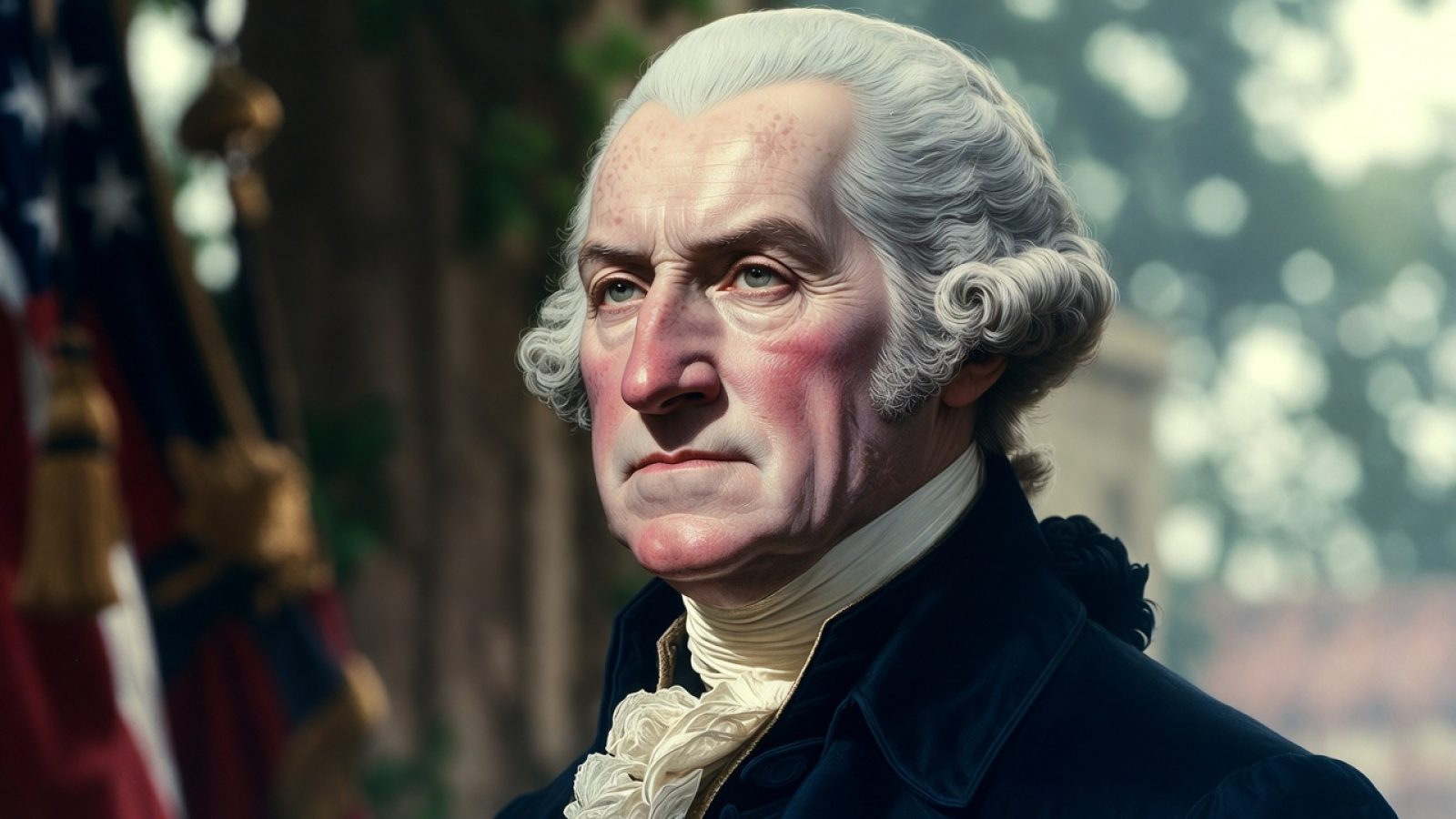
George Washington is the President and the undisputed leader of the Nation.
Recall that the Revolutionary War arguably started or had it’s precursor in the Boston Tea Party incident — where colonists living in Boston revolted after Britain imposed a tax on their tea. The infamous “taxation without representation”.
So revolt against taxes — especially taxation without representation — is fresh in the Country and a pattern we do not want to repeat as we now create and grow our own country.
On top of that, many fighters who fought in the Revolutionary War were claiming they were not paid what they were promised, and the biggest source of unrest is always caused by economic lack.
So with all of that as the setting and backdrop, you add the final match on top of the powder keg which is a new tax on whiskey recently imposed and you get Shays’ Rebellion.
The people rebelled, and quite frankly it’s easy to see why.
These are not “rebel-rousers” just looking to cause problems and chaos, these are sympathetic people who have been pushed too far.
They rebel and overtake a federal courthouse building and George Washington is faced with a crisis. What does he do? Does he send in Federal Troops to quash this rebellion, and risk being labeled no better than the King?
Or does he do nothing and risk the fragile new Union crumble before it ever gets a chance to take hold?
It was not an easy decision, and he did not like doing it, but he invoked what was essentially the predecessor to The Insurrection Act and very methodically and swiftly quashed the rebellion. And then it was over. No prolonged federal troop presence. No gloating. No glee. In fact, he was very upset about needing to do it. But it saved the Union from crumbling.
And that, my friends, is where our Nation currently sits again.
The George Washington of our time, Donald J. Trump, is faced with the same situation that George Washington faced.
And I hope he makes the same decision.
It’s time sir, call the ball.
Watch the video below and see how Glenn Beck perfectly tells this story:
TRANSCRIPT:
What are you going to do to get Tim Walz? Again, I go back to the color revolution. You have people that are trying to pull off a color revolution. I don’t know if Tim Walz is part of that or not. I do know Tim Walz is involved in massive corruption.
So, that gives him a reason to discredit and thwart and cause all kinds of chaos so those feds never come walking into his house and knocking on his door. That’s the motivation here for the left on that color revolution and also corruption with Tim Walz on his side.
ADVERTISEMENTSo we asked George AI, and George AI is the collection—I don’t know how many documents we have in there, but tens if not hundreds of thousands of documents in there now, and it’s getting bigger every day. Of all founding documents, it’s the Federalist Papers.
It’s all of their letters back and forth. We are growing this thing exponentially every day. And it does not know anything about the present-day situation. Okay. If we have to come up with hypothetical situations, and we don’t want to put anything in, and it’s all roped off.
It has to memorize all of their words. So it can’t hallucinate and it cannot pull from outside of their documents. So it’s not like ChatGPT that can give an opinion or pull from something else. It is only based on their writings. Okay.
So, we asked George AI—and this is going to be the George AI that’s released later on glennbeck.com. So, we asked George AI, “What do you make of a situation like this?” And we explained the situation as best we could without picking sides, without using names.
What should the federal government, what would the founders have done? Let me just give you this. The ink on the Constitution wasn’t even dry. The new republic was fragile, barely tested, and already it was catching fire. Western Massachusetts was boiling over.
Daniel Shays and a mob of dissatisfied veterans and farmers are closing in on courthouses, armed and angry. The state government is outmatched. What do they do? The Shays’ Rebellion was—I mean, you want to talk about having the sympathy of people.
These were soldiers who fought in the revolution and were not being paid, and they were going broke and they were struggling and they were going to lose everything and they needed their pay from the government. They fought in the revolution. We’re veterans.
Where’s the money you promised us? So, you want to talk about sympathy being on their side? Sympathy was on their side. But they were going and they were obstructing the courts. They were causing all kinds of problems and some of it was violent.
ADVERTISEMENTSo, what did we do? The founders sent in the militia, not cheering, not stomping. It was just a desperate move to avoid collapse. And it was very controversial at the time because people said, “Look at they’re just becoming King George. They’re just sending in everybody else.”
Okay? The laws of Massachusetts were being ignored. The judiciary was being threatened and the entire government of the people, by the people, was under threat. So they sent the troops in. Let me repaint the scene, but this time instead of going back, let me paint the scene.
Now federal laws get passed, but a bunch of state governments raise their hands and say, “No, not here. Not in our town. Not in our state. Not in our courts.” Then they go further. They tell their police departments not to cooperate.
The governors speak publicly, even approvingly, of people mobilizing in the streets, dismissing the violence, saying it’s a mostly peaceful protest. And it’s not just a protest. It’s to actively block and confront federal officers, and it turns violent.
All of that is true. So, we asked George, what would the founders do? And here was the response. George Washington or Madison or Hamilton or even Jefferson—see the Insurrection Act. Would they see it as the right tool in a mess like this?
Not would they support authoritarianism, because that’s lazy thinking. Would they see this kind of national fracture as justifying federal boots on the ground? Let’s use Washington because he and Jefferson hated it the most. Okay, not trigger happy, but he was also not naive.
So, he becomes president in his first term. And the Whiskey Rebellion is there—again, it’s all about taxation. We’re starting to tax whiskey. And the whiskey people are like, “What are you doing taxing? You’ve just become the king again.”
And so there’s this rebellion. What did he do? He not only sent in the troops, he led the troops in to put that rebellion down. He actually rode in himself as the head of the militia. And he wasn’t doing it to intimidate the population.
He was not doing it because he loved federal power. He hated this act. He went back and forth. What do I do? What do I do? What do I do? But he saw—he knew what happens when the center loses authority. If the center starts to crumble and fall apart, the republic would be over.
So they hated tyranny, but they hated disunion just as much, if not more. Their biggest fear was not a king. Listen to this. Their biggest fear was not a king. It was lawlessness dressed up as liberty. And that’s exactly what we’re getting today.
Now, he would not be sending them in quickly. He would not be doing it lightly. He would not be beating his chest. He would not be doing it for vengeance. Our founders wouldn’t have done any of that. He would have done it to restore the system of government that we have all voted on.
This is the way it works. These are criminals that they are rounding up. They’re criminals. And we haven’t even gotten just to the people who are here because they wanted a better life. We’re still at the really nasty criminals.
ADVERTISEMENTThe three that just beat that ICE officer within an inch of his life just two days ago. They were part of a nasty, nasty gang. All three of them from Venezuela. They’re criminals. How are you making this about little Jose who just wants to go to school?
He wants some Cheerios in the morning because he couldn’t get anything back home in Guatemala. That’s not what this is about. We’re not even there yet. This is not—I don’t think this is resistance. This is rebellion.
And I will tell you, I was not for the use of insurrection in an easy, lazy way. January 6th, the media and the left immediately came out and called January 6th an insurrection. And I told you they were doing it for a reason.
It was the most dangerous thing since the Civil War. That insurrection of January 6th, it lasted one day and it came under control. Okay? The President spoke out. It came under control. It lasted a day. This is lasting weeks. This is only getting worse.
They defined insurrection on January 6th. I don’t think that was insurrection, but okay, they defined it. This is much more of an insurrection than that ever was. But I don’t want to become like them. I won’t look at their standard.
I’ll look at the constitutional standard. And I believe the president is justified to calmly, rationally make the case in a very serious way. Hold a conference in the Oval Office. Don’t call anybody names. Just state the facts as the Constitution lays it out.
Show exactly. Have Pam Bondi, have somebody of credibility to make sure you’re there making the case. Have them step up. Make the federal constitutional case in a reasoned way and put down this insurrection. You have poll results from the audience.
Speaker 2: So, we asked insiders only about 20 minutes ago. Should President Trump invoke the Insurrection Act in Minnesota? We already have a ton of results. 62% say that he should. 38% believe that he should not.
Speaker 1: And you can find that poll now.com and take that poll. I’d like to see it. I will bet you the 38%—because this is our audience—I’ll bet you the 38% are saying, “I really would like him to, but I’m afraid the way they’ll react will cause civil war.” They’re always in a win-win situation.
RELATED REPORT:
Can you feel it?
Some call it the Overton Window...
Others call it the Zeitgeist...
But it's the collective sense and feeling that we're all moving in one direction, almost like a freight train that you know cannot be stopped after a certain point.
That's how it feels to me with The Insurrection Act.
What was once kind of an obscure concept now feels like a foregone conclusion. No longer a matter of "if" but only a matter of "when".
And Elon Musk just added his finger to the scale to make the "when" be right now:
Time to invoke the Insurrection Act https://t.co/pkTdBJVcxT
— Elon Musk (@elonmusk) January 16, 2026
I completely agree.
Elon reposted a post from Insurrection Barbie which I thought was very well said:
Some fun facts:
1. The Insurrection Act has been invoked 30 times by 17 different presidents.
2. In fact, 37% of American presidents have invoked the Insurrection Act.
3. It was invoked to deal with rebellions and uprisings.
What are rebellions and uprisings?
Examples:…
— Insurrection Barbie (@DefiyantlyFree) January 15, 2026
Some fun facts:
1. The Insurrection Act has been invoked 30 times by 17 different presidents.
2. In fact, 37% of American presidents have invoked the Insurrection Act.
3. It was invoked to deal with rebellions and uprisings.
What are rebellions and uprisings?
Examples:
- Armed groups openly defied federal law
- State or local authorities could not or would not enforce federal law
- Violence or organized resistance threatened the authority of the federal government
- Courts were blocked, taxes couldn’t be collected, or officials were attacked
Look I just described Minnesota.
ADVERTISEMENT
Spot on!
In fact, here is a full breakdown of all the past US Presidents who have successfully invoked the Insurrection Act and the circumstances surrounding each time.
Check this out and tell me if any of this sounds and looks familiar to what we are seeing right now in America:
Historical Invocations of the Insurrection Act
The Insurrection Act of 1807 (codified in 10 U.S.C. §§ 251–255) empowers the President to deploy U.S. military forces domestically to suppress insurrections, rebellions, or domestic violence that hinders the execution of federal or state laws. It has been invoked over 30 times since 1807, often in response to civil unrest, labor disputes, or civil rights crises.
Below is a chronological breakdown of all known invocations, including the president, date, circumstances, and outcomes. This list is based on historical records from the Congressional Research Service and other authoritative sources; some early invocations were brief or partial, and exact counts vary slightly due to overlapping events or state requests.
1. Thomas Jefferson (1808)
Date: February 1808.
Circumstances: Enforcement of the Embargo Act of 1807, which prohibited trade with Britain and France amid tensions leading to the War of 1812. Smugglers and armed groups in the Northeast (e.g., Massachusetts and Connecticut) resisted federal enforcement, creating localized insurrections against U.S. authority.
Actions: Jefferson authorized militia deployment to suppress smuggling operations. No large-scale federal troops were used; it was more a proclamation than full invocation.
Outcome: Minimal military action; the embargo was unpopular and repealed in 1809.
2. George Washington (1794)
Date: August 7, 1794 (proclamation); invoked under precursor authority to the Act.
Circumstances: Whiskey Rebellion in western Pennsylvania, where farmers rebelled against a federal excise tax on whiskey, attacking tax collectors and forming armed militias. This was the first major test of federal authority under the Constitution.
Actions: Washington personally led 13,000 militia from several states to suppress the uprising.
Outcome: Rebels dispersed without major violence; two were convicted of treason but pardoned. Affirmed federal supremacy.
Note: This predates the formal 1807 Act but is often included as an early invocation of similar powers.
3. John Adams (1799)
Date: 1799 (limited use).
Circumstances: Fries's Rebellion in eastern Pennsylvania, a tax resistance movement against a federal property tax to fund a potential war with France. Armed farmers led by John Fries resisted U.S. marshals.
Actions: Adams authorized militia to quell the uprising.
Outcome: Fries and others were arrested; Fries was initially sentenced to death but pardoned by Adams.
4. James Madison (1812)
Date: 1812.
Circumstances: During the War of 1812, desertions and mutinies in the U.S. Army, particularly in the Northeast, where anti-war sentiment led to insubordination.
Actions: Invocation to deploy forces against mutinous troops.
Outcome: Suppressed internal dissent; no major engagements.
5. James Monroe (1817)
Date: 1817.
Circumstances: Seminole raids from Spanish Florida into U.S. territory (Georgia), involving Native American and escaped slave groups disrupting frontier law.
Actions: Authorized military expedition into Florida.
Outcome: Led to the First Seminole War; U.S. forces seized Pensacola, pressuring Spain to cede Florida in 1819.
6. John Quincy Adams (1820)
Date: 1820.
Circumstances: Slave rebellion fears in South Carolina, amid the Missouri Compromise debates; local militias were insufficient to maintain order.
Actions: Proclamation invoking the Act to support state forces.
Outcome: No actual deployment; preventive measure.
7. Andrew Jackson (1830s)
Date: Multiple in 1830s (e.g., 1832–1834).
Circumstances: Nullification Crisis in South Carolina, where the state declared federal tariffs null and threatened secession. Also, enforcement of the Tariff of 1828.
Actions: Jackson issued a proclamation and prepared to deploy federal troops and militia.
Outcome: South Carolina backed down after the Force Bill passed; crisis averted without violence.
8. Martin Van Buren (1838)
Date: 1838.
Circumstances: Patriot War spillover from Canada; armed filibusters from the U.S. (e.g., in New York and Michigan) invaded Canada, creating border unrest and threats to U.S. neutrality laws.
Actions: Deployed troops to enforce neutrality and suppress invasions.
Outcome: Invasions repelled; reinforced U.S.-Canadian border security.
9. John Tyler (1842)
Date: 1842.
Circumstances: Dorr Rebellion in Rhode Island, a constitutional convention movement that turned violent, with competing governments and armed clashes over voting rights.
Actions: Tyler invoked the Act at the request of the state legislature to deploy federal troops.
Outcome: Rebel forces surrendered; led to constitutional reforms expanding suffrage.
10. James K. Polk (1844)
Date: 1844.
Circumstances: Anti-rent wars in New York, where tenant farmers rebelled against landlords, leading to riots and attacks on property.
Actions: Authorized militia to restore order.
Outcome: Riots quelled; contributed to agrarian reforms.
11. Zachary Taylor (1849)
Date: 1849.
Circumstances: Astor Place Riot in New York City, stemming from class tensions and a theater dispute between British actor William Macready and American Edwin Forrest supporters, resulting in deadly clashes.
Actions: Taylor offered federal troops to the governor; militia was used instead.
Outcome: 20+ deaths; highlighted urban unrest issues.
12. Millard Fillmore (1850)
Date: 1850.
Circumstances: Enforcement of the Fugitive Slave Act amid rising sectional tensions; unrest in Northern cities over slave catchers.
Actions: Limited invocation to support federal marshals.
Outcome: Increased enforcement but heightened abolitionist resistance.
13. Franklin Pierce (1854–1857)
Date: Multiple, 1854–1857.
Circumstances: Bleeding Kansas, where pro- and anti-slavery settlers clashed violently over the Kansas-Nebraska Act, leading to guerrilla warfare.
Actions: Pierce declared martial law in Kansas Territory and deployed troops.
Outcome: Temporary suppression; violence continued until 1859, exacerbating path to Civil War.
14. James Buchanan (1857–1859)
Date: 1857–1859.
Circumstances: Continuation of Bleeding Kansas violence, including the Marais des Cygnes massacre.
Actions: Buchanan sent federal troops to Lecompton and other areas to enforce pro-slavery constitution.
Outcome: Failed to resolve conflict; troops withdrew amid controversy.
15. Abraham Lincoln (1861)
Date: April 15, 1861.
Circumstances: Civil War outbreak after Fort Sumter; Southern secession and rebellion against federal authority.
Actions: Suspended habeas corpus and invoked the Act to call up 75,000 militia and deploy Union forces to suppress the rebellion.
Outcome: Enabled full-scale war effort; upheld by Congress.
16. Andrew Johnson (1866–1867)
Date: Multiple, 1866–1867.
Circumstances: Reconstruction-era violence in the South, including race riots (e.g., New Orleans 1866) and Ku Klux Klan activities obstructing federal laws and freedmen's rights.
Actions: Invoked to deploy troops to enforce Reconstruction Acts and protect civil rights.
Outcome: Troops occupied Southern states; reduced immediate violence but led to impeachment tensions.
17. Ulysses S. Grant (1871)
Date: March 1871 (Ku Klux Klan Act enforcement).
Circumstances: Widespread Ku Klux Klan terrorism in the South during Reconstruction, including lynchings and voter intimidation against African Americans.
Actions: Grant declared martial law in parts of South Carolina and deployed federal troops.
Outcome: Thousands arrested; broke Klan's power temporarily.
18. Rutherford B. Hayes (1877)
Date: 1877 (end of Reconstruction).
Circumstances: Great Railroad Strike of 1877, nationwide labor unrest with riots in multiple cities (e.g., Pittsburgh, Chicago) disrupting interstate commerce.
Actions: Hayes invoked the Act to send federal troops to suppress strikes at the request of governors.
ADVERTISEMENTOutcome: Strikes ended; troops protected railroads but criticized for favoring capital.
19. Grover Cleveland (1894)
Date: July 1894.
Circumstances: Pullman Strike in Chicago, led by Eugene V. Debs; workers halted rail traffic, causing national economic disruption and violence.
Actions: Cleveland deployed 12,000 federal troops despite Illinois governor's objections, citing interference with mail.
Outcome: Strike broken; Debs imprisoned. Marked federal intervention in labor disputes.
20. Theodore Roosevelt (1903)
Date: 1903.
Circumstances: Colorado Labor Wars, including the Cripple Creek miners' strike with bombings and armed clashes between union workers and company guards.
Actions: Roosevelt sent federal troops to maintain order after state forces failed.
Outcome: Strike resolved; troops enforced arbitration.
21. Woodrow Wilson (1914)
Date: 1914.
Circumstances: Colorado Coalfield War continuation, with the Ludlow Massacre where striking miners and families were attacked, leading to widespread unrest.
Actions: Wilson federalized the Colorado National Guard and sent regular troops.
Outcome: Violence subsided; led to labor reforms.
22. Woodrow Wilson (1919)
Date: 1919.
Circumstances: Red Summer race riots and steel strikes; racial violence in cities like Washington D.C. and Chicago, plus labor unrest amid post-WWI economic woes.
Actions: Invoked to deploy troops to Omaha and other areas for riots; also for steel strike in Pennsylvania.
Outcome: Riots quelled; 30+ deaths in D.C. alone; strikes suppressed.
23. Warren G. Harding (1921)
Date: 1921.
Circumstances: Tulsa Race Massacre aftermath in Oklahoma, where white mobs destroyed Black Wall Street; local authorities overwhelmed.
Actions: Harding sent federal troops to restore order.
Outcome: Troops enforced curfew; massacre ended, but 300+ deaths and massive destruction occurred.
24. Herbert Hoover (1932)
Date: July 1932.
Circumstances: Bonus Army March in Washington, D.C.; WWI veterans demanding early bonus payments camped out, clashing with police.
Actions: Hoover invoked the Act to deploy Army under Douglas MacArthur to evict the protesters.
Outcome: Camp burned; 1 death, many injured. Damaged Hoover's reputation during the Depression.
25. Franklin D. Roosevelt (1943)
Date: June 1943.
Circumstances: Detroit Race Riot and Zoot Suit Riots in Los Angeles; racial tensions between Black migrants/white residents and servicemen/Mexican-American youth.
Actions: FDR sent 6,000 federal troops to Detroit at Michigan governor's request.
Outcome: Riots ended; 34 deaths in Detroit. Highlighted wartime racial issues.
26. Dwight D. Eisenhower (1957)
Date: September 1957.
Circumstances: Little Rock Crisis; Arkansas Governor Orval Faubus used National Guard to block nine Black students from integrating Central High School, defying Brown v. Board of Education.
Actions: Eisenhower federalized the Arkansas National Guard and sent 1,000 paratroopers from the 101st Airborne.
Outcome: Students protected and integrated; set precedent for federal enforcement of civil rights.
27. John F. Kennedy (1962)
Date: September 1962 (Ole Miss Crisis); August 1963 (Alabama schools).
Circumstances: University of Mississippi integration riot after James Meredith's enrollment; Alabama Governor George Wallace's "Stand in the Schoolhouse Door" blocking Black students at University of Alabama.
Actions: For Ole Miss, Kennedy federalized Mississippi National Guard and sent 3,000+ troops/U.S. Marshals. For Alabama, sent federalized Guard.
Outcome: Meredith enrolled (2 deaths in riots); Wallace stepped aside, allowing integration.
28. John F. Kennedy (1963)
Date: September 1963.
Circumstances: Civil rights unrest in Alabama, including bombings and protests in Birmingham.
Actions: Deployed troops to support federal marshals.
ADVERTISEMENTOutcome: Stabilized the area; aided desegregation.
29. Lyndon B. Johnson (1965)
Date: March 1965 (Selma); July 1967 (Detroit).
Circumstances: Selma to Montgomery marches for voting rights, met with violence; 1967 Detroit Race Riot, sparked by police raid, leading to arson and looting.
Actions: For Selma, federalized Alabama National Guard. For Detroit, sent 4,700 paratroopers and Marines at governor's request.
Outcome: Marches protected, leading to Voting Rights Act; Detroit riot ended (43 deaths, 7,000 arrested).
30. Lyndon B. Johnson (1968)
Date: April 1968.
Circumstances: Riots following Martin Luther King Jr.'s assassination in multiple cities (e.g., Washington D.C., Chicago, Baltimore).
Actions: Johnson deployed over 13,000 troops to D.C. and other areas.
Outcome: Riots contained; 100+ deaths nationwide. Led to Kerner Commission report on racial inequality.
31. Richard Nixon (1970)
Date: 1970.
Circumstances: Postal workers strike disrupting mail service, deemed a threat to national function.
Actions: Nixon invoked to federalize striking workers and deploy military to sort mail.
Outcome: Strike ended quickly; workers returned with pay raises.
32. George H.W. Bush (1992)
Date: May 1992.
Circumstances: Los Angeles Riots after Rodney King verdict acquittal; widespread looting, arson, and violence (over 50 deaths).
Actions: Bush federalized California National Guard and sent 4,000 troops/Marines at governor's request.
Outcome: Order restored after six days; led to federal civil rights investigations.
Summary Notes
Total Invocations: Approximately 32 major instances, though some (e.g., under Pierce/Buchanan) overlap. Not all led to full deployments; many were proclamations or state-assisted.
Common Themes: Early uses focused on rebellions and enforcement; 19th century on labor/slavery; 20th century on civil rights and riots. No invocations since 1992.
Legal Context: Invocations require a presidential proclamation ordering insurgents to disperse. Congress can limit but rarely has. The Act was last amended in 2007 (briefly expanded, then restored).
Sources: This draws from CRS Report R42659 (2018 update), historical analyses by the Brennan Center, and presidential archives. For primary documents, refer to the Federal Register or White House proclamations.
In related news, we also had this report from yesterday:
President Trump is saying it as clearly as he possibly can....
This is the final warning.
QUOTE:
"If the corrupt politicians of Minnesota don't obey the law and stop the professional agitators and insurrectionists from attacking the Patriots of I.C.E., who are only trying to do their job, I will institute the INSURRECTION ACT, which many Presidents have done before me, and quickly put an end to the travesty that is taking place in that once great State. Thank you for you attention to this matter! President DJT"
“If the corrupt politicians of Minnesota don’t obey the law & stop the professional agitators & insurrectionists from attacking the Patriots of I.C.E., who are only trying to do their job, I will institute the INSURRECTION ACT, which many Presidents have done…” - President Trump pic.twitter.com/d7XJMA7qUU
— The White House (@WhiteHouse) January 15, 2026
That would be what is called an "If/then" statement....
And we all know the "if" part is guaranteed to continue. The professional agitators and insurrectionists are not going to stop.
See this for example, they will never quit:
Minneapolis Mayor Jacob Frey is pushing for a Civil War
"We're in a position right now where we have residents that are asking police officers to fight ICE agents on the street, to stand by their ‘neighbors’."
Look at the Police Chief’s face as soon as he said it... He better… pic.twitter.com/0XEW7J0Ppp
— MJTruthUltra (@MJTruthUltra) January 15, 2026
So the "then" is a foregone conclusion.
In other words folks, it's coming! And I think very soon. Possibly this week.
Kristi Noem confirmed earlier today:
Kristy Noem says she’s spoken with President Trump about invoking the Insurrection Act, amongst other things — And there are no Plans to Pull Out of Minnesota.
Buckle up buttercups.https://t.co/X5icbNMdbe https://t.co/SIHugCuFva pic.twitter.com/8ytEeEF2k5
— MJTruthUltra (@MJTruthUltra) January 15, 2026
And next let's address the question of "why is this taking so long?"
The reason it's taking so long is because when he does it everything is going to change rapidly -- overnight. And some blue-pilled, blue-haired Far-Left liberals are simply not going to be able to handle it.
President Trump is doing everything he can to precondition the masses, and he's willing to take extra time to do so, to get as many people ready as possible:
For those asking why Trump has not invoked the Insurrection Act yet, the answer is always PUBLIC PERCEPTION.
POTUS is legally within his Constitutional authority to invoke the Insurrection Act unilaterally. Giving the order is the easy part.
Convincing hundreds of millions of… pic.twitter.com/SqHe1Oup1U
— Clandestine (@WarClandestine) January 15, 2026
For those asking why Trump has not invoked the Insurrection Act yet, the answer is always PUBLIC PERCEPTION.
POTUS is legally within his Constitutional authority to invoke the Insurrection Act unilaterally. Giving the order is the easy part.
Convincing hundreds of millions of Americans that we need to send the US MIL into US cities nationwide to help deport millions of illegal aliens that the Dems are using to steal elections… that’s the hard part.
Trump has been teasing the Insurrection Act for months for a reason. It was soft disclosure. He was softening the landing for when the time comes. The public needed to be psychologically prepped before undertaking something of this magnitude, especially considering the Dems/MSM have been telling their sheep that Trump is Hitler, ICE are the Gestapo, etc.
This is an extremely delicate situation, and one false step could be catastrophic. This must be done surgically, without causing a full-on civil war with unfathomable civilian casualties.
It must be clean and swift, and the public must be downloaded on why it is happening BEFORE it happens.
POTUS will do it when the time is right, and when the public are psychologically prepared to what must happen.
I discussed all of this with Sheriff Mack earlier this morning:
Earlier today, I invited Sheriff Richard Mack back onto my show over on The Daily Truth Report, and I wanted to make sure you didn't miss it.
Make sure you are Following me over on Rumble here to make sure you never miss any future shows: https://rumble.com/c/DailyTruthReport
In light of all the chaos in Minnesota, LA and New York, not to mention Chicago, Portland and Colorado, I wanted to have Sheriff Mack on to find out why the local Sheriffs aren't getting involved to fill the gaps when the local police seem unable or unwilling to keep the peace.
We talked about that and specifically about Minneapolis and the shooting of Renee Good.
Sheriff Mack's opinion on that might surprise you!
We also talked about the Insurrection Act and when he thinks President Trump should invoke it -- including the one thing he would try first.
It was a FASCINATING conversation and I think you are going to really enjoy this one.
Watch here:
Backup on YouTube here:
Please help us get this message to President Trump's team.
SHARE!
What’s your opinion?

Join the conversation!
Please share your thoughts about this article below. We value your opinions, and would love to see you add to the discussion!