

Sometimes I post things here for posterity, so I can find them in the future — like my own personal diary.
An added benefit is that many of you get to enjoy them along with me.
So that’s exactly what I’m doing here.
In John 10:34, Jesus quotes Psalm 82:6 to the Pharisees and it’s one of the most confusing and debated passages in scripture.
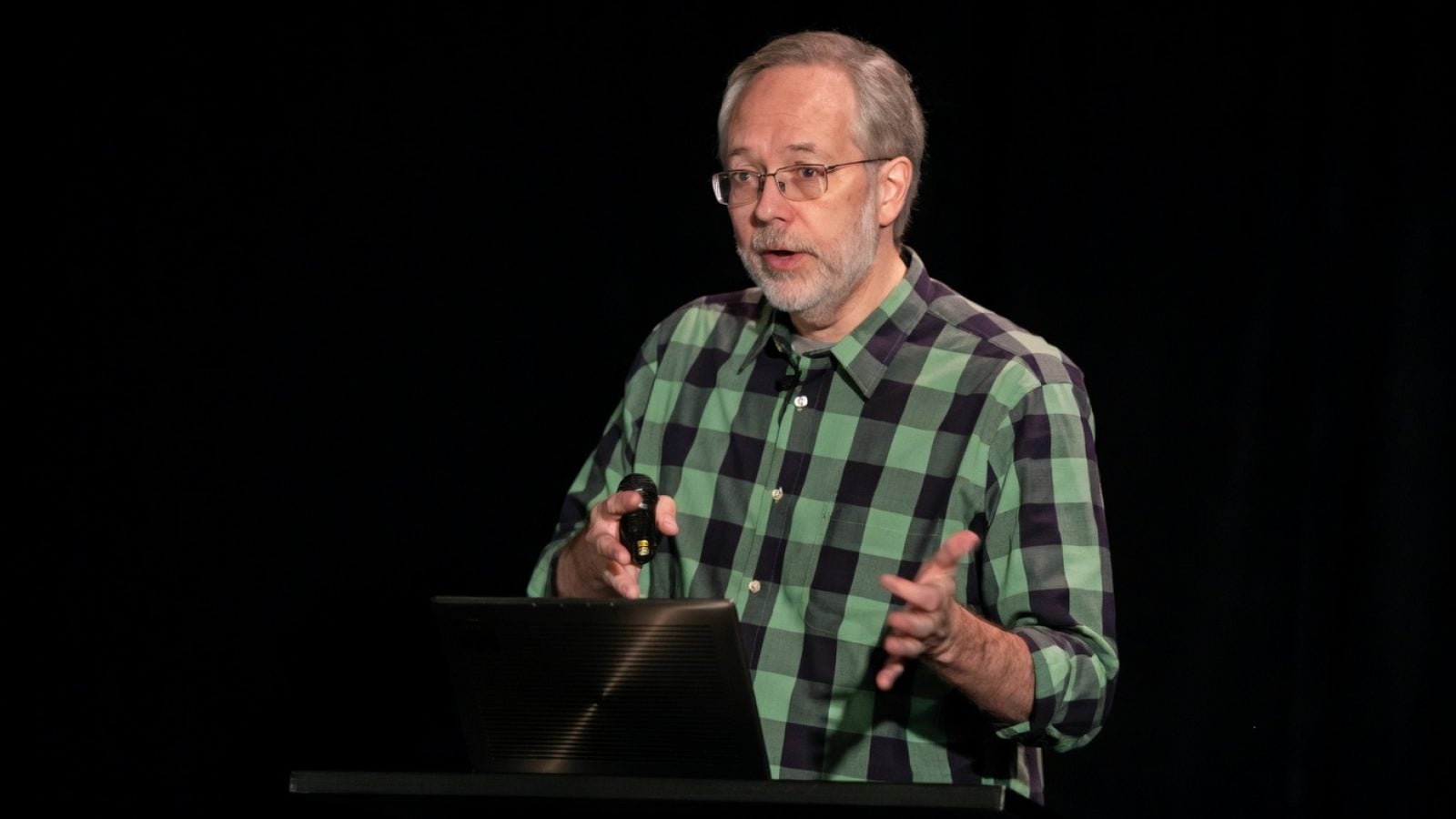
And Dr. Michael S. Heiser gives one of the best explanations I have ever heard, so I want to document that here.
First, allow me to lay out the issue in more detail:
This overlap is one of the most debated and misunderstood passages in the Bible. The key moment is when Jesus quotes Psalm 82:6 inside John 10—and everything hinges on why He does that.
1. What happens in John 10?
In John 10:30, Jesus says:
“I and the Father are one.”
The audience immediately understands this as a claim to divinity—that’s why they pick up stones to kill Him.
So Jesus responds by quoting:
“Is it not written in your Law, ‘I said, you are gods’?” (John 10:34, quoting Psalm 82:6)
2. What does Psalm 82 actually say?
Psalm 82 describes a scene where God stands in a divine council:
- God (singular) presides
- Other beings are called “gods” (Elohim)
- These beings are judged for corruption
They are told:
ADVERTISEMENT“You are gods… sons of the Most High… nevertheless, you will die like men” (Psalm 82:6–7)
The big interpretive question is:
Who are these “gods”?There are two main views:
View A (common traditional view)
- “gods” = human judges or rulers
- Psalm is about corrupt human leadership
View B (older / scholarly / supernatural view)
- “gods” = divine beings (members of a heavenly council)
- God is judging spiritual authorities over nations
3. What is Jesus doing by quoting it?
This is the critical part.
Jesus is not randomly quoting Scripture—He is making a tight logical argument.
Step-by-step logic:
Step 1:
Psalm 82 calls certain beings “gods”Step 2:
Those beings are lesser than God and are judged by HimStep 3:
Scripture itself uses the term “gods” for beings other than the one true GodADVERTISEMENTStep 4:
Therefore:“Why are you accusing me of blasphemy for calling myself the Son of God?”
4. Two main interpretations of Jesus’ argument
Interpretation 1 (defensive / “lesser” argument)
Jesus is saying:
- “If even human judges can be called ‘gods’ in Scripture…”
- “…then why are you upset that I call myself the Son of God?”
➡️ This reads as a downplaying argument (lesser-to-greater logic)
ADVERTISEMENT
Interpretation 2 (stronger / contextual argument)
This fits the flow of John much better:
- In Psalm 82, the “sons of God” are not mere humans
- They are supernatural beings
- Jesus uses that to say:
“Your own Scriptures acknowledge beings that are more than human…
and I am claiming something even greater.”Then He doubles down:
- “The Father is in me, and I am in the Father” (John 10:38)
➡️ This is not backing off—it’s escalating the claim
5. Why they still try to kill Him
After the quote, they still attempt to arrest/kill Him.
That tells you everything:
- They did not interpret His words as harmless
- They understood Him to be making a serious divine claim
6. The real overlap (core meaning)
Here’s the connection in plain terms:
- Psalm 82 → God judges other “gods” (divine beings)
- John 10 → Jesus identifies Himself with the God who judges them
So the logic becomes:
ADVERTISEMENT“You know Psalm 82.
You know God stands over the ‘gods’ in judgment.
I am telling you: I am one with that God.”
7. Bottom line
The overlap is not about lowering Jesus—it’s about clarifying categories:
- The Bible uses “gods” (elohim) for spiritual beings
- But only one is Yahweh—the Most High
- Jesus is claiming identity with that Most High God
So His argument is essentially:
“Your Scriptures already show a supernatural hierarchy.
I am not just part of it—
I stand at the top of it.”

And now watch as Heiser perfectly breaks it all down:
FULL TRANSCRIPT:
First, I kicked you out of my presence. That didn’t work. Then we send the flood to wipe the slate clean. That didn’t work. And I promise to never do it again. So now we’re at it again.
And you know, humanity is in rebellion. So he says, “Okay, you don’t want me to be your God. You don’t want to take your marching orders from me. Fine. I’m going to give you what you apparently want.” They’re not supposed to take worship for themselves, but they do.
They even seduced the Israelites. If you keep reading in Deuteronomy 32, you at verse 17, you know, you have the Israelites were sacrificing to Shadim, which most English translations translate as demons. It’s kind of an unfortunate translation.
Shadim is the plural of an Akkadian term shadu, which means a territorial entity. I mean, all these thoughts are connected. This is the tapestry of the biblical salvation story. It’s just that unfortunately evangelicalism sucks the supernatural right out of it.
But they have to retain the belief in God and Jesus and a Trinity and Satan and angels and demons. We’ll call it good. They don’t really do anything. They fly around, and somehow it’s okay to be a supernaturalist there, but not okay over here.
ADVERTISEMENTIf we read through the whole chapter, and I won’t do it for the sake of time, you will all notice a second thing. The judges, the people who are appointed, are never called Elohim. Not once. They’re also not called Elohim in other passages either.
This is an invention. It is an invented view. Now, if you’re having trouble sleeping at night, I recommend going to my website, thedivinecounsel.com. And you need the word ‘the’ because somebody else owns the URL divine.com.
That’s not me. It’s thedivinecounsel.com. On the right-hand side, there are some articles that get into this. Unfortunately, the one that I like getting into it best, I’m not able to post because of copyright.
It’s a journal that doesn’t allow me to post the information up there. I could send you the article. It’s in a journal called Bible Translator and I did two articles for them. One is “Does Deuteronomy 32:17 presume plural Elohim?”
And yes, it does. Should it be translated gods? And the other one is an article about—and this is the one that if the first one doesn’t put you to sleep, this one will get you. The second one is an examination of the noun Elohim when it’s the subject of a plural predicator.
It’s about a dozen times, but some of when it’s in the mouth of a pagan, I don’t worry about that. When it’s not—like when David says it or the Torah says it—I focus on that and I show that there isn’t a single reference even when Elohim is the subject of a plural verb.
In those instances, there isn’t a single reference where the judges are called that or where you need to translate it plural. There are other indicators in the context grammatically and contextually that show that we’re talking about the God of Israel.
Then you know, why is it a plural verb form? Yeah, occasionally they do it just for grammatical agreement. Elohim is a plural noun. We give it a plural verb, but the context always dictates the translation. So again, if you’re having trouble sleeping, that’s the place to go.
Speaker: Back to our—what was the name of the journal? No, the website.
Speaker: Oh, thedivinecounsel.com. It’s d-i-v-i-n-e, thedivinecounsel.com. That’s my website. I’ll just show you what it looks like here. We have time. We’re not in a rush. At least I’m not.
But see, I have my name at the top because I need to do that because the other one I don’t own. But on the right-hand side there, if I mark it academic or technical, I’m not lying to you. Okay? It’ll be technical. And again, if you have trouble sleeping, there you go.
But it’s discussed in a few of those. So, Exodus 18 really isn’t a good piece of evidence for the idea. Every occurrence of Elohim except the one to foreign gods is singular. You know, this singular God of Israel.
The men doing the judgment are never called Elohim. Again, I just threw this other slide in. It’s not a description of Sinai because Psalm 82 never mentions Sinai. You can read the whole chapter. You’re not going to find Sinai in there.
You can put it in if you want. I mean, the lightning bolt’s not going to come from heaven. Although many times I wish it would when people do this to Psalm 82, but there you go. Now, the right view, because it’s supported by the grammar and the context, is that the gods here are divine beings.
Here’s Psalm 82:1. God has taken his place in the divine counsel. It’s the gods. He holds judgment. Gods here, Elohim. Here’s the first God, second Elohim. They’re both Elohim. I talked about this yesterday.
This one is singular because the verb form that it goes with is singular. It’s very obvious. Plural. Again, you can’t be in the midst of one. Okay. Well, maybe this is like the Trinity. You know, you can be in the midst of the Trinity, Mike.
Well, good for you because God’s going to proceed in verses two and five to tell the members of the Trinity that they’re corrupt and they’re going to die like men. How’s that work? That doesn’t work real well.
So, you got to let the plurality be what it is. And we talked about the meaning of Elohim yesterday. It’s just a term you would use as a writer to identify a being or an entity that is by nature disembodied and a member of the spiritual world.
But I got to tell you a little story about this too. I had published an article and in academia this was somewhat controversial. Academics like to take Psalm 82 and other passages and say that Israelites initially were polytheists.
And they say that this psalm and Deuteronomy 32 and a few other places have Yahweh and El or Yahweh and Elyon the Most High as separate deities and that proves polytheism. So I wrote this paper against that view and it got published in a journal.
Within that view, I talk about the meaning of Elohim. So I thought that went too well. I need public humiliation. So I’m going to read this paper at the International Society of Biblical Literature conference. Actually, I had to come up with a paper so that Logos would fund my trip.
And so this one’s handy. Let’s do that. So I went, you know, I got to go to Edinburgh, which is where this particular meeting was. I took my wife along. It was a real nice trip. But I have to read this paper.
ADVERTISEMENTSo I’m in the room and again, if you’ve read any of my stuff or you read Israelite Religion, this name is going to be familiar. So we’re about ready to start. And in walks Nicholas Wyatt, he’s a professor at Edinburgh.
He’s retired now. He’s a big Ugaritic scholar in Israelite religion. And I watched him come in and I’m thinking this could go really badly, you know? It’s like, so what’s going to happen? And my wife’s there in the front row and Wyatt goes to the back as most of the seats are taken.
So I’m into this paper. And when I got to the point about the reason we have this is Elohim is just a term you would use for an entity that was disembodied, a member of the spiritual world, Wyatt stands up in the back and goes, “Yes, finally.”
And it’s like, “What are you going to start the wave or what?” But he was so excited that somebody figured it out. And it’s like, well, this could go pretty well now, you know? But I didn’t know. He hadn’t done anything on it.
But it was just a nice, good thing, and I chatted with him afterwards and thanked him for his enthusiasm. But again, when you finally actually just look at the term and ask yourself, why would biblical writers use this term of five or six different things other than the God of Israel?
See, because in evangelical circles, you know, you go through this material—and I never know who’s in the audience, and I don’t want to say I don’t care, but I used to care more than I do now—I know this creeps people out because we are taught and our brains just move this way.
We’re taught by Western culture and our own Christian tradition. We are taught that the letters G, O, and D equal a specific set of unique attributes: omniscience, omnipresence, eternality, sovereignty, all that stuff.
We are taught that when you see the letters G, O, and D, those are the attributes that go with that word. It’s incorrect for obvious reasons. The biblical writers did not think about the word Elohim the way we are taught to think about the letters G, O, and D.
Because they use Elohim of different things than the God of Israel. So if Elohim is about a unique set of specific attributes, then those other Elohim have those attributes, including like the disembodied dead.
You know, I’m sorry, but like my dead aunt is not at an ontological level with the God of Israel. And no Israelite would think that—at least if they were sane or they even had a whiff of orthodoxy about them.
I mean, this one, Yah—the way I summarize it is: look, you’ve got a lot of Elohim. It’s just another way of referring to spiritual beings. It’s all it is. And in the spiritual world, there’s a lot of these. You got the realm of the dead, you’ve got the presence of Yahweh himself.
ADVERTISEMENTYou’ve got the afterlife idea, you’ve got the gods of the nations. You know, you’ve got Ashtaroth and Chemosh; in the Hebrew text, they’re called Elohim. They are not at the level of the God of Israel. And no Israelite, no biblical writer anyway, is going to think that.
If you walked up to Abraham and you said, “Hey, Abraham, are there other Elohim?” He’d go, “What? Duh.” And okay, good. And all the Elohim are basically the same. He’d probably just punch you in the face. Abraham does not believe we’re all the same.
Biblical writers do not believe they’re all the same. How do we know that? Because biblical writers talk about this one, Yahweh of Israel, in ways that they never talk about the other ones. You don’t get that theology from the word Elohim.
You get that theology from reading your Bible—just how God is described as opposed to how the others are described. And there’s a disconnect there. So Yahweh is an Elohim. There’s a bunch of Elohim. Yahweh is one of them, but none of the other Elohim are Yahweh.
That’s what a biblical writer believed. That is not polytheism. See, we think polytheism because we’re taught G, O, and D denotes a specific set of attributes. It doesn’t. It denotes a divine being, a supernatural being.
It’s a way that they would use to refer to Elohim as: you’re a disembodied member of the spiritual world. You’re not of this world, you’re of that world. So, if we look at it again for what it says, you go down to verse 6—or let me go to Psalm 89.
If you go down to Psalm 82:6, I’ll just quote it to you because this is the part Jesus quotes. You have God, the God of verse one here, addressing the other Elohim. He reams them out in verses 2 through five. You have failed your charge.
I assigned you to the nations. This is the Deuteronomy 32 worldview because the psalm ends in a very particular way that reinforces that. You’re corrupt. You’re wicked. You’re evil. You get down to verse six. “I said you are gods. You’re Elohim, all of you, sons of the Most High.”
Sons is plural. “But you’re going to die like men. You’re going to fall like any prince.” Or you could translate it “any shining one,” any lesser being. “I’m the one who has control of life and death. And I’m judging you to death. You are going to die.”
There’s going to be a time when you cease to exist. Your existence is contingent upon my pleasure. That’s the point. And then the psalm ends where the psalmist cries out, “Rise up, O God, and take the nations.” Who has the nations now?
It’s the sons of God. It’s Deuteronomy 32:8 and a whole bunch of other verses. If you’ve read Supernatural or Unseen Realm, this is familiar to you. God punished humanity at Babel by assigning them to the sons of God as caretakers.
God divorced humanity. He said, “I’m done with you guys. This is our third go-round.” We’ve had Eden, we had sin, we had Genesis 6, and then I sent the flood. First, I kicked you out of my presence. That didn’t work.
Then we send the flood to wipe the slate clean. That didn’t work. And I promise to never do it again. So now we’re at it again. And you know, humanity is in rebellion. So he says, “Okay, you don’t want me to be your God.”
“You don’t want to take your marching orders from me. Fine. I’m going to give you what you apparently want. I’m going to assign you to lesser beings.” This is Deuteronomy 32:8. When the Most High divided up the nations, that’s a reference to Babel.
That’s when the nations get divided. He divided them up according to the number of the sons of God. But Israel is Yahweh’s portion. Jacob is his inheritance because God divorces humanity en masse, assigns them to lesser beings.
And they’re supposed to rule according to God’s rules of justice. That’s what we find out in Psalm 82. That’s why God’s mad at them, because they don’t do that. They’re not supposed to take worship for themselves, but they do.
They even seduce the Israelites. If you keep reading in Deuteronomy 32, you hit verse 17. You know, you have the Israelites were sacrificing to Shadim, which most English translations translate as demons. It’s kind of an unfortunate translation.
Shadim is the plural of an Akkadian term, Shadu, which means a territorial entity, which makes perfect sense in the context of Deuteronomy 32 because we’re talking about geography. But they seduce the Israelites into following them.
That’s not what God wanted. So God divorces humanity. And in the very next part, what happens in the biblical story right after Babel? He calls Abraham, says, “Now watch, I’m not done yet. I’ve kissed you guys goodbye, but not permanently.”
“I’m going to go to Ur and I’m going to call this one guy and he’s a perfect candidate because he’s old and his wife is old and can’t have kids. But I’m going to enable her to have a child and I’m going to start my own human family all over again.”
“Just watch. They’re my portion. They are my inheritance.” And so God makes a covenant with Abraham to do all that stuff. And then he squeezes in the covenant language that through your seed, all of the nations that I just divorced will be blessed.
I’m not forgetting about them permanently, but they are under judgment. They are exiled from me. If they want to come back to me, they have to go through you. It’s why they got to become part of the Israelite community.
The Israelite community is the only one that has access to the truth about the true God. You must be in right relationship with God through them until we get the seed who is Jesus. That’s what Paul says in Galatians 3 and Galatians 6.
I mean, all these thoughts are connected. This is the tapestry of the biblical salvation story. It’s just that unfortunately evangelicalism sucks the supernatural right out of it. But they have to retain the belief in God and Jesus and a Trinity and Satan and angels and demons.
We’ll call it good. They don’t really do anything. They fly around, and somehow it’s okay to be a supernaturalist there, but not okay over here. I got news for you. Nothing we believe is going to appeal to a rationalist mind, to a materialist mind.
Nothing we believe is normal and respectable to them. But for some reason we think, “Well, this isn’t going to make people laugh at me, but this will.” Why? And that’s the uncomfortable thing for a lot of people about Unseen Realm and some other things.
But God is judging the gods in counsel. And some people will say, “Well, you know, these are men and God consults with them or they consult with God and then they’re the judges and they make decisions.”
Well, that’s nice because if you look over in Psalm 89, we get the same language. “Let the heavens praise your wonders, O Lord, your faithfulness in the assembly, assembly of the holy ones. For who in the skies can be compared to the Lord?”
“Who among the heavenly beings?” There’s a footnote here. This is Ben-Elim, the sons of God or the sons of the gods. You could translate that too, but “sons of God” is again contextually—because we’re dealing with one here—the way to translate it.
“A God greatly to be feared in the council of the holy ones.” Well, here you have another divine counsel passage. Sons of God who were Elohim back in Psalm 82. Here we have sons of God here in the council. And guess what? It’s in the skies.
Now, the last time I read my Bible, there weren’t a bunch of Jewish elders ruling from the skies. Okay, there just aren’t. Maybe I haven’t looked closely enough, but I think I have. Doesn’t work. Again, here’s Psalm 82 again.
So, what in the world is Jesus doing? My view is that he was actually defending his deity. I don’t need a drum roll for that. I mean, this is John. This is what John does. And it’s sandwiched between “I and the Father are one” and “the Father is in me and I’m in the Father.”
Why would Jesus undermine it in the middle? He wouldn’t do that. John, as a writer, wouldn’t do that. And the Pharisees certainly don’t see it that way. So, you’ve got everything in the context going against the dominant majority view.
I’m just telling you, pick up a commentary on John and it’s going to land on the human view and you’re going to scratch your head and you go, “Why?” Well, I mean, that just doesn’t make any sense. It doesn’t have to make sense, citizen, now move along.
There’s nothing to see here in Psalm 82. I mean, that’s essentially what you get. And it’s because people haven’t been forced to sort of deal with it. If you’re in an Old Testament doctoral program or something like that, you’re forced to.
You’re confronted with this on the first day. I mean, critics love to throw this stuff at you and it’s your field, so you have to read all the literature about it. People in New Testament or systematic theology or churches, they don’t have to read it.
They are lucky if they ever hear of it. It’s just the way it is. So, if we take the divine view, here’s what I suggest. Here’s John 10. You know what? We’ve got “I and the Father are one.” He quotes Psalm 82 right here in the middle.
And then he’s going to reinforce the claim down here. So what is he doing? I would suggest this. He’s not saying “I’m just like you.” That’s the mortal view. Think with me here. When Jesus makes the statement and he watches them start to pick up stones, he knows that he’s pushed a button.
And so he’s going to draw on their knowledge of the text. He says, “Okay, calm down, fellas. Doesn’t it say ‘I said you are gods’?” And he quotes Psalm 82:6. Now he knows that they know the psalm.
And because they know the psalm, they know immediately that the sons of God in Psalm 82 are more than men. So the first stroke of Jesus is saying, “Your own scriptures tell you that there are sons of God that are more than men.”
“And the scripture cannot be broken. It’s not lying to you.” And then he follows that by saying, “The Father is in me and I am in the Father.” And he’s already told them, “I and the Father are one.”
So Jesus—I can just summarize the rest of what we’re doing this morning—Jesus quotes Psalm 82 to make two points. One, there are sons of God in your own Bible who are more than men. They are supernatural beings. So, he’s put himself into the psalm.
So, he’s saying, “I’m more than a man, but I’m not just one of them. I’m not just one of that group, the sons of God. There’s something about me that’s different. And I’ve already told you what it is.”
“I and the Father are one. The guy presiding over the council who is sentencing these Elohim to death? That’s me. I and the Father are one. The Father is in me and I am in the Father.” He’s sticking it to them.
That’s what he’s doing. He’s using their own text against themselves. And the scripture cannot be broken. That’s what he’s doing. It’s completely consistent. It’s totally awesome. And Jesus does this kind of stuff all over the place.
I mean, there are really—I don’t want to use the word clever because that sounds a little devious—but Jesus and other New Testament writers know how to push buttons in their audience. They don’t throw things away.
It’s just that for us, it’s either easy to read over it or we’ve been trained, like in this case, to not see it. But Jesus is completely consistent. He is not backing off. And you can tell at the end of John 10, they sought again to arrest him.
They want to put him on trial. They want to put him to death. They’re not saying, “Oh, okay. You’re just saying we’re all sons of God together and we’re all kind of part of the same family.” Okay?
That is not their reaction. They know what he’s doing and they don’t like it.
There’s actually a Part 2 as well, that goes even deeper…
And in this one it breaks down what Jesus is very clearly saying in John 10, and specifically why all Bible commentaries get this one wrong.
To me the biggest sticking point is the phrase “to whom the word of God came”. That seems to muddy the waters and confuse things, so in Dr. Michael S. Heiser’s voice, here’s the full explanation:
Alright—let me answer you the way I would in a classroom or a lecture, because this is exactly the sort of question people get hung up on.
You’re actually seeing the tension correctly—but the resolution is simpler than it looks once you stay anchored to the text.
When I read:
“to whom the word of God came”
I am not thinking about Moses. I am not thinking about Sinai. And I am not thinking about Israel as a nation receiving Torah.
Why?
Because Jesus is quoting Psalm 82, and whatever that phrase means has to come from that Psalm, not from somewhere else we import into it.
So I go back to Psalm 82 and ask: where does the word of God come to anyone in this passage?
It comes in the form of a direct address.
God stands in the council.
He speaks.
He indicts.
He judges.That speech—that confrontation—is the “word of God.”
So when I read John 10 and see:
“to whom the word of God came”
I understand that as referring to those beings in Psalm 82 who received God’s judicial decree.
Not humans. Not Israelites. Not judges.
The elohim of the divine council.Now, here’s where people tend to drift off course.
They see the phrase “word of God” and instinctively think “Scripture” or “Law” or “prophetic revelation to Israel.” But that’s a later, more narrow way of using the phrase. In the Hebrew Bible, the “word of God” can simply mean God speaking into a situation—especially in judgment.
And that’s exactly what’s happening in Psalm 82.
So I don’t need to go to Moses to explain John 10. In fact, if I do that, I’ve already left Jesus’ argument behind.
And that brings me to the point Jesus is making.
He’s responding to an accusation of blasphemy. They think he’s crossed a line by identifying himself in divine terms.
So what does he do?
He goes to their own Scripture and essentially says:
“Your text uses the term elohim for other beings—beings who are not Yahweh—and Scripture cannot be broken. So why are you objecting when I, the one set apart and sent by the Father, make a claim about my identity?”
That’s not Jesus lowering himself.
ADVERTISEMENTThat’s Jesus forcing them to deal with categories that already exist in their own text.
And here’s the key: his argument only works if Psalm 82 is about real divine beings. If those “gods” are just human judges, the whole thing collapses. Human judges aren’t a problem category. Nobody gets accused of blasphemy for being compared to a human judge.
So I don’t reinterpret Psalm 82 to fit John 10.
I let Psalm 82 stay what it is—a scene of divine council judgment—and then I let Jesus use it the way it naturally functions.
So no—this phrase doesn’t point you back to Moses.
It keeps you exactly where you already are:
in the divine council scene, where God has spoken judgment over other elohim.
And now Part 2.
Please enjoy:
RELATED REPORT:
I'm publishing this one for safe-keeping, because something tells me this might become VERY relevant in the near future.
You know, Aliens, Demons, Angels....I think we're about to see "Disclosure" and psyops on levels you never imagined before.
I've been warning about this for over ten years, the only difference is that ten years ago people scoffed and laughed when I warned about this.
Now, with the Trump Administration literally purchasing the Aliens.gov website, they don't scoff or laugh anymore.
And I have a feeling that what once seemed ancient and irrelevant (Genesis 6:4) might soon become one of the most relevant things you will ever learn about.
With that, we go to Dr. Michael S. Heiser who offers what I believe is the clearest and best explanation of Genesis 6:4 I have ever heard....and it explains a lot!
Watch here:
Backup here on Rumble if needed:
And if you loved that, we can take it one level even deeper with this next one.
Watch here:
And again a backup on Rumble if needed:
RELATED REPORTS:
LARA TRUMP: “President Trump Has A Speech On Aliens/UFOs Prepared And Ready To Use”
EXPLAINED: Nephilim, Watchers, Elohim, Angels, Demons and UFOs
That's quite a list, but we're going to tackle it all today!
Why?
Why would I bother to cover this when this is a site about politics and breaking news?
Simple -- because I think this will be "breaking news" in the not-too-distant future, and you desperately need to be prepared for it! Or you'll be confused, overwhelmed and you might just lose your way and your foundation.
You might be surprised to learn that your Bible is a supernatural book from beginning to end.
In the 21st Century, we've tried very hard to take every supernatural thing out of the Bible, and in doing so it's lost a ton of it's meaning.
You might also be surprised to learn that very same Bible describes in the first of the 66 Books that make up the Bible, an "alien incursion" of sorts which happens in Genesis 6:4.
That incursion produces the "Nephilim" -- the "Giants" which are mentioned all throughout the Old Testament.
In fact, this core story line of the Bible establishes the plot for the rest of the Old Testament -- YHWH and his chosen Israel against all the other Elohim "gods" and their allotted the other nations to them.
It's all right in there, just go read it.
Deuteronomy 32:8-9 (ESV):
"When the Most High gave to the nations their inheritance, when he divided mankind, he fixed the borders of the peoples according to the number of the sons of God. But the Lord's portion is his people, Jacob his allotted heritage."
So modern, American Christianity wants you to think only about churches with white steeples and organ music, sitting in pews and, quite frankly, being bored out of your mind the whole time.
But the truth is that the Biblical narrative is more action packed than a Marvel Avengers superhero movie (spoiler alert: the Bible is actually where they get all their plot lines from in the first place!) and it's filled with groups called the Nephilim, the Watchers, the Elohim, Angels, Demons and more!
And if you don't know who all the players are, you're not going to understand the plot -- and you're not going to understand what's about to play out on the world stage in our time -- because the final chapter of the book has not yet fully played out yet, and there are some BIG twists and turns coming!
I believe the UFO/Alien card is about to be played and it's going to throw a lot of people into a panic. This is likely the coming "Great Deception" the Bible talks about.
So you need to be prepared and educated.
As you may notice, I like to cover Clif High here from time to time because I think his work is fascinating.
But as I cover him, I usually make a note that I don't agree with all of his beliefs.
One of those such beliefs is Clif essentially groups all of these different groups of beings together and calls them "The El". Short for Elohim.
In Clif's view, all of these supernatural "El" are likely not supernatural at all -- they're just more advanced than us and appeared like "gods" to us -- and in Clif's world view they're all bad guys.
The Bible teaches a very different story.
The Bible uses the word Nephilim (or Watchers in the Book of Enoch terminology) to essentially describe the Angels who left Heaven, came to Earth, took human wives, and then created the Nephilim as their offspring.
You can imagine Angels mating Humans would create some very big, very powerful children, and that's what you got.
It's why in all the Ancient civilizations from Rome to Egypt and all around, you always have these Pantheons of "gods".
Do you think that all happened by accident?
All these different ancient cultures all came up with essentially the same pantheon of "gods" just with different names?
No! It's because these were not myths in the sense of just being made up for entertainment -- they were describing what they saw.
And it's right in your Bible, right in Genesis 6:4.
Genesis 6:4 (NIV):
"The Nephilim were on the earth in those days—and also afterward—when the sons of God went to the daughters of humans and had children by them. They were the heroes of old, men of renown."
Egypt:
- Ra – The sun god and the king of the gods, Ra was one of the most important deities. He was believed to rule over the sky, earth, and the underworld.
- Osiris – God of the afterlife, resurrection, and agriculture. Osiris was a central figure in Egyptian funerary beliefs.
- Isis – Goddess of magic, motherhood, and fertility. She was the wife of Osiris and mother of Horus, known for her powerful protective magic.
- Horus – God of kingship and the sky. He was often depicted as a falcon, and the Pharaohs were seen as incarnations of Horus.
- Anubis – God of mummification and the afterlife. Anubis was often depicted as a jackal or with a jackal head.
- Thoth – God of writing, wisdom, and knowledge. He was believed to have invented hieroglyphics and was often depicted as an ibis or baboon.
- Hathor – Goddess of love, beauty, music, and motherhood. Hathor was one of the most widely worshiped goddesses in ancient Egypt.
- Seth (Set) – God of chaos, desert, and storms. He was often seen as a villainous figure who killed his brother Osiris, but he also had protective aspects.
- Amun – Initially a local Theban god, Amun became one of the most powerful gods after being merged with Ra, forming Amun-Ra.
- Ptah – God of craftsmen and architects. Ptah was revered as a creator god and was associated with building and artisanship.
Rome:
- Jupiter – King of the gods, god of the sky and thunder. Jupiter was the Roman counterpart to the Greek god Zeus and held supreme power.
- Juno – Queen of the gods and goddess of marriage and childbirth. Juno was Jupiter’s wife and was often invoked to protect women.
- Neptune – God of the sea, earthquakes, and horses. Neptune was the Roman equivalent of the Greek god Poseidon.
- Mars – God of war. Mars was one of the most prominent deities in Roman culture and was believed to be the father of Romulus and Remus, the founders of Rome.
- Venus – Goddess of love, beauty, and fertility. Venus was the Roman equivalent of the Greek goddess Aphrodite and played a key role in various myths and stories.
- Minerva – Goddess of wisdom, strategy, and the arts. She was the Roman counterpart to the Greek goddess Athena.
- Apollo – God of the sun, music, healing, and prophecy. Unlike most Roman gods who had direct counterparts in Greek mythology, Apollo’s name remained the same in both traditions.
- Diana – Goddess of the hunt, the moon, and nature. Diana was the Roman counterpart of the Greek goddess Artemis.
- Vulcan – God of fire, blacksmithing, and craftsmanship. Vulcan was the Roman equivalent of the Greek god Hephaestus and was associated with the creation of weapons and armor.
- Mercury – God of commerce, communication, and travel. Mercury was the Roman counterpart of the Greek god Hermes and was also the messenger of the gods.
In both Bible quotes I've give you above, it's important to note that the most traditional understanding of the phrase "sons of God" always refers to Angels (or Elohim).
Now I want to show you this video series from Dr. Michael Heiser.
Dr. Heiser was considered the leading semitic languages scholar of his time, until his recent death.
He was a genius, but his true genius was in taking these complex concepts and making them easy (and fun) to understand.
Dr. Heiser was as conservative and traditional in his Biblical understanding as they come. But he had not only read his Bible, he had dissected it in its original language (that was his job). And he knew that the Bible taught the story I've told you above.
So he started teaching people what it really said, even going to UFO conferences (which is where the video I'm about to show you comes from).
Dr. Heiser saw the writing on the wall the same as I do....
Eventually, they're going to play the Alien Card.
Some entities WILL show up and they'll claim to be Aliens from another planet. They'll also claim that they seeded all life on Earth and that we should worship them.
It's coming folks.
And it's nothing new -- it's Deuteronomy 32:8-9 all over again!
Know your history or be doomed to repeat it.
With that background, I want to turn it over to Dr. Michael Heiser who lays it out far better than I ever could.
Settle in, buckle up and enjoy:
For more on these topics, check out these related articles where I go even deeper....
Jonathan Cahn is teaching the EXACT same thing:
CONTROVERSIAL: Jonathan Cahn Explains The Return of the “Gods”
More on the Elohim here:
Demons:
What’s your view?

Join the conversation!
Please share your thoughts about this article below. We value your opinions, and would love to see you add to the discussion!